The PASSPORT of the HEAVENLY Jerusalem

THE HERMENEUTICAL QUILL

bvthomas.com  •  Biblical Theology & Exposition

The Passport of the Heavenly Jerusalem

Kingdom Immigration and the Terms No One Is Preaching

b.v. thomas

Walk into any embassy on earth and you will feel it immediately — the weight of a jurisdiction that does not belong to the street outside. The flag on the wall, the seal above the consul’s desk, the forms in triplicate, the queue, the scrutiny, the stamp that either opens a door or closes it. Embassies do not apologize for their requirements. They do not whisper their regulations. They publish them. They enforce them. A nation that cannot define who belongs to it ceases to be a nation at all.

We live in an age when every ism on the earth — communism, nationalism, liberalism, capitalism — has its manifesto, its politburo, its membership criteria, its border enforcement. The wealthiest among us chase golden passports, shelling out fortunes to purchase citizenship in places that offer security, mobility, and privilege. The world understands, with brutal clarity, that belonging somewhere costs something.

And then there is the Kingdom of Christ.

The most real, most ancient, most consequential polity ever constituted in the history of the cosmos — and somehow, in the hands of a comfortable, sentimental Christianity, it has been reduced to this: “Just believe. You’re in. Don’t worry about the rest.” The passport handed out like a party favour at the door. No scrutiny. No terms. No understanding of what the document actually requires of the one who carries it.

This is not the gospel. This is a counterfeit stamped to look like one.

“But our citizenship is in heaven, from which we also eagerly wait for the Savior, the Lord Jesus Christ.”  — Philippians 3:20, NKJV

Paul did not use the word politeuma — citizenship, commonwealth, colony — loosely. His audience in Philippi knew exactly what it meant. Philippi was a Roman colony: Roman law, Roman customs, Roman loyalties, planted in foreign soil. When Paul said “our citizenship is in heaven,” he was invoking the full architecture of civic identity. We are a colony of the heavenly Jerusalem. We live under a foreign jurisdiction. And that jurisdiction has rules.

ARTICLE I

The Issuing Authority

No passport is valid without a legitimate issuing authority behind it. The Heavenly Jerusalem has one: the Triune God — Father, Son, and Holy Spirit — operating through the sole Mediator, the Lord Jesus Christ. There is no consulate on a street corner. There is no secondary issuing office. There is no appeal to heritage, lineage, sentiment, or religious performance apart from what Christ has secured.

“Jesus said to him, ‘I am the way, the truth, and the life. No one comes to the Father except through Me.’”  — John 14:6

The exclusivity of Christ is not theological narrowness. It is the nature of authority. A Kyrgyz passport is issued by Kyrgyzstan. A British passport is issued by the Crown. The passport of the Heavenly Jerusalem is issued by Christ, and by no other, and through no other channel. To imagine that sincerity, religious affiliation, moral effort, or cultural Christianity can produce a valid document is to imagine that you can print your own currency and expect the central bank to honour it.

The Father elects. The Son mediates and seals. The Spirit authenticates. The document, when legitimately issued, is irrevocable — but the process of acquisition is not what most pew-warmers think it is.

ARTICLE II

The Entry Stamp: Justification

Let us be precise, because imprecision here has cost millions their eternal standing without them knowing it.

Justification is the entry stamp. It is not the passport itself. It is the moment at the border when the document is examined, found valid, and the officer presses the seal: Approved. Righteous before God. Penalty paid. This is the work of the cross, received by faith. It is entirely God’s act. It is not earned. It cannot be lost by stumbling. It is the judicial declaration that the sin-debt has been discharged in full through the blood of Christ.

“Therefore, having been justified by faith, we have peace with God through our Lord Jesus Christ.”  — Romans 5:1

This is glorious. This is the foundation. But a foundation is not a house. The entry stamp is not the journey. The moment of justification is the beginning of a life, not the conclusion of one. And modern evangelicalism, in its terror of anything that sounds like ‘works,’ has collapsed the entire journey of the believer into that single moment and then sent people home to live however they please, clutching their ticket as though the destination is already reached.

It is not.

Justification declares you righteous. Sanctification makes you righteous in practice. Glorification perfects you in the age to come. To know the first and despise the second is to hold an entry stamp for a country you have never entered and do not intend to.

ARTICLE III

The Residency Terms: Sanctification

Every nation that grants you entry also defines the terms of your continued residence. You do not simply arrive and then do as you please. There are obligations, alignments, and expectations that come with the privilege of belonging.

The Kingdom of Christ is no different. The Sermon on the Mount is not a list of suggestions. The letters of Paul are not optional lifestyle content. The commands of Christ are not the fine print you skip before clicking “I Agree.” They are the residency terms of the Kingdom — the shape of what it looks like to actually live as a citizen of the heavenly polity while stationed in this present age.

“But as He who called you is holy, you also be holy in all your conduct, because it is written, ‘Be holy, for I am holy.’”  — 1 Peter 1:15–16

Sanctification is not a second-tier Christianity for the spiritually ambitious. It is the normal trajectory of every person who has genuinely received the entry stamp. The one who has truly been justified by faith will hunger for holiness — not to earn standing, but because the nature of the issuing authority has begun to reshape the holder of the document.

The one who is justified and then returns wholesale to the old life — who loves the world, who nurses the old appetites, who has no appetite for the Word, no grief over sin, no longing for God — has not been sanctified. And the uncomfortable question that the church has stopped asking is whether, in such a case, the justification was genuine at all.

“By this we know that we know Him, if we keep His commandments. He who says, ‘I know Him,’ and does not keep His commandments, is a liar, and the truth is not in him.”  — 1 John 2:3–4

John is not soft about this. He never was.

ARTICLE IV

The Register: The Lamb’s Book of Life

Every nation maintains a population register. Every valid passport corresponds to a real name in a real record. The Heavenly Jerusalem maintains its own: the Lamb’s Book of Life. This is not a metaphor for church membership rolls, denominational records, or the list of names on a baptismal certificate. It is the register of those who have been genuinely born from above — justified, sealed by the Spirit, and walking in the newness of life to which they have been called.

“And anyone not found written in the Book of Life was cast into the lake of fire.”  — Revelation 20:15

“But there shall by no means enter it anything that defiles, or causes an abomination or a lie, but only those who are written in the Lamb’s Book of Life.”  — Revelation 21:27

The sobering implication is this: the register is not maintained by human institutions. It is not updated by water baptism, confirmed by confirmation, or secured by signing a card at an evangelistic meeting. The name in the Book corresponds to a reality in the person — a genuine work of regenerating grace, evidenced by a life being progressively conformed to the image of the Son.

The self-deceived carry a counterfeit. And many will not discover the counterfeit until the final border crossing.

ARTICLE V

The Counterfeit Passport: Self-Deception and Easy Believism

Christ Himself raised the alarm. He did not leave us to discover the problem only at the end. He named it, described it, and placed the warning at the very center of His most famous discourse.

“Not everyone who says to Me, ‘Lord, Lord,’ shall enter the kingdom of heaven, but he who does the will of My Father in heaven. Many will say to Me in that day, ‘Lord, Lord, have we not prophesied in Your name, cast out demons in Your name, and done many wonders in Your name?’ And then I will declare to them, ‘I never knew you; depart from Me, you who practice lawlessness.’”  — Matthew 7:21–23

Note who is being described here. These are not atheists. These are not nominal pagans with no religious interest. These are people who called Christ Lord, who prophesied, who operated in supernatural gifts, who did works in His name. They had the vocabulary. They had the activity. They had the confidence. And they had a counterfeit.

The counterfeit passport is issued by the self, endorsed by a Christianity that has stopped preaching repentance, stamped by sentimentality, and carried with complete assurance into the final day. It is perhaps the most dangerous document in existence: it looks real, it feels real, and it fails at the border where it matters most.

Easy believism — the reduction of salvation to a single moment of cognitive assent, detached from repentance, discipleship, and the ongoing work of the Spirit — is the great passport-forgery operation of our age. The presses have been running for decades. The product is everywhere.

“Even the demons believe — and tremble!”  — James 2:19

Belief alone, separated from the obedience of faith, separated from repentance, separated from the regenerating work of the Spirit, produces a document that demons could carry. Belief is the first breath of saving faith — not the whole of it.

ARTICLE VI

The Border Crossing: The Final Judgment

Every journey culminates at a border. And the final border of the age is not a formality. It is the most rigorous immigration process in the history of existence.

Scripture speaks of two distinct judgments that the student of the Word must hold without confusion. For the believer, there is the Bema Seat — the judgment seat of Christ — where not guilt is assessed, but stewardship. The entry has already been secured. What is examined here is the quality of the life lived within the Kingdom’s terms: the gold, silver, precious stones of faithfulness — or the wood, hay, and stubble of a wasted residency.

“For we must all appear before the judgment seat of Christ, that each one may receive the things done in the body, according to what he has done, whether good or bad.”  — 2 Corinthians 5:10

This is the accounting of the citizen who arrived legitimately. The passport was real. The name was in the Book. But how was the residency lived? What was built? What was sacrificed? What was laid at the altar of the Kingdom’s purposes versus consumed on the altar of personal comfort?

And then there is the Great White Throne — the final reckoning for those outside Christ. No entry stamp. No name in the register. The counterfeit passport examined and found wanting. This is not a harsh technicality. It is the inevitable conclusion of a self that chose, over an entire lifetime, to hold a document it never actually possessed.

ARTICLE VII

Full Citizenship: The Glorified State

And for those whose document is real — for those in whom the work of justification, sanctification, and perseverance has been genuinely wrought by the grace of God — the final border crossing is not terror. It is homecoming.

“Beloved, now we are children of God; and it has not yet been revealed what we shall be, but we know that when He is revealed, we shall be like Him, for we shall see Him as He is.”  — 1 John 3:2

Full citizenship in the Heavenly Jerusalem is not the mere avoidance of hell. It is the inheritance of the age to come: co-heirs with Christ, governing with Him, bearing the full weight of the glory for which we were created. The passport was not a fire-insurance policy. It was the first document of a destiny that stretches into the eternal ages — that in the coming ages He might show the exceeding riches of His grace (Ephesians 2:7).

The Heavenly Jerusalem descends as a city because it is a city: a real polity, a real government, a real jurisdiction, a real population of real people who were genuinely changed, genuinely redeemed, genuinely formed into the image of their King. This is not a metaphor. This is where history ends and where the real story begins.

THE KINGDOM PASSPORT: A SUMMARY FRAMEWORK

A theological framework for what the passport of the Heavenly Jerusalem actually entails:

PROVISION

KINGDOM EQUIVALENT

Issuing Authority

The Triune God — through Christ alone, the sole Mediator (John 14:6; 1 Tim. 2:5)

Document

The Lamb’s Book of Life — the definitive register of the genuinely redeemed (Rev. 21:27)

Entry Stamp

Justification by faith — the judicial declaration of righteousness; peace with God (Rom. 5:1)

Residency Terms

Sanctification — the progressive conformity to Christ; obedience of faith (1 Pet. 1:15–16)

Citizenship Rights

Co-heirs with Christ; inheritance of the coming age; governing with the King (Rom. 8:17)

Authentication Mark

The indwelling Holy Spirit — the seal and down-payment of the inheritance (Eph. 1:13–14)

Border Control

The Bema Seat (for citizens) and the Great White Throne (for the stateless) (2 Cor. 5:10; Rev. 20:11–15)

Destination

The Heavenly Jerusalem — the city that descends; the eternal polity of the redeemed (Rev. 21:2)

Counterfeit Signal

Belief without repentance; profession without transformation; the lawless who called Him Lord (Matt. 7:21–23)

Final Status

Full citizenship in the age to come: glorification, full conformity to Christ’s image (1 John 3:2)

CLOSING WORD

Stop Taking the Passport for Granted

The golden passport hunters of this world understand something the comfortable church has forgotten: belonging costs something, means something, and demands something. They part with fortunes because they understand that citizenship in a stable, prosperous nation transforms your life, your options, and your future.

The passport of the Heavenly Jerusalem is not for sale. It cannot be purchased with religious performance, moral effort, or theological correctness. It is received, by grace alone, through faith alone, in Christ alone. But it is not free of cost to the one who carries it. It costs you your old life. It costs you your allegiance to the world. It costs you the right to be the final authority over your own existence. It costs you, in the end, everything — and in return, it gives you everything that lasts.

Stop assuming you have it because you said a prayer once. Examine the document. Not with terror, but with the sober clarity of a traveller who knows that only one border crossing in eternity matters, and that border is not impressed by church attendance, charismatic gifts, or the fervency of your self-confidence.

Is the name real? Is the seal genuine? Is the life being lived consistent with the terms of the citizenship you claim? Is there fruit? Is there hunger? Is there the unmistakable mark of the Spirit at work — producing, pressing, convicting, conforming?

“Examine yourselves as to whether you are in the faith. Test yourselves.”  — 2 Corinthians 13:5

That is not a verse for the faint-hearted. It was written to a church. To people who thought they knew. To people very much like the ones in the pews today who have booked a ticket they have never actually examined.

The Kingdom of Christ has policies. It has terms. It has a register. It has a border. And it has a King who will not be fooled by a counterfeit.

The Heavenly Jerusalem is accepting applicants. The consulate is open. The Mediator is at the right hand of the Father. But the terms have not changed, and the Book is not amended by wishful thinking.

Get the real passport. Carry it with trembling and gratitude. Live worthy of the citizenship it represents.

— b.v. thomas

The Hermeneutical Quill  •  bvthomas.com
The THREE Fathers: A Journey of DISCERNMENT, Redemption, and Abundant LIFE

Every soul navigates a world shaped by three fatherly voices, each vying to define our identity, purpose, and destiny. The father of lies, Satan, whispers deception, cloaking destruction in the guise of freedom. His voice, as John 8:44 declares, is the origin of falsehood, seeking to impede souls from the life of God by ensnaring them in spiritual deadness. He exploits the potential for despair, tempting us with lies like “you are unworthy” or “you are alone,” aiming to bind us in darkness and separation from truth.

The earthly father, through whom we enter the world, shapes our early sense of self. Yet, as a fallen soul himself, he is subject to the law of sin and death (Romans 7:23), influenced by the devil’s deceit or his own human frailty. Some earthly fathers nurture, but others, swayed by sin or brokenness, may crush their children’s spirits, conditioning them to believe they are “good for nothing,” rejecting them outright, or leaving them as orphans—whether physically absent or emotionally distant, raised by others or left to fend for themselves. Even the best earthly fathers, bound by imperfection, cannot fully meet the soul’s deepest need for unconditional love.

Yet above these voices rises the Everlasting Father, God Almighty, whose love is boundless and whose presence is eternal. As Isaiah 9:6 proclaims, He is the Everlasting Father, and through His Son, Jesus Christ, He calls all souls to come to Him, that they might have life—life abundant and full (John 10:10). Unlike the father of lies, who seeks to steal, kill, and destroy, or the earthly father, whose failures may wound, God pursues weary souls with a promise: “I will not leave you as orphans; I will come to you” (John 14:18). Through Jesus Christ, who paved the way for liberation from sin, the devil, and darkness, God offers salvation, adoption, and a restored identity as beloved children (Romans 8:15).

For those who walk in faith, a spiritual father—whether a mentor, pastor, or guide—may serve as a bridge to this divine truth. As Paul describes in 1 Corinthians 4:15, such figures facilitate rebirth into Christ, echoing the Everlasting Father’s call and guiding souls toward His light. These spiritual fathers, though imperfect, help navigate the journey from spiritual deadness to abundant life.

Life, then, is a journey of discernment and redemption: to reject the lies that bind, to forgive the earthly flaws that wound, and to answer the call of Jesus Christ to abundant life. The father of lies exists to thwart this journey, exploiting the spiritual deadness of souls to keep them from God’s truth. The earthly father, swayed by sin or brokenness, may reinforce these lies through rejection or failure. But the Everlasting Father, through His Son, seeks those weary souls, offering liberation from sin’s dominion and the devil’s deceit. Jesus’ invitation is clear: “Come to me, all you who are weary and burdened, and I will give you rest” (Matthew 11:28).

To choose the Everlasting Father is to embrace a transformative truth: that we are never alone, never forsaken, and always loved. It is to step into a destiny where lies are exposed, wounds are healed, and the soul finds its eternal home in the abundant life offered through Christ. This is the profound reality of God’s love—a love that pursues, redeems, and restores, calling every soul to rise above deception and brokenness into the fullness of His salvation.

The FIRE of GRACE: How God RESUSCITATES Dead SOULS

The enemy’s camp is ablaze with a lie: that man, in his own strength, can climb to God. This falsehood has chained countless souls, convincing them they can save themselves. But the Word of God thunders a different truth—a truth that shatters pride, revives the dead, and sets captives free. Like Samson tying firebrands to foxes to burn the Philistines’ fields (Judges 15:4-5), we must send the fire of divine revelation to torch the enemy’s deceptions. The scriptures declare: salvation is God’s work, from first breath to final glory, and only the humble receive His grace.

Dead Bones and the Breath of God

Picture a valley of dry bones—bleached, scattered, lifeless. This is humanity apart from God. Ezekiel 37:1-14 paints a vivid portrait of our spiritual state: “dead in trespasses and sins” (Ephesians 2:1). These bones can’t stitch themselves together, nor can they choose to live. When God asks Ezekiel, “Can these bones live?” the prophet doesn’t point to human effort. He replies, “O Lord God, thou knowest” (Ezekiel 37:3). Only God can act, and act He does. He commands Ezekiel to prophesy, and the Spirit—the “ruach”—breathes life into the lifeless (Ezekiel 37:9-10). The bones rattle, flesh forms, and an army rises—not by their own power, but by the breath of God.

This is the starting point of salvation. We are not merely sick or struggling; we are spiritually dead, incapable of responding to God without divine resuscitation. The lie of self-salvation crumbles here. No amount of good deeds, religious rituals, or willpower can spark life in a dead soul. As Ephesians 2:5 declares, “Even when we were dead in sins, [God] hath quickened us together with Christ, (by grace ye are saved).” Salvation begins with God’s initiative, not ours.

The Son of Man Seeks the Lost

Enter Jesus, the Shepherd of souls, who declares His mission: “For the Son of man is come TO SEEK and TO SAVE that which was lost” (Luke 19:10). Like a heat-seeking missile, Christ locks onto the lost—those spiritually adrift, weary, and yearning for life. But who are the “lost”? They are not the self-sufficient or the proud, who think they need no savior. They are the “poor in spirit” (Matthew 5:3), those who sense their emptiness and cry for life. Jesus doesn’t wait for them to find Him; He seeks them, as a shepherd pursues a stray sheep (Luke 15:4-7).

Yet this seeking is not universal in its outcome. Not all respond, for not all are drawn. Jesus Himself reveals the divine prerequisite: “No man can come to me, except the Father which hath sent me draw him” (John 6:44). The Father, through the Holy Spirit, initiates the pull, stirring the dead heart to life. This drawing is the breath of Ezekiel’s vision, the grace that enables a response. The lie of human autonomy burns here: we don’t choose God until He first chooses to awaken us. As Romans 2:4 proclaims, “The goodness of God leadeth thee to repentance.” Salvation is God’s pursuit, not man’s achievement.

Salvation to the Uttermost

For those who are drawn, the promise is staggering: “Wherefore he is able also to save them to the uttermost THAT COME unto God BY HIM, seeing he ever liveth to make intercession for them” (Hebrews 7:25). Jesus’ salvation is complete, eternal, and unshakable. The phrase “to the uttermost” is a divine shout—there is no limit to His saving power for those who come. But notice the condition: “that COME unto God BY him.” This coming is not a work we muster; it’s a response enabled by grace. As in the Genesis dawn, when God said, “Let there be light,” and the Word shaped creation while the Spirit hovered over the formless deep, so too in redemption: the Father draws, the Spirit breathes, and the soul, now alive, runs to Christ. Just as God commanded light to shine out of darkness, He now makes His light shine in our hearts to reveal the glory of Christ (2 Corinthians 4:6), awakening us as a new creation in His boundless grace.

Who comes? The humble, the broken, those who know they’re spiritually bankrupt. Jesus said, They that be whole need not a physician, but they that are sick. But go ye and learn what that meaneth, I will have mercy, and not sacrifice: for I am not come to call the righteous, but sinners to repentance – Matthew 9:12,13. Jesus uses the metaphor of a physician to explain His mission. The “whole” refers to those who consider themselves righteous, self-sufficient, or spiritually healthy, feel morally upright and does not need repentance. The “sick” represents sinners—those who recognize their spiritual brokenness, moral failings, or need for forgiveness, such as those marginalized by society.

Jesus quotes Hosea 6:6, saying, “I will have MERCY, and not sacrifice,” emphasizing that God desires compassion and a heart oriented toward repentance. His mission is to call “sinners to repentance,” inviting those who acknowledge their need for grace to follow Him, rather than those who feel they are already whole. The people which sat in darkness SAW great light; and to them which sat in the region and shadow of death light is sprung up” (Matthew 4:16). The people which sat in darkness saw great light,” comes from Matthew 4:16 in the New Testament, quoting Isaiah 9:2 from the Old Testament, which represents spiritual ignorance, spiritual lostness, sin, despair, and separation from God.

Grace and truth CAME through Jesus Christ (John 1:17), and the grace of God that brings salvation HATH appeared to all men (Titus 2:11), leaving none with excuse. Jesus, the embodiment of grace, stands at the door and knocks on every heart (Revelation 3:20). Yet not all respond, nor can all receive, for “this is the condemnation, that light IS COME into the world, and men loved darkness rather than light, because their deeds were evil” (John 3:19). Those who do evil hate the light and shrink from it, lest their deeds be exposed (John 3:20), but he that doeth truth comes to the light, that his deeds may be made manifest, wrought in God (John 3:21). This movement toward the light cannot occur without the work of grace in a heart, for no one can say, “Jesus is Lord,” except by the Holy Spirit (1 Corinthians 12:3). The soul’s motion toward God is sparked by the Spirit’s divine work, as no one can come to Christ unless drawn by the Father’s grace (John 6:44). Without this grace, the natural inclination is to remain in sin, loving darkness (John 3:19). To “do truth” is to live in alignment with God’s will, embracing honesty, righteousness, and faith—not merely intellectual assent but a lifestyle of sincerity and obedience to the truth revealed in Christ. But God be thanked, that ye were the servants of sin, but ye have obeyed from the heart that form of doctrine which was delivered you. – Romans 6:17. This reflects a heart already touched by grace, for only those regenerated by the Spirit can genuinely seek truth, responding to God’s initiative rather than relying on self-generated effort. Coming to the light means accepting Jesus, confessing sin, and submitting to His truth in an act of faith and humility, acknowledging the need for salvation. Just as the people who “sat in darkness” were passive until the great light dawned (Isaiah 9:2, Matthew 4:16), so too in John 3:21, grace moves a person from spiritual passivity to actively seeking the light, fulfilling God’s redemptive promise. This underscores the synergy of divine grace and human responsibility: God’s grace initiates, but individuals must respond through faith and obedience. Coming to the light is transformative—it exposes sin yet empowers righteous living through the Spirit, shifting one from hiding in darkness to standing openly before God.

God resists the proud, but gives grace to the humble (James 4:6; 1 Peter 5:5). The proud, with no room for God in their thoughts (Psalm 10:4), build towers of self-reliance, unaware of their spiritual deadness. Yet the humble, awakened BY grace to their spiritual poverty (Matthew 5:3) and lack of strength (Romans 5:6), recognize their need and cling to the Savior. Jesus exalts them, for “he that shall humble himself shall be exalted” (Matthew 23:12). Some hearts, like stony ground or thorn-choked soil, cannot receive the seed of grace, while the good ground of the humble heart yields fruit (Matthew 13:3-23).

This redemption mirrors the Genesis dawn, when God said, “Let there be light,” the Word shaped creation, and the Spirit hovered over the formless deep (Genesis 1:2-3). Likewise, in salvation, the Father’s grace pierces the darkness of the humble heart, where the Spirit moves as over the deep; the Word incarnate brings redemption, and the Spirit breathes life, awakening the soul to embrace Christ.

Burning the Falsehood

The enemy’s lie—that we can save ourselves—crumbles under the weight of these truths. Consider the implications:

– “Dead souls can’t save themselves.” Like dry bones, we need the Spirit’s breath to live (Ezekiel 37:9; Ephesians 2:1-5).

– “God initiates salvation.” Jesus seeks the lost, and the Father draws them (Luke 19:10; John 6:44).

– “Grace enables response.” We repent and come because God’s goodness leads us (Romans 2:4; Titus 3:5).

– “Humility receives grace.” The proud are rejected, but the humble are saved to the uttermost (James 4:6; Hebrews 7:25).

This is no scattershot salvation. God’s grace is precise, like a laser targeting the weary, the lost, and the poor in spirit. Not all are drawn, and not all respond, but those who do are saved completely. The lie of self-salvation fuels pride, but the truth of grace humbles us before a sovereign God.

A Call to the Humble

If your heart stirs as you read this, it may be the Spirit’s breath, drawing you to the Savior. Don’t trust in your own strength—it’s a lie that leads to death. Instead, humble yourself before God. Cry out as the tax collector did: “God be merciful to me a sinner” (Luke 18:13). Jesus seeks you, the Father draws you, and the Spirit empowers you to come. And when you come, Christ saves you to the uttermost. Jesus said, All that the Father giveth me SHALL COME to me; and him that cometh to me I will in no wise cast out – John 6:37.

For believers, this truth is a firebrand to carry. The world is choking on the falsehood of self-reliance. Like Samson, tie these truths together—God’s initiative, grace’s power, and salvation’s completeness—and send them into the enemy’s camp. Proclaim that salvation is by grace alone, through faith alone, in Christ alone. Let the proud stumble, but let the humble rise, revived by the breath of God.

Conclusion

The valley of dry bones lives because God breathes. The lost are saved because Jesus seeks. The humble are exalted because grace draws. This is the gospel that burns away falsehood and opens blind eyes. Salvation is not man’s work but God’s glory. So come, you weary and poor in spirit. Come to God by Christ, and be saved to the uttermost. And for those who know this truth, let’s set the enemy’s lies ablaze with the fire of grace.

The Seeds of Dry Bones: Israel’s Scattering to God’s Army

Introduction: The Vision Unveiled

What if the dry bones rattling in Ezekiel’s vision weren’t a dusty relic of prophecy, but God’s breathtaking blueprint for the salvation of the world? Picture a field—barren, lifeless—where a farmer scatters seeds not in despair, but with unshakable purpose. Those seeds are Israel, chosen to fall into the earth, to die, and to rise through Christ as an army of light spanning the globe. This isn’t conjecture; it’s a truth woven through scripture and history, hidden in plain sight, shaking awake anyone who dares to see.

Through four steps—scattered, reassembled, revived, and raised as an army—God unfolds His plan: Israel’s exile sows the seeds, Christ’s cross binds them into one, the Spirit breathes life, and the elect stand as a host for eternity. This revelation hit me like a thunderbolt, tying the lost sheep of Israel to the body of Christ, from Assyria’s conquest to the end of days. It’s not just a story—it’s a seismic truth, demanding we reexamine God’s Word and our place in His field.

I. Scattered: The Seeds of Israel (Step 1)

Ezekiel stood in a valley of dry bones and heard God’s voice: “These bones are the whole house of Israel” (Ezekiel 37:11). Scattered, they cried, “Our hope is lost.” But was it? Scripture shouts no. The northern tribes—ten lost sheep—were carried off by Assyria in 721 BCE, their kings and dynasties devoured by history (Jeremiah 50:6). Not a corner of the earth escaped their dispersion (Deuteronomy 28:63-64), their seed sown among the nations (James 1:1). Judah followed, exiled to Babylon from 606 to 586 BCE, yet returned after 70 years in 539 BCE to fulfill God’s word (Jeremiah 29:10-14). Historians call them “lost,” their bloodlines blurred by centuries. God calls them seeds.

“I will sow the house of Israel and the house of Judah with the seed of man,” declares Jeremiah 31:27—a promise echoed in Hosea 2:23: “I will sow her unto me in the earth.” Psalm 119:176 mourns, “I have gone astray like a lost sheep,” yet Jesus seeks them: “I am not sent but unto the lost sheep of the house of Israel” (Matthew 15:24). Why scatter them? Isaiah 49:6 reveals it: “I will give thee for a light to the Gentiles, that thou mayest be my salvation unto the end of the earth.” Amos 9:9 adds, “I will sift the house of Israel among all nations,” and Zechariah 10:9 confirms, “I will sow them among the people.” This wasn’t failure—it was divine planting. Like a corn of wheat falling to die (John 12:24), they were buried to bear fruit, sown into every nation to till the soil for God’s kingdom. What looked like loss was the genesis of life.

West Asia:

Mizrahi Jews

Babylonian Jews (Iraqi Jews)

Kurdish Jews

Persian Jews

Yemenite Jews Palestinian Jews Lebanese Jews

Omani Jews Syrian Jews

Subbotniks (Jews from Azerbaijan and Armenia)

Sub-Saharan Africa:

Beta Israel or Falashim (Ethiopian Jews)

Descendants of the Jews of the Bilad el-Sudan (West Africa)

Lemba people in Malawi

South, East, and Central Asia:

Malabar Yehuddim/Cochin Jews (Indian Jews)

Bene Israel (Jews of Mumbai, India)

Bukharan Jews (Jews from Central Asia)

Baghdadi Jews (Jews from Iraq, Iran, Afghanistan, and Arab countries)

Bnei Menashe Jews in Manipur and Mizoram in northeastern India) Bene Ephraim (Telugu-speaking Jews of Kottareddipalem in Andhra Pradesh, India)

Chinese Jews (Kaifeng Jews in China)

Pakistani Jews

Afghan Jews

Tamil Thattar Jews in Sri Lanka

Americas:

Sephardic Bnei Anusim

Amazonian Jews

Iquitos Jews

B'nai Moshe (Inca Jews)

Veracruz Jews

Israel:

Ashkenazi Jews Mizrahi Jews
II. Reassembled: One Fold in Christ (Step 2)

Dry bones don’t stay scattered. Ezekiel saw them knit together—bone to bone, sinews and flesh clothing them—yet lifeless (Ezekiel 37:7-8). So it was with Israel’s seed, dead in spirit until the Seed of David arrived. “Concerning His Son Jesus Christ our Lord, which was made of the seed of David according to the flesh” (Romans 1:3), He emerged from Judah’s soil, trained by centuries as a priestly nation (Exodus 19:6) to offer the Lamb. Passover sacrifices (Exodus 12) and the Day of Atonement (Leviticus 16) pointed to Him, the One who “taketh away the sin of the world” (John 1:29), propitiating all (1 John 2:2).

Jesus declared, “Other sheep I have, which are not of this fold: them also I must bring, and they shall hear my voice; and there shall be one fold, and one shepherd” (John 10:16). Who are these sheep? The scattered seeds of Israel, mingled with Gentiles, now “reconciled in one body by the cross” (Ephesians 2:16). Galatians 3:28 proclaims, “There is neither Jew nor Greek… for ye are all one in Christ Jesus.” The cross stitched flesh to bone, uniting the lost with the found. Israel’s rejection wasn’t a misstep—it was required: “Through their fall salvation is come unto the Gentiles” (Romans 11:11), fulfilling Isaiah 53:3’s despised servant. Christ fell—“except a corn of wheat fall into the ground and die, it abideth alone” (John 12:24)—and the seeds became one.

This staggers the soul. The dragon of Revelation 12 raged against the woman who birthed the child, his wrath—“the dragon was wroth with the woman” (Revelation 12:17)—fueling anti-Semitism’s bitter persistence. No wonder the world hates Israel; she bore the Seed Satan sought to devour. Yet God’s plan held firm, hiding His treasured ones in the world’s field (Matthew 13:38; Psalm 83:3), awaiting the breath of life.

III. Revived: Life from the Grave (Step 3)

Then came the wind. “Prophesy unto the wind,” God told Ezekiel, “Come from the four winds, O breath, and breathe upon these slain, that they may live” (Ezekiel 37:9). The bones stood, alive at last. So it was with Israel’s seeds. Scattered and reassembled, they needed the Spirit’s breath, which roared at Pentecost, igniting the Gospel from Jerusalem to the ends of the earth, tracing the paths where Israel’s seeds had fallen—Asia Minor, Rome, beyond.

Isaiah 42:7 promised, “To open the blind eyes, to bring out the prisoners from the prison, and them that sit in darkness.” Luke 1:79 echoes, “To give light to them that sit in darkness and in the shadow of death.” The Gospel took root in seed-sown zones, where the lost sheep wandered (Matthew 15:24), sprouting as “the children of the kingdom” (Matthew 13:38). This wasn’t mere revival—it was resurrection. Once bound in affliction and iron (Psalm 107:10), they rose as the Israel of God (Galatians 6:16), witnesses to His plan (Isaiah 43:10). The Spirit plowed hearts with God’s Word, fulfilling Isaiah 40:5: “The glory of the Lord shall be revealed, and all flesh shall see it together.”

Here the Church emerged, a temple of God (1 Peter 2:5), sown from Christ’s seed to defy the darkness. Satan struck from Pergamos’ throne (Revelation 2:13), where “the seven churches” stood at his root (Revelation 2-3), but the Gospel prevailed, scattering light where Israel’s seeds had prepared the ground. The world awoke because Israel fell.

IV. Army: The Exceeding Great Host (Step 4)

“And they stood upon their feet, an exceeding great army” (Ezekiel 37:10). From scattered seeds to a unified host, Israel’s journey ends in triumph. Song of Songs 6:4 sings, “Thou art… terrible as an army with banners,” a glimpse of Ecclesia—the called-out ones (1 Peter 2:9). This army wields not swords but light, fulfilling Isaiah 49:8: “I will preserve thee… to establish the earth, to cause to inherit the desolate heritages.”

In tribulation’s furnace, they shine. Shadrach, Meshach, and Abednego (Daniel 3) prefigure the sealed elect (Revelation 7:3-4), unbowed by fire. Here stand the 144,000, “sealed from all the tribes of the children of Israel” (Revelation 7:4-8), redeemed to follow the Lamb on Mount Zion (Revelation 14:1-4). Not just the Church, but Israel’s remnant—12,000 from each tribe—preserved as God’s eschatological promise, fulfilling Romans 11:26: “All Israel shall be saved.” Revelation 18:4 cries, “Come out of her, my people,” and they do, escaping Babylon’s plagues (Luke 21:36), a residue of grace (Romans 9:25-26).

Satan struck from Pergamos (Revelation 2:13), but this host turned a world once hellish—rife with war—into one plowing peace (Isaiah 2:4: “They shall beat their swords into plowshares”). The earth fills with God’s knowledge (Isaiah 11:9), a contrast like heaven to hell, birthed from Israel’s fall with Christ (John 12:24). “To the Jew first” (Romans 1:16) wasn’t exclusion—it was the spark that lit the nations. From dry bones to an exceeding great army, Israel’s scattering became our salvation, a truth vast enough to shake eternity.

Conclusion: Seeds of Today

This vision—seeds scattered, reassembled, revived, and raised—shook me awake. It’s not just Israel’s story; it’s ours. Ezekiel’s dry bones are God’s kingdom seeds, and we stand in their harvest. The lost sheep weren’t forsaken—they were sown. The cross didn’t divide—it united. The elect don’t cower—they conquer. See Israel anew—not abandoned, but foundational; as seeds, falling to bear fruit in a darkening age (John 12:24). God’s plan marches from Assyria to eternity, and we’re in it—an exceeding great army, born of dry bones, alive in Christ. This is the revelation that pierces the soul: God so loved the world, He scattered His people to save it. While many await Romans 11:15’s fulfillment in a distant millennial age, Paul unveils a mystery already unfolding: “For if the casting away of them be the reconciling of the world, what shall the receiving of them be, but life from the dead?” This is the work of regeneration. The Spirit breathes into these bones even now, regenerating the world through Israel’s scattered seeds.

For the covenant belongs to Israel, “to whom pertaineth the adoption, and the glory, and the covenants, and the giving of the law, and the service of God, and the promises; whose are the fathers, and of whom as concerning the flesh Christ came” (Romans 9:4-5), anchoring God’s eternal purpose in their enduring call.

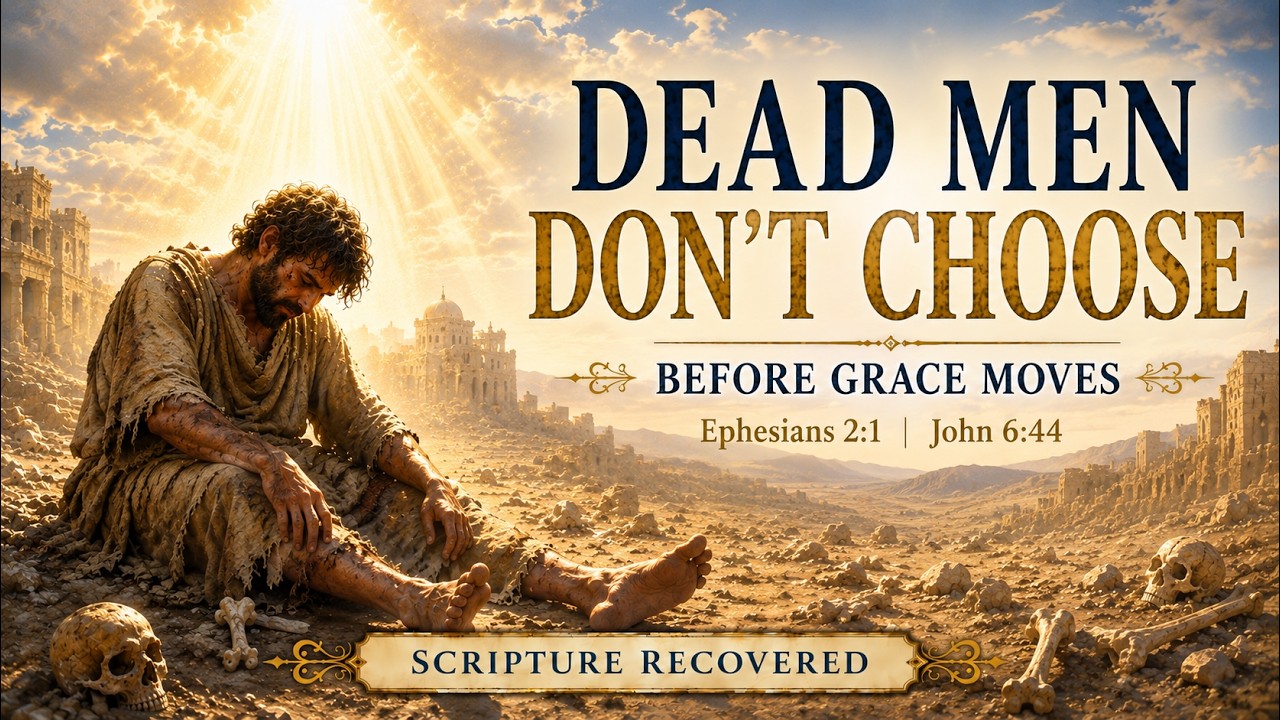
Dead Men Don’t Choose: The Undeniable Truth of God’s Grace

I’ve had it. Lately, I stumbled into a discussion tearing into Calvinism—its theology, its doctrines—and I’m not even a card-carrying Calvinist. I haven’t read his books, haven’t signed up for his club. I just try to follow the Scriptures and the Spirit of God. But what I saw incensed me: ignorance and sheer gall coming against the established Word, picking at gospel verses without context, tossing out the epistles like trash. It’s a butchery of truth, and I can’t shake it off. This battle’s raged for centuries—God’s sovereignty versus human free will—and it’s time to lay it down with the absolute, sledgehammer truth of Scripture. No more dancing around it.

Here’s the question: If we reject the points Calvinism leans on—total depravity, unconditional election, irresistible grace, all of it—what do we undo from the Word of God? Not just a system, but the Bible itself. I’m not here to defend a man-made label; I’m here to let God’s Word speak. And it’s screaming: we’re dead without Him, saved by Him, and He provides it all. Let’s hammer this home.

The Deadness: "Nekros" and Dry Bones

Start here: we’re dead. Not wounded, not limping—”nekros”. Ephesians 2:1—“You were “nekros” in your trespasses and sins.” That’s Greek for corpse. No pulse, no breath, no life. Romans 3:10-12 piles on: “None righteous, no one understands, no one seeks God. All have turned away.” Not some—”all”. Colossians 2:13—“You were “nekros” in your sins.” Dead men don’t choose. They don’t seek. They rot.

Ezekiel saw it too. Chapter 37: a valley of dry bones, scattered, hopeless. God asks, “Can these bones live?” Ezekiel doesn’t play hero—“Lord, you alone know.” Humanly? No chance. Dead bones don’t wiggle. But God says, “Prophesy,” and the Spirit’s breath—”ruach”—sweeps in. Bones rattle, flesh forms, and they stand—a vast army. Who did that? Not the bones. God. Ezekiel 37:14—“I will put my Spirit in you, and you will live.” Dead means “nekros”. No life ‘til God moves.

John 6:44 seals it: “No one can come to me unless the Father who sent me draws them.” “Can”—ability. Without the Father’s pull, we’re stuck. Romans 8:7—“The mind of the flesh is hostile to God; it does not submit, nor can it.” Hostile. Incapable. “Nekros”. If you think a corpse picks itself up, you’re not reading the Bible—you’re writing fiction.

The Process: God Provides All

Salvation’s not steps we take—it’s God’s work breaking us alive. He’s not waiting for us to climb a ladder; He’s emptying our grave. Listen:

He’s the Seed Supplier: 1 Peter 1:23—“Born again, not of perishable seed, but of imperishable, through the word of God.” Matthew 13:37—“The one who sows the good seed is the Son of Man.” Christ plants life in “nekros” soil. We don’t sprout ourselves—He sows.  

He’s the Knocker: Revelation 3:20—“I stand at the door and knock.” Jesus isn’t begging us to knock first—He’s pursuing. Dead men don’t knock back; “nekros” hearts don’t answer—He’s the hunter breaking in. Luke 19:10—“The Son of Man came to seek and save the lost.” He seeks; we’re lost.

He’s the Convictor: John 16:8—“The Spirit will convict the world of sin.” Acts 2:37—Pentecost’s crowd, “cut to the heart,” didn’t self-diagnose. The Spirit stabbed them awake. Dead hearts don’t feel ‘til He strikes.

He Gives His Spirit: Ezekiel 37:14—“I will put my Spirit in you.” John 3:5—“Born of the Spirit.” Titus 3:5—“Saved by the renewal of the Holy Spirit.” No Spirit, no life. He breathes; we don’t.

He Provides the Lamb: John 1:29—“The Lamb of God, who takes away the sin of the world.” Romans 3:25—“God put [Him] forward as a propitiation by his blood.” We didn’t slay the Paschal Lamb—God did. Hebrews 9:12—“With his own blood, he secured eternal redemption.” All Him. For if, when we were enemies, we were reconciled to God by the death of his Son, much more, being reconciled, we shall be saved by his life. Romans 5:10

These aren’t steps to be redeemed—check off faith, grab grace, earn the cross. That’s works, and Ephesians 2:9 says, “Not a result of works, so that no one may boast.” It’s His process, His redemption, His hammer smashing our “nekros” chains. Acts 13:48—“As many as were ordained to eternal life believed.” Ordained, then believed—not the other way around. Romans 2:4—“God’s kindness leads you to repentance.” He leads; we follow. He provides all, or it’s not salvation—it’s self-help.

The Gift: No Paychecks Here

If God does it all, it’s a gift. Ephesians 2:8—“By grace you have been saved through faith… it is the gift of God.” Faith too—not your grit, His grant. Philippians 1:29—“It has been granted to you to believe.” Granted, not grabbed; to them that have obtained like precious faith with us through the righteousness of God and our Saviour Jesus Christ—2 Peter 1:1. Hebrews 12:2—“Jesus, the AUTHOR and perfecter of our faith.” He writes it, not us.

If we choose God without His seed, knock, conviction, Spirit, and Lamb, that ain’t a gift—it’s a paycheck. “I chose wisely; pay me salvation.” Romans 3:27—“Where is boasting? Excluded.” Why? A “nekros” soul doesn’t choose—it’s chosen. John 15:16—“You did not choose me, but I chose you.” 1 John 4:19—“We love because he first loved us.” First. Always Him first. If we kickstart it, why the cross? Galatians 2:21—“If righteousness were through [us], Christ died for nothing.” Dead men don’t earn gifts—they receive them.

The Folly of Free Will Chasing

Some scream, “But free will!” Sure, we respond—”after” He moves. Acts 2:37—“What shall we do?”—comes after the Spirit cuts. John 1:13—“Born not of human decision, but of God.” Charles Spurgeon saw it clear: “Free will carried many a soul to hell, but never a soul to heaven. Anyone who believes that man’s will is entirely free and that he can be saved by it does not believe the fall.” He’s right. Romans 3:23—“All have sinned and fall short.” Free will without grace is freedom to rot, not rise. Romans 8:7—“The flesh “cannot” please God.” Cannot. “Nekros”.

2 Corinthians 4:6—“God… has shone in our hearts to give the light of the knowledge of the glory of God in the face of Jesus Christ.” We didn’t flip the switch—He did. Dead hearts don’t chase light; light chases them. Spurgeon’s not guessing—he’s echoing Scripture: a “nekros” will, unbound by grace, runs to ruin, not redemption.

Lay It Down

This war’s dragged on too long—centuries of dodging the obvious. Scripture’s clear: we’re “nekros” without God, revived by His Spirit, saved by His Lamb. He’s the seed, the knock, the conviction, the breath, the blood. Spurgeon’s words ring true—free will without grace is a one-way ticket down, never up. Reject that, and you’re not just undoing Calvinism—you’re undoing the gospel. Dead men don’t choose; God chooses them. John 6:44. Ezekiel 37. Ephesians 2. Romans 9:16—“It does not depend on human desire or effort, but on God’s mercy.” It’s a sledgehammer of truth, and it’s time to swing it. He provides all. Let the Word silence the noise. Full stop.

Three CRIES, One Grace: My Journey TO LIFE in God

I didn’t choose God like picking a book off a shelf. Faith wasn’t a decision I mulled over—it was a lifeline I grabbed when the darkness of my soul nearly swallowed me whole. This is my story: three cries from a broken life, answered by one grace that remade me. It’s not neat, but it’s real—and if you’re searching for purpose, it’s for you too.

The Void That Defined Me

A gnawing emptiness shadowed me from the start. Childhood wasn’t a warm memory—it was a jagged edge, a void nothing could fill. Hobbies fizzled, distractions faded, and the world seemed to spit me out like Jonah from the whale. Schools branded me hopeless, a lost cause not worth the effort. Church folks tried to reel me in, but their Sunday smiles turned hollow by Monday—I saw the masks. Oddly, I found more truth among unbelievers, rough souls who didn’t judge me like the “righteous” did. Still, I was a misfit, adrift in a life that had no slot for me. Sin’s weight grew, a stranglehold tightening, and I teetered on the edge—ready to end it all.

The Light That Found Me

Then an accident pinned me down—bedridden, trapped, with nothing but time and a sealed Gideon’s Bible on the shelf. Curiosity cracked it open, and I tore into it like a starved man, devouring every page. The Gospels hit hardest, but I didn’t have some grand epiphany—not yet. I just ate, clueless, while God’s Word sank deep, an incorruptible seed (1 Peter 1:23). Days later, it broke loose: a heavenly shift—peace flooded in, the kind Jesus promised, “My peace I give unto you” (John 14:27). Joy surged, and my old crutches—cigarettes, alcohol, filthy words—turned sour. I didn’t pray a formula; grace crashed in unbidden, remaking me from the core.

That’s when I knew why I believe. He’s the light of all humanity (John 1:4), a brilliance only the broken can truly see. In my abyss, that light pierced through—not random, but personal, as if I’d been chosen, predestined for rescue (Eph. 1:4-5). It was God’s goodness, His grace, shattering my despair like dawn through a storm. I was famished, crushed by sin’s burden, and like a dying man lunging for bread, I grabbed it—the life I couldn’t conjure. “Taste and see that the Lord is good” (Psalm 34:8), and I did. I tasted Him, and I’m changed forever.

The Cry That Birthed Me Anew

The shadows didn’t just weigh me down—they crushed me open. Weeping, I’d whisper, “Somebody help me!”—a plea from a soul collapsing under sin. That’s when the Father drew me (John 6:44). Jesus, the Great Physician, came for the brokenhearted (Luke 4:18), and my cry stirred His compassion. I wasn’t righteous or polished—I was a wreck, a child begging. The proud don’t need a Savior, but I did. He heard me, pulling me from the wreckage of my chaos.

Friends saw it: “This isn’t Bob.” The old me—ringleader of ruin—vanished. Those who thrived on my darkness ditched me; one called me a “good chap” gone astray. They drifted off, but I wasn’t alone—I’d been born of God (John 1:13). How do you wrap that in words? With man, it’s impossible; with God, it’s a miracle. I thought this was just for me, a fluke for the few, but no—salvation’s for all (Titus 2:11). I loved the shadows until they broke me. Jesus knocks on every heart (Rev. 3:20)—mine, yours, everyone’s. I was lost, now I’m found—because of Him.

A Call to the Searching

This isn’t a fairy tale for the chosen few—it’s a lifeline for the wrecked. If you feel that void, if darkness chokes you, cry out. Crack open His Word, taste His goodness. He’s the Life of man, the Physician who heals, and He’s still reaching today. Three cries—despair, discovery, deliverance—led me to one grace. Will you let Him in?

The CURSE of SANCTIMONY and the Grace That Breaks It

Picture a man standing tall, chest puffed with pride, declaring his soul whole—while the Savior he claims to follow passes him by, seeking the broken instead. Jesus said it plainly: “I have not come to call the righteous, but sinners” (Matthew 9:13). Again, “It is not the healthy who need a physician, but the sick” (Matthew 9:12). His mission was clear—yet so many miss it, blinded by a righteousness of their own making. This is the paradox of pride: those who need Him most often see Him least, while the wretched and weary find their way to His feet. And worse, even those who’ve tasted His grace can forget its source, trading humility for a gavel. Sanctimony, it seems, is both a barrier to salvation and a temptation after it—a curse that only God’s grace can break.

The Unsaved: Sanctimony as a Curse

The New Testament reveals a stark truth: not everyone senses their need for a Savior. Some souls stand content, convinced of their own wholeness. They are the “righteous” Jesus spoke of—not righteous in God’s eyes, but in their own. To them, their virtues gleam like polished armor, hiding the decrepitude beneath. Scripture calls all humanity depraved—“There is no one righteous, not even one” (Romans 3:10)—yet these refuse to see it. Their sanctimony is their doom, a self-made prison barring them from the light.

Think of the Pharisee in Jesus’ parable, praying loudly in the temple: “God, I thank you that I am not like other people—robbers, evildoers, adulterers” (Luke 18:11). He’s not pleading for mercy; he’s boasting of merit. Contrast him with the tax collector, head bowed, crying, “God, have mercy on me, a sinner” (Luke 18:13). One leaves justified; the other does not. We see this today: the moralist insisting, “I’m a good person,” the religious legalist tallying deeds, the secular humanist smug in self-sufficiency. Pride isn’t just a religious trap—it’s cultural. In an age of cancel culture, where moral superiority fuels outrage, sanctimony thrives, blinding people to their own flaws. They cannot turn to God like a child (Matthew 18:3)—humility is an impossibility to such. Their pride, like a stone wall, keeps grace at bay.

The Saved: The Leaven of the Pharisee

The trap doesn’t end with salvation. Those made whole by the Spirit of Christ can fall into a subtler snare: the leaven of the Pharisee. Jesus warned, “Beware of the yeast of the Pharisees and Sadducees” (Matthew 16:6)—a creeping pride that rises unnoticed. Some, once broken and redeemed, begin to sit as sanctimonious judges, condemning the weak who stumble beneath their lofty standards. They forget the grace that lifted them from the mire, deeming themselves holier than the rest.

Consider Augustine, the early church theologian. Before conversion, he was a proud rhetorician, reveling in intellect and sensuality, blind to his need for God. Even after salvation, he wrestled with pride, confessing how easily it returned. Today, it’s the believer, rescued from addiction, sneering at the struggling drunk; the church elder, once lost in sin, wielding doctrine like a whip rather than a balm. Worse, this evil stance can hinder the whole work of God to save the lost and brokenhearted. Their mission—to heal those in the slough of despond, deep in sin—shifts to playing church organizations, upholding structures over souls. How can anyone feel the pain or wretched state of another when the one called to tend the lost is hardened by pride and loftiness? It’s a devastating betrayal: they obstruct the Spirit’s work, shutting their hearts to His fruits meant to reach a dying world. They’ve traded the cross for a pedestal, forgetting Paul’s words: “By grace you have been saved through faith—and this is not from yourselves, it is the gift of God” (Ephesians 2:8-9). Had God not intervened, they’d be no different from the wretched they scorn. Their righteousness isn’t theirs—it’s His—yet the leaven of pride blinds them to this truth.

The Impossibility of Salvation—And Its Possibility

Now we see why not everyone can be saved. Pride, that impossible wall, bars the soul from grace. The sanctimonious—whether unsaved or backslidden—cannot humble themselves as children must. Their self-sufficiency is a curse no human effort can break. To kneel, to cry out, “I am the sick one, the sinner”—this is beyond them. Left to themselves, they are lost.

Yet Jesus offers a breathtaking twist: “With man this is impossible, but with God all things are possible” (Matthew 19:26). Even a soul drenched in pride can be pierced by grace—if the Father wills it. “No one can come to me unless the Father who sent me draws them,” Christ declares (John 6:44). How does He draw them? Sometimes through suffering, as with Job, whose pride was broken by loss until he saw God anew (Job 42:5-6). Sometimes through revelation, as with Paul, struck blind on the Damascus road to face his zeal’s folly (Acts 9:3-9). Sometimes through love, as with the prodigal son, welcomed home despite his shame (Luke 15:20-24). Salvation isn’t a human achievement; it’s a divine act. The sanctimonious soul, hardened beyond hope, might yet crumble—if God chooses to draw them near. This isn’t a promise that all will be saved, but a testament to God’s power: no heart is too proud for Him to reach, though many will resist His call.

The Remedy: Grace and Humility

What, then, is the way forward? For the unsaved, it’s a breaking—shattering the illusion of self-righteousness to see their need. For the saved, it’s a staying broken—clinging to grace as their lifeline. Both must return to the childlike faith Jesus demands, a dependence that boasts in nothing but Him. “Let the one who boasts boast in the Lord” (1 Corinthians 1:31), Paul writes, for apart from God’s mercy, we are all the base things of the world—chosen not for our merit, but His glory (1 Corinthians 1:27-28).

How do we live this? Through prayer, confessing our pride daily—“Search me, God, and know my heart” (Psalm 139:23). Through community, where the broken sharpen one another, as iron sharpens iron (Proverbs 27:17). Through service, washing the feet of the fallen as Jesus did (John 13:14), remembering we were once them. The saved must never forget: it’s grace that saves and grace that sustains. To judge the broken is to deny the cross that redeemed us—and to hinder the Spirit’s work. Instead, let us weep with, lift up, and walk alongside those still lost.

Conclusion: The Father’s Draw

Salvation eludes the proud not because God cannot save, but because they will not see. Their sanctimony—before or after grace—is a veil only the Father can lift, a hardness that can derail His mission to the lost. In a world where pride fuels both religious hypocrisy and cultural wars, the call remains: yield to the One who chooses the weak to shame the strong. Where human will fails, divine grace prevails—if only He draws them near. For the unsaved, it’s a summons to surrender. For the saved, it’s a plea to abide, lest we obstruct the Spirit’s healing flow to a broken world. Will we resist, or kneel? The answer lies not in our strength, but in His.

The Absolute Truth of BAPTISM: Unveiling the Apostolic Witness Against the DIDACHE’S Shadow

An Incontrovertible Call to Return to the Name of Jesus Christ

Confusion cripples millions—Christians and leaders pluck Gospel snippets, blind to the covenants, Israel’s role, and the Spirit’s light, deceived by traditions and texts that strain at gnats while swallowing camels. The Didache stumbles with its Trinitarian formula, a relic or revision misaligned with Scripture’s arc. This article buries error, silences critics, and lifts high the absolute truth: baptism “in the name of Jesus Christ for the remission of sins” is God’s unassailable standard, proven by the apostles, rooted in His plan from Israel to the Gentiles. Let’s strip away the layers and see the light as clear as water.

The Didache: A Misstep in Time?

The Didache, or “The Teaching of the Twelve Apostles,” is a late first- or early second-century text (ca. 50–120 AD), rediscovered in 1873 via a 1056 AD manuscript (Codex Hierosolymitanus). Scholars peg it to a Jewish-Christian community in Syria or Palestine, not the twelve “Apostles of the Lamb” (Matthew 10:2–4, Revelation 21:14). Its anonymity, composite nature—borrowing Jewish “Two Ways”—and post-apostolic structure (bishops, deacons) betray a later hand. Its four sections—moral teachings (1–6), liturgical rules (7–10), church order (11–15), eschatology (16)—offer a historical glimpse. Credible—baptism in running water, Eucharistic prayers echo norms (Acts 2:38, 1 Corinthians 11:23–25)—but not Scripture (Eusebius, Ecclesiastical History 3.25.4; Athanasius, Festal Letter 39). It lacks Christological depth—a shadow, not the light.

Didache 7: Trapped in the Old?

Didache 7 instructs: “Baptize into the name of the Father, and of the Son, and of the Holy Spirit, in living water… if you have neither, pour water three times on the head… let the baptizer fast, and the baptized…” mirroring Matthew 28:19. Yet Acts reveals the apostles baptizing “in the name of Jesus Christ” (Acts 2:38, 8:16, 10:48, 19:5). Why this divergence? Jesus’ earthly words came under the Old Covenant—“when the fulness of the time was come, God sent forth his Son, made of a woman, made under the law, To redeem them that were under the law” (Galatians 4:4–5)—born to fulfill the Law’s demands, yet His blood remained unspilled, without which there is no remission (Hebrews 9:22), and the New Covenant stood unratified until His death sealed it (Hebrews 9:15–18). Parables veiled truth from the masses (Matthew 13:10–13), awaiting the Spirit’s full revelation to the disciples (John 16:13). The Spirit was *with* them, not yet *in* them (John 14:17), and His name lingered unglorified in its redemptive power (John 17:1). Didache 7 lingers in this pre-redemption shadow, tethered to an era before the cross unleashed salvation, or perhaps bears the mark of a later hand—F.C. Conybeare posits Matthew 28:19’s Trinitarian phrasing as a second-century edit, a claim the 1056 AD manuscript cannot disprove. It fixates on procedure—running water, fasting, pouring thrice—tithing mint while the weightier matter of remission lies neglected (Matthew 23:23), silent on the sin-cleansing power Acts boldly proclaims in Jesus’ name.

Jesus’ Mission: Israel First

Jesus declared, “I am not sent but unto the lost sheep of the house of Israel” (Matthew 15:24). His earthly ministry targeted the Jews, to whom “pertained the adoption, and the glory, and the covenants… and the promises” (Romans 9:4). Matthew 28:19, though post-resurrection, reflects His pre-glorification humility—blood shed (Hebrews 9:22), New Covenant opened (Hebrews 10:19–20), yet not enacted until Pentecost (Acts 2). Jesus, in His self-effacing humility, sought not His own glory but the Father’s (John 17:4), deflecting exaltation during His earthly ministry; only after His sacrifice does the Father exalt Him (Philippians 2:9), and the Spirit, in turn, glorifies both Father and Son (John 16:14), unveiling His name’s supremacy post-Pentecost. Without saving Israel, the rest couldn’t be saved—their acceptance or rejection was pivotal.

Israel’s Fall, Gentiles’ Gain

Romans 11 unveils a divine pivot: “Have they stumbled that they should fall? God forbid: but rather through their fall salvation is come unto the Gentiles, for to provoke them to jealousy” (Romans 11:11). Israel’s temporary stumble—not a permanent fall—opened the door, grafting Gentiles into the beloved (Romans 11:17–24, Ephesians 1:5–6). Without their fall, the nations would have no adoption. “When the fulness of the time was come, God sent forth his Son, made of a woman, made under the law, To redeem them that were under the law, that we might receive the adoption of sons” (Galatians 4:4–5). Pentecost ignited this era—grace and truth came by Jesus, but the Spirit of Christ became the inaugurator of grace, so to speak (Acts 2), glorifying Jesus’ name—“He that descended is the same also that ascended up far above all heavens, that he might fill all things” (Ephesians 4:10). Yet, until Acts 10, the church remained predominantly Jewish, still shadowed by the Law’s influence, as seen in their temple gatherings (Acts 2:46) and Peter’s initial recoil from Gentile uncleanliness (Acts 10:14). Only when Cornelius’ household receives the Holy Spirit (Acts 10:44–48) does the Gentile church truly emerge, Peter’s vision shattering the legal barrier: “God hath shewed me that I should not call any man common or unclean” (Acts 10:28). Before this, Jesus was bound in the body of His flesh, but now, ascended, He’s omnipresent through His Spirit—“The Lord is that Spirit” (2 Corinthians 3:17). As Jesus foretold, “Verily, verily, I say unto you, The hour is coming, and now is, when the dead shall hear the voice of the Son of God, and they that hear shall live” (John 5:25)—this spiritual resurrection, the quickening of the Spirit, has dawned. “In Christ Jesus dwells all the fullness of the Godhead bodily” (Colossians 2:9), and “God exalted Him… that at the name of Jesus every knee should bow” (Philippians 2:9–11), for “There is no other name under heaven… by which we must be saved” (Acts 4:12). In this dispensation, God recognizes no other name but Jesus Christ, the name that saves and subdues devils. Demons tremble (James 2:19); He defeated the strong man (Mark 3:27). The Old Testament itself foreshadows this glorious truth, pointing beyond its shadows to the One who fulfills them all: “They were all baptized unto Moses in the cloud and in the sea” (1 Corinthians 10:2)—but unto whom are we baptized now? It was Christ’s Spirit working in them even then, “the Spirit of Christ which was in them” (1 Peter 1:11), guiding Israel through Moses as a type of the greater Deliverer to come. Stephen proclaimed, “This is that Moses, which said unto the children of Israel, A prophet shall the Lord your God raise up unto you of your brethren, like unto me” (Acts 7:34–37), echoing Deuteronomy’s promise of the Messiah. And Jesus Himself unveiled His eternal identity: “Before Abraham was, I am!” (John 8:58). He is our greater Deliverer, the timeless Christ whose name now reigns supreme over every shadow of the Law.

Consider who stands to gain when that name is not invoked—when the church fails to invoke Jesus’ name, whether in baptism or faith, it hands victory to the devil, who thrives on rebellion against God’s will. This rebellion festers, weakening the Spirit’s power that once fueled the apostles’ miracles and witness, leaving us spiritually diminished today compared to their thriving era. Moreover, this shift leads to the rise of mere believers, rather than devoted disciples, who no longer passionately follow His teachings, rejecting sound doctrine in favor of doctrines of devils, slowly diluting the work of salvation and diminishing the power to redeem souls. See how contrived the devil is in his subtle efforts to undermine the truth. The devil does not attack the whole truth outright, but subtly alters it—either removing or diminishing its core power, rendering it ineffective. His work is meticulous, premeditated, and often difficult to discern.

Once the name, which is endowed with all authority and power, is removed, the consequences are clear. While individuals may undergo baptism and partake in other rites, the outcome remains unchanged, and no genuine work of redemption is imparted to them. I have often pondered why many new converts appear to reflect behavior even more grievous than that of the unconverted. The Spirit’s work and operations are manifest only when the name that God has highly exalted is invoked, for it is through that name alone that authentic transformation and the redemptive power of salvation are brought to fruition.

Apostolic Truth: Remission in His Name

Post-Pentecost, apostles preached: “Repent and be baptized… in the name of Jesus Christ for the remission of sins” (Acts 2:38). “Wash your sins away, calling on His name” (Acts 22:16). “Baptism… saves you… through the resurrection of Jesus Christ” (1 Peter 3:21). It is always through His name—whether for the Samaritans (Acts 8:16) or Cornelius (Acts 10:48)—that we are united to His death and resurrection, as Paul writes in Romans 6:3–4. His name is the foundation of our salvation, uniting us to His redemptive work. Understand this: In Christian theology, the name of Jesus is not just a label or title but is deeply connected to His person and His divine authority. The name represents His identity, His essence, and His salvific work. When Scripture speaks of the power of His name, it is referring to the person of Jesus Christ and all that He is—His death, resurrection, and authority as the Son of God. So, invoking His name is, in a sense, invoking the very presence and power of Christ Himself. Even Matthew 28:19’s “in the name of” points to Jesus—singular, the name of Father, Son, and Spirit, for in Him dwells all (Colossians 2:9). How can I invoke “in the name of the Father, the Son, and the Holy Ghost” when it isn’t a name, and God Himself authorized only one name, highly exalted, in whom dwells all the fullness of the Godhead bodily? If we apply the Trinitarian formula, we might as well invoke Jehovah or other names of God in baptism—but that would be subversion or perversion of truth. Is there any other name by which devils submit, sinners are saved, and the spiritually blind restored sight? No—“Neither is there salvation in any other: for there is none other name under heaven given among men, whereby we must be saved” (Acts 4:12). Jesus said, “I am the way, the truth, and the life: no man cometh unto the Father, but by me” (John 14:6). Demons fled (Luke 10:17), the lame walked (Acts 3:6), the dead rose (John 11:43–44)—all in His name (Mark 16:17–18, Acts 16:18).

The Spirit revealed this; apostles grasped it. Heathens call their gods by name—Zeus for power, Athena for wisdom, and countless others—each tied to a need. So too, God commands us to call on one name: Jesus, not a mere label but imbued with authority to deliver and transform, unmatched by any other. Reluctance to invoke it forfeits redemption, healing, and deliverance. Can we baptize with just ‘the name of the Father, Son, and Holy Spirit’—what is that, even? It’s not a name, but a title. What is that one name? It is Jesus Christ—for the apostles understood the name and they followed that pattern, knowing it as the name of God, the true God and eternal life, in whom dwells all the fullness of the Godhead bodily (Colossians 2:9, 1 John 5:20), exalted above all as King of kings (Philippians 2:9–11), to whom the Father has committed all judgment, that all should honor Him as they honor the Father (John 5:22–23). These gods—devils, as Scripture reveals—yield only to Him, for He alone triumphs over their works (1 John 3:8). Israelites called God ‘El,’ a name Canaanites gave their god too, and ‘Baal’—meaning master or husband—echoes in Isaiah where ‘your Maker is your husband’ (Isaiah 54:5). Pagans named their gods for power or harvest, yet OT prophets boldly applied such terms to the true God, subverting false deities. Even Paul, in Athens, took pagan words—‘in him we live’ (Acts 17:28)—to unveil the Creator. Heathens grasp naming’s power; so too, God commands one name: Jesus. Baptism’s authority hinges on that name—remission of sins is no mere rite but a covenantal act, the first step to peace with God (Romans 5:1), burying us with Christ (Colossians 2:12). The devil despises it, for it threatens his dominion over sin (1 John 3:8). The book of Acts trumps titles. No eisegesis muddies these verses—they shine clear as water.

Didache’s Fatal Flaw

Didache 7 falters—whether as a pre-Pentecost relic or a post-apostolic blunder—by ignoring the name of Jesus in favor of titles, remaining silent on remission, and fussing over minor details while neglecting the weightier matter of salvation (Matthew 23:23–24). It overlooks Israel’s role, the Spirit’s revelation, and the inclusion of the Gentiles. The apostles, filled with the Spirit, baptized in the name God has exalted. Thus, it either reflects an outdated perspective or has been tampered with, failing to align with apostolic truth.

The Root of Confusion

Which Bible are they reading? Leaders misread Gospels, blind to Jesus’ Israel-first mission (Matthew 15:24), covenant shift, and Gentile grafting (Romans 11). Cherry-picking Matthew 28:19 over Acts, they cling to titles, not the name Jesus—the Spirit’s revelation—sowing disarray (Ephesians 2:20). It’s a fatal mistake: they strain at mint and cumin, neglecting the core of the gospel, leaving millions deceived by muddied waters. Why does the devil resist baptism if it’s powerless? Because it’s God-ordained for remission (Acts 2:38), uniting us to Christ (Romans 6:3–4)—a threat he obscures through tradition. The Jews knew authority rests in a name—“By what authority doest thou these things?” (Matthew 21:23)—yet we invoke titles, not Jesus, producing shallow believers, not disciples (Matthew 28:19–20). Devils roam Christendom, for we’ve strayed from the name that saves.

The Call to Truth

The Didache fades—Acts reigns. Baptism “in the name of Jesus Christ for the remission of sins” is Scripture’s absolute truth, life-altering and eternal, rooted in God’s plan from Israel’s fall to Gentile grace. Follow the apostles, prophets, and teachers upon whom the church is built (Ephesians 2:20), not blind guides or post-apostolic echoes. Bury speculation. Silence the opposition. Lift high the Name above all names. The Spirit has spoken—let the church return to this unassailable standard and end the confusion once for all.

The RESURRECTION of the DEAD: A Profound Spiritual Lesson in the Gospels

In the gospels, we witness Jesus performing incredible miracles, one of the most striking being his raising of the dead. The physical resurrection of individuals like Lazarus, the widow’s son, and Jairus’ daughter astonishes us and speaks powerfully about Jesus’ divine authority. However, if we are to truly understand the significance of these miracles, we must look beyond their physical nature and see them as part of a larger spiritual narrative. The real depth of these resurrections is not just about physical life returning to dead bodies but about Jesus preparing the way for a deeper, eternal resurrection of the soul—one that would be fully realized through His death, resurrection, and the coming of the Holy Ghost.

In this was manifested the love of God toward us, because God sent his only begotten Son into the world, that we might live through him (1 John 4:9).

In 1 John 4:9, the Apostle John underscores the manifestation of God’s love through the sending of His only begotten Son, Jesus Christ, into the world, ‘that we might live through him.’ This spiritual life begins now, as Paul writes in Ephesians 2:1 and 6, ‘And you hath he quickened, who were dead in trespasses and sins… and hath raised us up together and made us sit together in heavenly places in Christ Jesus.’ Here, Paul captures both the immediate renewal of the soul and its eternal position in Christ, a resurrection from spiritual death to vibrant life. This new life is about more than mere survival; it represents a transformation empowered by God’s love and grace, healing the sickness of sin and aligning believers with His will. The verse invites a deeper understanding of salvation, showing that it is not only a future promise but a present reality, wherein the love of God continually transforms and revives the believer’s spirit. Furthermore, this transformation is brought to fruition through the promise of the Holy Spirit. Jesus said, Verily, verily, I say unto you, He that hears my word and believes on him that sent me, hath everlasting life, and shall not come into condemnation; but is passed from death unto life. Verily, verily, I say unto you, The hour is coming, and now is when the dead shall hear the voice of the Son of God, and they that hear shall live. “For since by man came death, by man came also the resurrection of the dead. For as in Adam all die, even so in Christ shall all be made alive” (1 Corinthians 15:21-22). This verse clearly articulates the concept of the resurrection of the dead, emphasizing that it refers to a raising to life according to the spirit rather than the body itself.

As Jesus declared in John 14:12, believers would do greater works than He did—not merely in miraculous deeds, but in the spiritual empowerment provided by the Holy Spirit. This divine empowerment, bestowed upon believers after Christ’s ascension, equips them to live out this spiritual renewal in every facet of life, enabling them to carry out the greater works Christ spoke of—that is, they would become life-givers as well, imparting the very life and power of the Spirit to others through the transformative work of Christ in them. This is exemplified in the mission given to the Apostle Paul: “To open their eyes, and to turn them from darkness to light, and from the power of Satan unto God, that they may receive forgiveness of sins and inheritance among them which are sanctified by faith” (Acts 26:18). In this way, Paul’s commission reflects the broader calling for believers to bring about spiritual renewal and transformation through the work of the Holy Spirit.

This may come as a surprise to some, but could it be that the resurrection we often await—a future raising of the body—rests upon a spiritual resurrection that has already begun? Scripture calls this the ‘first resurrection’ (Revelation 20:6), a present reality for those in Christ. As Paul declares in Ephesians 2:6, ‘And hath raised us up together and made us sit together in heavenly places in Christ Jesus,’ we are already lifted from spiritual death, seated with Him in the heavenly realms. This is not to deny the future renewal of our bodies but to affirm that it hinges on the eternal life already at work within us. Jesus Himself said, ‘The hour is coming, and now is when the dead shall hear the voice of the Son of God, and they that hear shall live’ (John 5:25). Without this spiritual awakening, how could our bodies be quickened by the Spirit? For the spiritually dead, any raising would lead only to judgment—the ’second death’ (Revelation 20:14)—but for those alive in Christ, the first resurrection secures an inheritance that the physical will one day fully reflect.

How can we expect our physical bodies to be quickened by the Spirit of God without first experiencing spiritual renewal? Shouldn’t the presence of eternal life within us make our bodies eligible to be raised to life? If a person is spiritually dead, how can they be raised except to face the second death? Revelation 2:11; 20:6,14; 21:8

It deeply troubles me when ministers of the gospel attempt to imitate Jesus by trying to raise the dead physically, using it as a means to showcase their ministerial power and validate themselves before men. Yet Jesus said, “Ye shall do greater things than these,” and they seem to have no understanding of what the New Testament is truly about. While the Spirit of God can raise someone who has experienced physical death, this pales in comparison to the power of raising someone who is spiritually dead. If we limit death to mere physical separation, its significance diminishes. However, death is not just the separation of the body; it is a spiritual condition, representing estrangement from the living God.

Physical Resurrection as a Foreshadowing of Spiritual Resurrection

While Jesus raised the dead physically, these acts were not simply displays of miraculous power. They were signs, symbols, and foretellings of a far greater reality—spiritual resurrection. These miracles pointed to Jesus’ ultimate mission: to conquer spiritual death, remove the jurisdiction of sin, and destroy the power of Satan over humanity. Through His death and resurrection, He opened the way for the Spirit to awaken souls, fulfilling His promise that those who hear His voice shall live.

In the gospels, when Jesus declares, “I am the resurrection and the life” (John 11:25), He is not merely speaking to a physical truth but to a far-reaching spiritual reality. The raising of the dead was a precursor to what Jesus would accomplish through His death and resurrection. The physical resurrections demonstrated His authority over death but also highlighted a deeper, more eternal promise—the restoration of humanity to God through spiritual rebirth. The work that Jesus did physically on earth was a foreshadowing of the spiritual resurrection that would come with the outpouring of the Holy Ghost at Pentecost.

The spiritual death resulting from Adam’s sin (Genesis 3) also brought about physical death, not the other way around. Spiritual death set the stage for the eventual physical death of the body. This can be understood by recognizing that the spirit of man is the “candle of the Lord” (Proverbs 20:27), and if that candle is extinguished, the whole body is in darkness—as the Gospels point out in Matthew 6:22–23: “The light of the body is the eye; if therefore thine eye be single (ἁπλοῦς – haplous-spiritually healthy), thy whole body shall be full of light. But if thine eye be evil (πονηρός – ponēros, a state of spiritual blindness or moral corruption—moral evil or wickedness—used to describe things or actions that are inherently corrupt, malicious, or harmful), thy whole body shall be full of darkness. If therefore the light that is in thee be darkness, how great is that darkness!” Here, the “eye” symbolizes the condition of the spirit within a person. Just as the eye governs the flow of light into the body, the state of the spirit determines whether the individual is filled with spiritual light or darkness. When the spirit is dead or corrupted—like a candle that has been extinguished—the whole person remains in spiritual darkness. This spiritual condition permeates every part of life, leading to confusion, brokenness, and separation from God. As James 2:26 says, “For as the body without the spirit is dead, so the spirit that is made alive alone can give light to the whole body.” This underscores that the spirit, once revived in Christ, is the source of light for the whole person. For God, who commanded the light to shine out of darkness, has shined in our hearts to give the light of the knowledge of the glory of God in the face of Jesus Christ (2 Corinthians 4:6). Only by bringing the spirit of man back to life through Christ can the body also expect resurrection, as the restoration of the spirit is the precursor to the physical resurrection. The reawakening of the spirit to new life through Christ guarantees that the body, too, will be transformed and quickened in the fullness of time. This is why Jesus Christ declared, Verily, verily, I say unto thee, Except a man be born of water and of the Spirit, he cannot enter into the kingdom of God. That which is born of the flesh is flesh, and that which is born of the Spirit is spirit (John 3:5, 6).

The Greater Works of Spiritual Resurrection

The Greater Works: Spiritual Life Through the Gospel

In John 14:12, Jesus delivers a stunning promise: “Verily, verily, I say unto you, He that believeth on me, the works that I do shall he do also; and greater works than these shall he do; because I go unto my Father.” At first, this seems almost impossible to grasp. Jesus raised Lazarus from the tomb, gave sight to the blind, and stilled the storm—how could His followers possibly exceed such feats? The key lies in understanding that Jesus was not speaking solely of physical miracles but of a far greater work: the spiritual resurrection of souls, made possible through the Holy Spirit after His ascension.

This promise came to life on the day of Pentecost, when the Holy Ghost descended upon the disciples in tongues of fire. Peter, once a fisherman who denied Christ, stood before a crowd in Jerusalem and preached the gospel with such power that “about three thousand souls” were added to the church that day (Acts 2:41). This was no mere physical healing—it was a mass resurrection of hearts, a turning from spiritual death to life in Christ. Where Jesus raised one Lazarus, the disciples, empowered by the Spirit, raised thousands into eternal life through the proclamation of the gospel. This, Jesus declared, was the “greater work”—not because it diminished His miracles, but because it addressed humanity’s deepest need: reconciliation with God.

Consider, too, the transformation of Saul of Tarsus. A persecutor of the church, he was struck blind on the road to Damascus, only to rise as Paul, a vessel of the gospel who would pen much of the New Testament (Acts 9:1–18). His physical blindness was healed, yes, but the greater miracle was the awakening of his spirit—a resurrection from the death of sin to a life that would ignite the early church. These examples reveal that the “greater works” are not about outdoing Jesus in spectacle but about extending His mission through the Spirit’s power, bringing life where death once reigned.

From Old Covenant Signs to New Covenant Reality

To fully grasp this shift from physical to spiritual resurrection, we must consider the context of Jesus’ ministry. When He walked the earth, Israel still operated under the Old Covenant, a system of signs and shadows awaiting fulfillment. The physical resurrections—like the widow’s son raised by Elijah (1 Kings 17:17–24)—were powerful yet temporary. The boy lived again, but he would one day die anew. These miracles were foretastes, pointing to a reality that could only be unveiled after Jesus’ death and resurrection ushered in the New Covenant.

Hebrews 9:8 tells us, “The way into the holiest of all was not yet made manifest, while as the first tabernacle was yet standing.” Until Christ, the Testator of the New Covenant, shed His blood, the full outpouring of the Holy Spirit remained sealed. The physical miracles Jesus performed were like rays of light breaking through a veil, illuminating what was to come. When He raised Jairus’ daughter (Mark 5:35–43), it was a sign of His authority over death—but it also foreshadowed the day when, through the Spirit, countless souls would be raised to eternal life. The Old Covenant offered glimpses; the New Covenant delivered the reality.

Contrast Elijah’s miracle with the Samaritan woman at the well (John 4:7–29). Elijah restored a body to life, but Jesus, through a single conversation, revived a soul. She left her waterpot—not because her physical thirst was quenched, but because her spirit had tasted living water. Her testimony then sparked a revival in her village, a ripple effect of spiritual life that outshone any temporary restoration. This is the New Covenant promise: not just signs, but transformation, fulfilled at Pentecost when the Spirit empowered believers to become conduits of resurrection.

Awakening to Our Resurrection Life

This brings us to a staggering truth: believers in Christ have already experienced this spiritual resurrection. Paul writes in Ephesians 2:5–6, “Even when we were dead in sins, [God] hath quickened us together with Christ… and hath raised us up together, and made us sit together in heavenly places in Christ Jesus.” This is not a future hope deferred to the end of days—it is a present reality. When we are born again, we pass from death to life (John 5:24), our spirits awakened by the same power that raised Jesus from the tomb (Romans 8:11). We are, even now, seated with Him in heavenly places, far above the dominion of sin and death.

Yet how often do we live as if this were true? Many believers fix their eyes on a distant resurrection, awaiting a physical transformation while overlooking the spiritual victory already won. Could it be that we miss the fullness of our resurrection life because we’ve yet to grasp its present power? Imagine the implications: if we are seated with Christ, how should that change the way we face temptation, fear, or suffering? The early church understood this. When Paul confronted the Areopagus in Athens (Acts 17:22–34), he didn’t perform a physical miracle—he preached the risen Christ, and souls like Dionysius and Damaris were raised to faith. This is our calling too—to live as resurrection people, wielding the gospel as a life-giving force.

This misunderstanding isn’t new. Even today, some emphasize physical healings or prosperity as the pinnacle of faith, echoing the crowds who sought Jesus for loaves rather than the Bread of Life (John 6:26–27). But the true miracle is the soul set free from sin’s chains, a victory that endures beyond this frail body. As Hebrews 12:22 declares, “Ye are come unto mount Sion, and unto the city of the living God, the heavenly Jerusalem”—not will come, but are come. We enter by faith, as children, already partakers of the first resurrection.

Conclusion: Living as Resurrection People

The physical resurrections of the Gospels—Lazarus stepping from the tomb, the widow’s son restored—were breathtaking previews of Christ’s power. Yet they were but shadows of the greater work He entrusted to us: to raise the spiritually dead through the gospel, empowered by the Holy Ghost. Just as Jesus called Lazarus forth by His voice, we are called to step into the world as agents of resurrection, bearing the life of Christ to those entombed in darkness.

Picture a church fully awake to this reality: death defeated, sin powerless, every believer a beacon of eternal light. This is not a distant dream—it is the victory Christ has already secured. The first resurrection has begun in us, and its power pulses through our lives today. Let us not linger in the tomb of ignorance or fear, but rise to walk in the Spirit, proclaiming with Paul, “O death, where is thy sting? O grave, where is thy victory?” (1 Corinthians 15:55). For we are more than conquerors, alive in Him, now and forever.

The Power of DEATH and the Gift of LIFE: A Choice Between Two Realities

Death stands as the most powerful and unrelenting force humanity will ever confront—an inescapable grip that no effort can ultimately outrun. No matter how far we flee, how much we distract ourselves, or how advanced our medicine becomes, its reach claims all: the rich and the poor, the healthy and the sick, the great and the small. This is the undeniable truth we must face: death is the ultimate equalizer, leveling every life in its path.

In response, humanity grasps at anything to dull the weight of this reality. We seek solace in fleeting comforts—addictions like fentanyl, alcohol, and a thousand other vices, each a hollow attempt to silence the restless soul. People turn to twisted forms of entertainment, depraved ways of living, and endless distractions, all in a futile effort to mask the deep spiritual separation from the life of God. Consider the evidence: wars rage, murders multiply, lies fester, divorces fracture families, and punishments echo through societies—all stemming from death’s pervasive dominion. It invades every corner, corrupting the body with incurable diseases, blood disorders, and the ravages of time, while breaking the soul through betrayal, abandonment, and the harshness of this world.

How strange is it that we run to everything but the life freely offered to us? There is, however, a profound alternative.

One has conquered this overwhelming force: Jesus Christ of Nazareth. He faced death head-on, in its full fury, and emerged victorious through His death on the cross and resurrection. No other figure in recorded history can claim such a feat. The empty tomb, documented in the Gospels, and the rapid spread of Christianity despite Roman persecution stand as testaments to this unique triumph. He did not merely delay death; He shattered its power, rendering it powerless over those who believe. This is the gospel: through His sacrifice, death no longer holds the final word, and eternal life—a restored connection with God—becomes available to all.

Scripture affirms this in 1 John 4:9: “In this was manifested the love of God toward us, because that God sent his only begotten Son into the world, that we might live through him.” Jesus did not come to offer a better way of coping or to teach us resilience. He came to abolish death itself, to break the chains that have bound humanity since the fall. The same Spirit that raised Him from the grave is offered to those who believe—a Spirit that quickens us, fills us with divine life, and empowers us to transcend the limits of this dying world.

Yet, here lies the tragedy: though He bore the consequences of sin and made this ultimate sacrifice, many still refuse the gift. Why? Pride drives some to cling to illusions of self-sufficiency, rejecting any need for a savior. Ignorance blinds others, leaving them unaware of the light within reach. Suffering—grief from loss, scars from abuse, or doubts born of injustice—causes many to question whether such a gift could be real. Instead, they fill the void with temporary pleasures: drugs, distractions, or fleeting thrills that crumble under scrutiny. Is it not tragic that the very life we need most—eternal life—is the thing we so often resist?

Death reigns supreme in this world, its evidence inescapable in every graveyard, every hospital bed, and every broken heart. But Jesus has broken its dominion. He has overcome the grave, and His victory can become ours through faith. The choice is clear yet profound: we can persist in the path of death, chasing empty comforts that fade, or we can turn to the One who has defeated it. History and Scripture declare His triumph; the Spirit extends His life to us now.

So, I ask you: Why would anyone choose the grip of death over the gift of life when the contrast is so stark? Every person must confront death, but through Christ, we can also conquer it. His life is ours to claim, freely offered to all who will believe. Will we persist in the shadow or embrace the light?