Two and Yet One: Understanding the Distinction Between the Holy Ghost and the Holy Spirit

By B.V. Thomas | The Hermeneutical Quill

The Distinction That Would Not Let Me Go

There are moments in the study of Scripture when your mind gets suspended on a word — a single syllable, a capitalisation, a preposition — and something within you knows, with a certainty that precedes explanation, that something is locked in there. That the Spirit placed it there deliberately. That it is not a coincidence, not a copyist’s variation, not a translator’s preference. That it is a door, and it is waiting to be opened.

That is what happened to me every time I worked through the New Testament with careful eyes. I could not shake it. The distinction kept surfacing — the Holy Ghost here, the holy Spirit there — and my spirit would not let me pass over it the way a casual reader might, with a shrug and a note that says “same thing, different translation.” It did not feel like the same thing. It felt like a distinction the Holy Ghost Himself had placed into the Canon and was now pressing me to examine.

I will be honest about what it cost to pursue that examination. There is a friction that comes with crossing an established doctrinal line — even when you are crossing it in the direction of the truth. It feels something like what a pilot must feel when an aircraft approaches the sound barrier: the resistance intensifies, the structure strains, the demand on the engine climbs to its limit. And then — if you hold your course — something breaks open. The barrier gives way. And on the other side is a freedom and a clarity that makes the turbulence entirely worth it.

I have been called worse things than unconventional for what I am about to share. But John 17:3 settles it for me: “this is life eternal, that they might know thee the only true God, and Jesus Christ, whom thou hast sent.” To know God — truly, deeply, precisely — is the whole point. And if that pursuit requires me to stand alone with a conviction, then I will stand. The Spirit of God who authored and superintended the Canon of Scripture did not place ninety distinct uses of the term “Holy Ghost” in the King James Bible by accident. Every tittle carries spiritual authority. Every distinction was placed there by the One who breathes through every word.

This article is the third in a trilogy. It is the piece I promised you at the close of the first. It is the priceless discovery I could not fit into the anointing article without reducing it to a footnote — and it is too important for that. Come with me now. The door is open.

Why the King James Version Matters Here

Before we can explore the distinction itself, we must address the version of Scripture that preserves it — because without this foundation, everything that follows will seem like a house built on sand.

Some will say the King James Version is imperfect. Some will point to its archaic language, its translation choices, its historical context. And there are legitimate scholarly conversations to be had about all of those things. But what cannot be dismissed — what must not be dismissed — is the nature of what the King James Bible represents in the history of God’s dealings with mankind.

The Holy Ghost did not merely permit the King James Bible. He superintended it. He inspired it. He chose the men who produced it and breathed upon their work in a way that has borne fruit for over four hundred years. The world was permeated with the glory of God through the missionaries, the laymen, the preachers, and the martyrs who were forged by this Scripture. Fierce and blood-thirsty tribes were transformed. Parched lands bloomed. The modern foundations of Christendom were laid by men and women whose entire theological formation came from this Canon. That is not the work of a flawed translation. That is the signature of the Holy Ghost upon a chosen vessel.

The Jewish poet Haim Nachman Bialik said that reading Scripture in translation is like kissing your bride through a veil. But what Bialik was lamenting was the loss of the original Hebrew — not the argument that all translations are equal. Some translations carry the breath of their Author more faithfully than others. And when it comes to the specific distinction we are about to examine — the distinction between the Holy Ghost and the holy Spirit — the King James Bible is alone among English translations in preserving it with consistency.

Notice the lowercase “h” in “holy Spirit” in the KJV. Notice the uppercase “H” and “G” in “Holy Ghost.” Was this an accident of typography? A printer’s inconsistency? My spirit will not accept that. This is Canon. This is the Sword of the Spirit. Every tittle and every dot carries spiritual authority — and I choose to treat it accordingly, even when it places me outside the comfort of consensus.

With that foundation laid, let us look at what the distinction actually means.

The Spirit of the Son

Every believer knows, from the moment of their new birth, that the Spirit of God dwells within them. But which Spirit? The answer matters more than most have ever been told.

The Spirit that every born-again believer receives at the moment of salvation is the Spirit of the Son — the Spirit of Christ — what the King James Bible consistently renders as the “holy Spirit.” Let the Scriptures speak for themselves.

“Because ye are sons, God hath sent forth the Spirit of his Son into your hearts, crying, Abba, Father” — Galatians 4:6. “But ye are not in the flesh, but in the Spirit, if so be that the Spirit of Christ dwell in you: now if any man have not the Spirit of Christ, he is none of his” — Romans 8:9. “According to my earnest expectation and my hope… through your prayer, and the supply of the Spirit of Jesus Christ” — Philippians 1:19.

This is the holy Spirit — the Spirit of the Son, the Spirit of Christ, the Spirit of Jesus Christ. It is the Spirit of adoption, whereby we cry Abba, Father — Romans 8:15. It is the Spirit of grace — Hebrews 10:29. It is the Spirit of truth — John 14:17. It is the seal of salvation — “ye were sealed with that holy Spirit of promise” — Ephesians 1:13. It is by this Spirit that every believer is baptized into one body — 1 Corinthians 12:13. It is the “Chrisma” — the smearing, the endowment — that abides in every member of the body of Christ — 1 John 2:27.

This is the Spirit of sonship. The Spirit that joins us to Christ and makes us joint-heirs with Him — Romans 8:17. The Spirit that causes us to cry out to the Father not as strangers but as children. The Spirit that intercedes within us with groanings that cannot be uttered — Romans 8:26.

And it is the Spirit that can be received afresh, repeatedly, as we yield and open ourselves to His filling. “Be filled with the Spirit” — Ephesians 5:18 — is a present continuous command. It is not a one-time event but a constant, renewable posture of surrender. “The supply of the Spirit of Jesus Christ” — Philippians 1:19 — is an ongoing provision, not a fixed deposit. This is the well that never runs dry for the thirsty believer.

Every genuine Christian possesses this Spirit. It is the minimum threshold of belonging to Christ — “if any man have not the Spirit of Christ, he is none of his.” It is the foundation upon which everything else in the spiritual life is built.

The Spirit of the Father

Now we come to the deeper mystery.

The Holy Ghost is not a synonym for the holy Spirit. He is the third person of the Godhead — the Spirit of God, the Spirit of the Father — and His operations in Scripture are distinct, weighty, and unmistakable once you have eyes to see them.

Consider how He is introduced. “Now the birth of Jesus Christ was on this wise: when as his mother Mary was espoused to Joseph, before they came together, she was found with child of the Holy Ghost” — Matthew 1:18. The Holy Ghost is the one who overshadowed the Virgin Mary. The Holy Ghost is the one through whom the Word took flesh. He is the creative, originating, overshadowing power of the Highest — “the Holy Ghost shall come upon thee, and the power of the Highest shall overshadow thee: therefore also that holy thing which shall be born of thee shall be called the Son of God” — Luke 1:35.

This is not the Spirit of the Son. This is the Spirit of the Father — the Spirit that brought the Son into the world, that raised Him from the dead — Romans 8:11 — and that descended upon Him at the Jordan River in the form of a dove — Matthew 3:16.

The Holy Ghost is the one who descended upon the disciples on the Day of Pentecost — “they were all filled with the Holy Ghost” — Acts 2:4. He is the one Jesus described as rivers of living water — John 7:37-39. He is poured out — Acts 10:45. He falls upon — Acts 8:16; 11:15. He comes upon — Acts 1:8. He is not merely received within — He descends from without, enveloping the vessel He fills.

The Holy Ghost has gifts — Hebrews 2:4. He gives commands — Acts 1:2; 21:11. He functions of His own sovereign will — 1 Corinthians 12:11. He teaches — 1 Corinthians 2:10-14. He can be blasphemed — and such blasphemy, Jesus said, is the one unpardonable sin — Matthew 12:31,32. No man can even confess that Jesus is Lord except by the Holy Ghost — 1 Corinthians 12:3.

This is the Spirit that Jesus promised the Father would send — “I will pray the Father, and he shall give you another Comforter” — John 14:16. This is the promise of the Father — Acts 1:4. This is the endowment with power from on high — Luke 24:49. This is the gift — “the gift of the Holy Ghost” — Acts 2:38; 10:45 — that Christ came to pave the way for, removing every obstacle so that this supreme and sovereign gift could be freely given to mankind.

The baptism with the Holy Ghost is the immersion of the entire being into this Spirit — the fullness of the Father Himself taking up residence not merely within the believer but upon them, around them, filling them to overflowing. This is what it means to be full of the Holy Ghost — Luke 4:1; Acts 6:3; 7:55; 11:24. This is not the same as being filled with the Spirit of Christ, though the two are related. This is the weight of the Father Himself descending upon a prepared and sanctified vessel.

One Essence, Two Distinct Operations

We must pause here before we go further — because the distinction we are drawing could, if mishandled, be heard as an argument for two Gods, or two competing Spirits, or a division within the Godhead that does not exist.

Let me be unequivocal: there is one God. The Father, the Son, and the Holy Ghost are of one essence, one nature, one divine being. And God is a Spirit. “For there are three that bear record in heaven, the Father, the Word, and the Holy Ghost: and these three are one” — 1 John 5:7. “I and my Father are one” — John 10:30. “Believe me that I am in the Father, and the Father in me” — John 14:11. The oneness of the Godhead is not compromised by the distinction we are drawing.

What we are drawing is an operational distinction — not an ontological one. They are of one essence, but they operate distinctly. This is not a new idea — it is embedded in the very grammar and structure of the New Testament, preserved with care in the King James Canon, and confirmed by the lived experience of every believer who has known both the indwelling of the holy Spirit and the overshadowing of the Holy Ghost.

Think of it this way. Light and heat proceed from the same flame. They are inseparable in their source. You cannot have one without the other being present. Yet they are distinct in their effect — light illuminates, heat transforms. You experience them differently. You describe them differently. To say they are the same in every sense is to flatten a reality that is richer than that description allows.

So it is with the Spirit of the Son and the Spirit of the Father. Both proceed from the Father — “which proceedeth from the Father” — John 15:26; John 8:42. Both are given by God. Both are real, both are present, both are active in the life of the believer. Yet they are distinct in their operation — the holy Spirit indwells, the Holy Ghost envelops. The holy Spirit is received by faith, the Holy Ghost is received by obedience — Acts 5:32. The holy Spirit seals, the Holy Ghost empowers.

And the Father is greater — “my Father is greater than I” — John 14:28; 1 Corinthians 15:28. Not greater in essence — but greater in the order of the Godhead. The Son proceeds from the Father. The Holy Ghost proceeds from the Father. The Father is the source from which both flow. This is not subordinationism — it is the beautiful order of a Trinitarian God who is simultaneously one and three, equal in essence and ordered in operation.

 The Hypostatic Union and the Unique Persona of Christ

To understand this distinction fully, we must look at the One in whom both Spirits were uniquely united — Jesus of Nazareth, the Son of Man, the Son of God.

When the Holy Ghost came upon the Virgin Mary, something mysterious and unprecedented occurred. The Word — who was with God, and was God — John 1:1,2 — took flesh. He became one with mankind. The eternal Son of God entered the created order through the womb of a woman, conceived by the Spirit of the Father. And in doing so, a distinction was created that had never existed before: the Word, which is the Spirit of Christ, the holy Spirit of the Son — was now clothed in human flesh, bearing a human nature alongside the divine.

This is the hypostatic union — the doctrine that Jesus Christ is fully God and fully man simultaneously, two natures united in one person. It is the deepest mystery of the Incarnation and the key to understanding why both Spirits are real, both are given, and both are necessary.

Notice what happened at the Jordan River. Jesus — already the Son of God, already carrying within Him the Word, the holy Spirit — was anointed by the Holy Ghost who descended upon Him in the form of a dove. The Father’s voice came from heaven: “This is my beloved Son, in whom I am well pleased” — Matthew 3:17. The Father-Son union, which had been present from eternity, was now openly declared and divinely confirmed. The Holy Ghost — the Spirit of the Father — descended upon the One who already carried the Spirit of the Son. The two were reunited upon and within the same vessel in a way that had never been seen before.

From that moment, Jesus was full of the Holy Ghost — Luke 4:1. And it was from that fullness that He declared His mission in the synagogue at Nazareth: “The Spirit of the Lord is upon me, because he hath anointed me” — Luke 4:18. The holy Spirit was within Him as the Word. The Holy Ghost was upon Him as the anointing of the Father. Both present. Both real. Both operating — yet one person, one Christ, one Anointed.

When Jesus breathed on His disciples after the resurrection and said “Receive the Holy Ghost” — John 20:22 — He was imparting the holy Spirit, the Spirit of the Son, the Spirit of Christ. This was the deposit, the indwelling, the seal of belonging. But when the Holy Ghost descended on the Day of Pentecost — Acts 2:4 — that was the Father’s Spirit being poured out from on high. The first was the breath of the Son. The second was the fire of the Father. Both necessary. Both real. Both given.

And Jesus himself said it plainly: “I will pray the Father, and he shall give you another Comforter” — John 14:16. The Comforter He would send from the Father was distinct from the Spirit He had already breathed upon them. Not separate in essence — but distinct in operation, in source, in the weight and nature of the gift.

What This Means for the Believer's Experience

Why does any of this matter? Why spend so much careful attention on a distinction that most Christians never think about?

Because it explains things. It resolves confusions that have plagued sincere believers for generations. It answers the question: “why do some spiritual experiences feel different from others? Why does the infilling seem to repeat, while the baptism feels like a threshold I crossed once and did not uncross? Why do some believers seem to carry a weight and authority that others, equally sincere, equally gifted, do not?”

The answer is precisely here. There are two distinct operations of the Spirit available to the believer — and understanding the difference between them is the key to understanding both your own experience and your own spiritual inheritance.

The infilling of the holy Spirit — the Spirit of Christ — is repeatable. It is the well you return to. “Be filled with the Spirit” is a continuous command because continuous filling is available. Every time you yield, every time you open yourself in surrender and seek, the supply of the Spirit of Jesus Christ is there — Philippians 1:19. This is not a lesser experience. It is the foundation of the entire Christian life. Without it, you do not belong to Christ. With it, you are sealed, adopted, indwelt, and equipped for every basic work of God.

The baptism with the Holy Ghost — the Spirit of the Father — is of a different order. It is not repeatable in the same sense. It is a threshold — a once-for-all immersion that marks a level of spiritual maturity and consecration that few believers press through to receive. You can be filled with the holy Spirit many times. You are baptized with the Holy Ghost once — and that baptism transforms you in ways that the ongoing filling, precious as it is, does not. It is the fullness of God — “filled with all the fulness of God” — Ephesians 3:19. It is the endowment with power from on high — Luke 24:49. It is the Father Himself making His home in the sanctified and surrendered vessel — John 14:23.

One you receive by faith. The other you receive by obedience — Acts 5:32. One is given to every believer at salvation. The other is available to every believer through the long road of surrender, sanctification, and consecration — but few choose to walk that road to its end.

This is not favouritism. God shows no partiality — Acts 10:34. But Matthew 22:14 remains true: many are called, and few are chosen — not because God withholds, but because few are willing to pay the price the fullness demands. The vessel must be prepared. The new wine requires the new bottle. And the making of a new bottle is a process that involves fire, pressure, and the surrender of everything the old bottle held onto.

What This Means for You

Let me bring this home to where you live.

If you are a believer in Christ, you have the holy Spirit. The Spirit of the Son dwells within you. You are sealed, adopted, and indwelt. The “Chrisma” — the anointing of the Holy One — abides in you — 1 John 2:27. You are not spiritually empty. You are not unannointed. You are not waiting for God to begin. He has already begun. His Spirit is already within you, already teaching you, already interceding for you, already bearing witness with your spirit that you are a child of God — Romans 8:16.

That is the foundation. Settle it. Own it. Walk in it.

But there is more. The promise of the Father — the gift of the Holy Ghost — is not reserved for an apostolic age that has passed. It is not locked away in the first century. “The promise is unto you, and to your children, and to all that are afar off, even as many as the Lord our God shall call” — Acts 2:39. The Father’s Spirit is still being poured out. The rivers of living water are still flowing. The fire of Pentecost has not been extinguished.

What it requires is what it has always required — a vessel that has been emptied of itself, purged of its offense, broken of its pride, and surrendered without reservation. Not a perfect vessel — there is no such thing on this side of glory. But a yielded one. A vessel that has said, with the whole weight of its being: *here I am. All of me. Whatever the cost.

The pursuit of this fullness will cost you things you are not yet aware of. It will take you to places that are lonelier than you imagined. It will bring opposition from directions you did not expect. It will require you to cross lines that feel restricted, to press through barriers that feel impenetrable, to hold a conviction when consensus abandons you.

But the knowing that waits on the other side — the knowing of God, the knowing of Jesus Christ, which is itself eternal life — John 17:3 — is worth every step of the journey. The Logos is good. But the Rhema — the engrafted word that the Spirit breathes alive within the surrendered heart — is where true life hides. It sets you free. It brings you home.

Two and yet one. Distinct in operation, inseparable in essence, given by the same Father who loves you enough to give you not merely His Son but His very Spirit — in fullness, without measure, to the vessel willing to receive it.

That is the gift. Go after it with everything you have.


A NOTE TO THE READER:

This article is the third and final piece in a trilogy. It follows “The Anointing Belongs to You: Unveiling the True Significance of Anointing and Baptism with the Holy Ghost” and “You Don’t Know What You Are Asking For: The Voice, the Years, and What God Showed Me.” Each article can be read independently, but together they form a complete exploration of the anointing, the Holy Ghost, and the full spiritual inheritance available to every believer in Christ.

© B.V. Thomas | The Hermeneutical Quill — “Unlocking Insights, One Quill Stroke at a Time.”

To the SAINTS Who Are FAITHFUL in Christ Jesus: Identity, Preservation, and the SOILS of the Heart

Paul opens his letter to the Ephesians with a greeting that is far richer than most English translations reveal:

“Paul, an apostle of Christ Jesus by the will of God, To the saints who are [in Ephesus] and faithful in Christ Jesus…”

(Ephesians 1:1)

In Greek, it reads:

“τοῖς ἁγίοις τοῖς οὖσιν καὶ πιστοῖς ἐν Χριστῷ Ἰησοῦ”

(tois hagiois tois ousin kai pistois en Christo Iesou)

This is no mere formal address. It is a profound declaration of identity, a quiet theological foundation that anchors everything that follows in the letter.

1. Saints: Set Apart by God, Not Achievement

“ἁγίοις” (hagiois) means “saints” or “holy ones.”

It does not refer to morally flawless people who have “arrived.” The root ἅγιος means “set apart, consecrated, belonging to God”. In the Old Testament, this word described vessels, days, land, and priests—things claimed by God for Himself.

Paul calls ordinary believers “saints” before he ever addresses their conduct. Sainthood is identity before behavior. It is who they “are” because they belong to God—not because they have earned a status.

Stability of Being

The phrase “τοῖς οὖσιν”tois ousin (“the ones who are being”) is often smoothed over in translation, but it carries weight. It is a present participle emphasizing ongoing existence and standing—almost ontological.

Paul is saying: “To those who “truly are” saints.”

Not those who strive to become saints, but those whose being is now rooted in God.

Faithful: Present, Relational Allegiance

“καὶ πιστοῖς” (kai pistois) is the phrase that opens the deepest riches.

The Greek πιστός can mean both “faithful” and “believing”—English forces a choice, but Greek holds both. It is adjectival and present-tense: describing, not demanding.

This is not “saints who manage to stay faithful by effort.”

It is “saints characterized by faith—marked by relational loyalty and trust toward Christ.”

Crucially, both qualities—sainthood and faithfulness—flow from the same source: “ἐν Χριστῷ Ἰησοῦ”en Christō Iēsou (“in Christ Jesus”). Union with Christ is the anchor. Their identity and their allegiance exist because they are “in Him”, not because they generated them.

Paul’s logic is clear:

In Christ → therefore saints → therefore faithful.

Not the reverse.

2. The Challenge of Apostasy: Not Mere Positionalism

Some who once seemed to believe later abandon Christ (John 6:66; 1 John 2:19; Hebrews 10:39). This reality prevents us from reading πιστοῖς as an empty label given to anyone who once assented.

Yet Paul is not naive. He addresses the church in the present tense: “those who “are” faithful in Christ Jesus.” The description fits those presently marked by allegiance. If someone later departs, the description no longer applies—not because they lost a status, but because the reality has been revealed over time.

Faithfulness here is evidence, not the cause. It is located “in Christ”, produced and sustained by union with Him. Perseverance is the mark of authentic faith, but its source is divine grace.

3. Divine Preservation: The Hidden Root

Scripture holds this in holy tension:

– “The Lord knows those who are His” (2 Timothy 2:19).

– “No one will snatch them out of My hand” (John 10:28).

– “I lose nothing of all that He has given Me” (John 6:39).

The same people can be described from two angles:

From human history → they “remained” faithful.

From divine action → they were “kept”.

Preserving grace produces persevering faith. Warnings are real, but they are means God uses to keep His own. The elect hear and cling; the false drift away.

Even in Ephesians, Paul soon speaks of believers being “sealed with the Holy Spirit… the guarantee (ἀρραβών) of our inheritance” (1:13–14)—a down payment that cannot be withdrawn.

4. The Soils of the Heart: Jesus’ Parable Illuminates Paul’s Greeting

Jesus’ Parable of the Sower (Matthew 13) provides the perfect lens for understanding the difference between fleeting response and lasting faithfulness.

The Wayside → Seed snatched away immediately. No response.

Rocky Ground → Sudden sprouting after a drizzle of conviction—joyful reception, but no root. When heat (trials, persecution) comes, the plant withers quickly.

Thorny Ground → Seed grows for a time, but thorns—cares of this world, deceitfulness of riches, pleasures of life—creep in and choke the life. No fruit to maturity.

Good Soil → Deep, receptive, rooted. The Word takes hold, withstands heat and thorns, and bears lasting fruit.

These images map directly onto Ephesians 1:1:

– Shallow or thorny responses reveal a lack of true rooting in Christ. Enthusiasm appears, but trials or distractions expose the absence of genuine union.

– The “faithful in Christ Jesus” (πιστοῖς ἐν Χριστῷ – pistois en Christō) are the good soil—rooted by the Spirit, preserved through heat and thorns, producing fruit because Christ keeps them.

5. The Wise Farmer

The sower scatters seed generously, even on poor soil. Yet only the good soil receives cultivation and yields a harvest. A farmer does not waste ongoing care on rocks or weeds; he tends what can bear fruit.

So it is with God. He sows the Word broadly, but His preserving, nurturing work is directed toward those who are truly His—the good soil, the saints who are faithful in Christ Jesus. This is not neglect; it is wise, sovereign care.

Conclusion: Grace from Beginning to End

Ephesians does not begin with “walk worthy.”

It begins with who you already are in Christ: saints, truly being, marked by faithfulness—because you are in Him.

Identity precedes obedience.

Union precedes fruit.

Preservation ensures perseverance.

The good soil does not make itself good.

The faithful do not preserve themselves.

Christ, the Sower and Keeper, does.

And those whom He keeps remain faithful to the end—not by their grip, but by His.

Before you move on, you may find it helpful to reflect on the ideas above.

🔍 Reflection Quiz (from this article):

Check how well you’ve grasped the key ideas:

👉 [link]


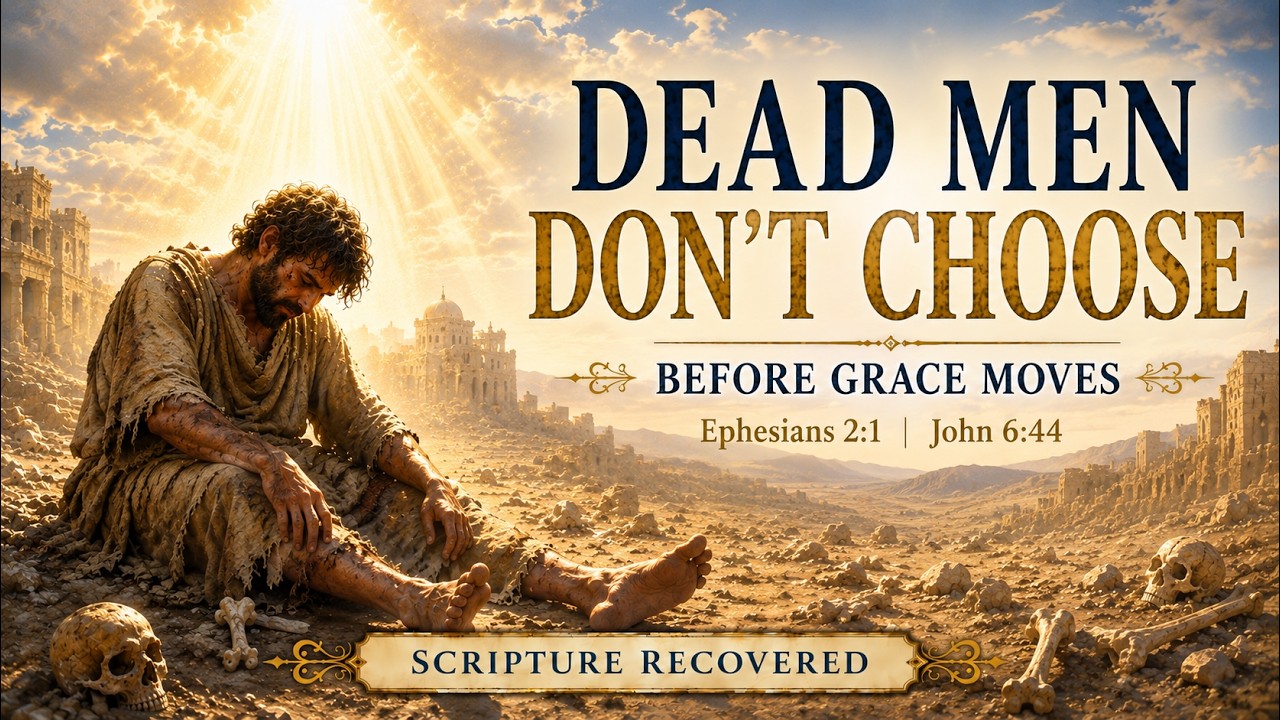
Dead Men Don’t Choose: The Undeniable Truth of God’s Grace

I’ve had it. Lately, I stumbled into a discussion tearing into Calvinism—its theology, its doctrines—and I’m not even a card-carrying Calvinist. I haven’t read his books, haven’t signed up for his club. I just try to follow the Scriptures and the Spirit of God. But what I saw incensed me: ignorance and sheer gall coming against the established Word, picking at gospel verses without context, tossing out the epistles like trash. It’s a butchery of truth, and I can’t shake it off. This battle’s raged for centuries—God’s sovereignty versus human free will—and it’s time to lay it down with the absolute, sledgehammer truth of Scripture. No more dancing around it.

Here’s the question: If we reject the points Calvinism leans on—total depravity, unconditional election, irresistible grace, all of it—what do we undo from the Word of God? Not just a system, but the Bible itself. I’m not here to defend a man-made label; I’m here to let God’s Word speak. And it’s screaming: we’re dead without Him, saved by Him, and He provides it all. Let’s hammer this home.

The Deadness: "Nekros" and Dry Bones

Start here: we’re dead. Not wounded, not limping—”nekros”. Ephesians 2:1—“You were “nekros” in your trespasses and sins.” That’s Greek for corpse. No pulse, no breath, no life. Romans 3:10-12 piles on: “None righteous, no one understands, no one seeks God. All have turned away.” Not some—”all”. Colossians 2:13—“You were “nekros” in your sins.” Dead men don’t choose. They don’t seek. They rot.

Ezekiel saw it too. Chapter 37: a valley of dry bones, scattered, hopeless. God asks, “Can these bones live?” Ezekiel doesn’t play hero—“Lord, you alone know.” Humanly? No chance. Dead bones don’t wiggle. But God says, “Prophesy,” and the Spirit’s breath—”ruach”—sweeps in. Bones rattle, flesh forms, and they stand—a vast army. Who did that? Not the bones. God. Ezekiel 37:14—“I will put my Spirit in you, and you will live.” Dead means “nekros”. No life ‘til God moves.

John 6:44 seals it: “No one can come to me unless the Father who sent me draws them.” “Can”—ability. Without the Father’s pull, we’re stuck. Romans 8:7—“The mind of the flesh is hostile to God; it does not submit, nor can it.” Hostile. Incapable. “Nekros”. If you think a corpse picks itself up, you’re not reading the Bible—you’re writing fiction.

The Process: God Provides All

Salvation’s not steps we take—it’s God’s work breaking us alive. He’s not waiting for us to climb a ladder; He’s emptying our grave. Listen:

He’s the Seed Supplier: 1 Peter 1:23—“Born again, not of perishable seed, but of imperishable, through the word of God.” Matthew 13:37—“The one who sows the good seed is the Son of Man.” Christ plants life in “nekros” soil. We don’t sprout ourselves—He sows.  

He’s the Knocker: Revelation 3:20—“I stand at the door and knock.” Jesus isn’t begging us to knock first—He’s pursuing. Dead men don’t knock back; “nekros” hearts don’t answer—He’s the hunter breaking in. Luke 19:10—“The Son of Man came to seek and save the lost.” He seeks; we’re lost.

He’s the Convictor: John 16:8—“The Spirit will convict the world of sin.” Acts 2:37—Pentecost’s crowd, “cut to the heart,” didn’t self-diagnose. The Spirit stabbed them awake. Dead hearts don’t feel ‘til He strikes.

He Gives His Spirit: Ezekiel 37:14—“I will put my Spirit in you.” John 3:5—“Born of the Spirit.” Titus 3:5—“Saved by the renewal of the Holy Spirit.” No Spirit, no life. He breathes; we don’t.

He Provides the Lamb: John 1:29—“The Lamb of God, who takes away the sin of the world.” Romans 3:25—“God put [Him] forward as a propitiation by his blood.” We didn’t slay the Paschal Lamb—God did. Hebrews 9:12—“With his own blood, he secured eternal redemption.” All Him. For if, when we were enemies, we were reconciled to God by the death of his Son, much more, being reconciled, we shall be saved by his life. Romans 5:10

These aren’t steps to be redeemed—check off faith, grab grace, earn the cross. That’s works, and Ephesians 2:9 says, “Not a result of works, so that no one may boast.” It’s His process, His redemption, His hammer smashing our “nekros” chains. Acts 13:48—“As many as were ordained to eternal life believed.” Ordained, then believed—not the other way around. Romans 2:4—“God’s kindness leads you to repentance.” He leads; we follow. He provides all, or it’s not salvation—it’s self-help.

The Gift: No Paychecks Here

If God does it all, it’s a gift. Ephesians 2:8—“By grace you have been saved through faith… it is the gift of God.” Faith too—not your grit, His grant. Philippians 1:29—“It has been granted to you to believe.” Granted, not grabbed; to them that have obtained like precious faith with us through the righteousness of God and our Saviour Jesus Christ—2 Peter 1:1. Hebrews 12:2—“Jesus, the AUTHOR and perfecter of our faith.” He writes it, not us.

If we choose God without His seed, knock, conviction, Spirit, and Lamb, that ain’t a gift—it’s a paycheck. “I chose wisely; pay me salvation.” Romans 3:27—“Where is boasting? Excluded.” Why? A “nekros” soul doesn’t choose—it’s chosen. John 15:16—“You did not choose me, but I chose you.” 1 John 4:19—“We love because he first loved us.” First. Always Him first. If we kickstart it, why the cross? Galatians 2:21—“If righteousness were through [us], Christ died for nothing.” Dead men don’t earn gifts—they receive them.

The Folly of Free Will Chasing

Some scream, “But free will!” Sure, we respond—”after” He moves. Acts 2:37—“What shall we do?”—comes after the Spirit cuts. John 1:13—“Born not of human decision, but of God.” Charles Spurgeon saw it clear: “Free will carried many a soul to hell, but never a soul to heaven. Anyone who believes that man’s will is entirely free and that he can be saved by it does not believe the fall.” He’s right. Romans 3:23—“All have sinned and fall short.” Free will without grace is freedom to rot, not rise. Romans 8:7—“The flesh “cannot” please God.” Cannot. “Nekros”.

2 Corinthians 4:6—“God… has shone in our hearts to give the light of the knowledge of the glory of God in the face of Jesus Christ.” We didn’t flip the switch—He did. Dead hearts don’t chase light; light chases them. Spurgeon’s not guessing—he’s echoing Scripture: a “nekros” will, unbound by grace, runs to ruin, not redemption.

Lay It Down

This war’s dragged on too long—centuries of dodging the obvious. Scripture’s clear: we’re “nekros” without God, revived by His Spirit, saved by His Lamb. He’s the seed, the knock, the conviction, the breath, the blood. Spurgeon’s words ring true—free will without grace is a one-way ticket down, never up. Reject that, and you’re not just undoing Calvinism—you’re undoing the gospel. Dead men don’t choose; God chooses them. John 6:44. Ezekiel 37. Ephesians 2. Romans 9:16—“It does not depend on human desire or effort, but on God’s mercy.” It’s a sledgehammer of truth, and it’s time to swing it. He provides all. Let the Word silence the noise. Full stop.

The Church HOLDS BACK the DARK: Why the RAPTURE Comes First

Introduction: The Unseen Anchor

Picture a dam—sturdy, unyielding—holding back a torrent that churns to swallow the earth. That’s the church, not a metaphor but a reality etched in God’s word. “What is restraining him now… until he is out of the way” (2 Thessalonians 2:6-7)—Paul’s riddle pulses with truth: the church stands as God’s sentinel, bottling lawlessness. Crack it, and the flood breaks—chaos, wrath, the end. This isn’t guesswork; it’s scripture’s heartbeat, throbbing through time. The church isn’t just a light flickering in the dark—“the light of the world” (Matthew 5:14)—it’s the clamp on a world gone mad. Its rapture isn’t an afterthought; it’s the trigger—unleashing what it restrains, yet sparing its own from the fire, “not destined for wrath” (1 Thessalonians 5:9). Debates swirl—pre-, mid-, post-tribulation?—like storms obscuring the sun. Post-tribulationists meld Christ’s comings into one loud clash; pre-wrath bends timelines to dodge early fury. But truth sits plain: the church bolts first, gathered to the barn (Matthew 13:30), safe before the furnace roars. We’ll unearth this—two restrainers, discipline not wrath, a harvest before ruin—burying doubters under scripture’s weight. The church’s heft holds the cosmos; its exit births collapse. Joel 2:31 tolls—“the great and terrible day of the Lord”—a shadow we won’t tread. This isn’t theory spun from thin air; it’s a clarion call, sharp and urgent. The dark presses; the light blazes now—seize it while it stands.

1. The Unsung Restrainer: The Church’s Hidden Power

Who stems the flood of evil surging through this age? Not governments—those tottering thrones of men, buckling under pride and decay. Not angels alone, tethered to tasks too narrow for this global storm. It’s the church—God’s silent titan, veiled in meekness, mighty in truth. Paul names it “the pillar and foundation of the truth” (1 Timothy 3:15)—not a fragile prop, but the bedrock of God’s order, unshakeable. Look at history: it carved the West’s soul—justice flowing from its courts, mercy from its hands, dignity into laws—all sparks from its fire as “the light of the world” (Matthew 5:14). Even a child could see it: where the church stands, lawlessness stumbles, retreats, dares not rise. Yet, cracks multiply across the landscape—recently, we’ve seen a rampant tide of hatred sweep through universities, with places like Columbia in the United States serving as stark examples, where Jewish students faced harassment and vitriol even death threats while administrations stood silent, only curbed when the Trump administration stepped in. This isn’t isolated; it’s a ubiquitous shadow creeping across institutions, a sign of lawlessness rising where Christendom’s grip weakens. Imagine the rage, the hatred, the chaos if the law upheld by Christendom were not at the helm—a state the modern generation pursues, the very mark of the Antichrist, “the lawless one” (2 Thessalonians 2:8).

Since the recent pandemic, we’ve witnessed the church being slowly eased from her entitled position—not a sign of weakness, but the preparatory work of God to remove her wholly from the world. She’s vacated grand buildings, preserved now in what seems like hiding, yet perfecting herself for her wedding day, ready to “meet the Lord in the air” (1 Thessalonians 4:17) before “gross darkness” falls on the wicked and unbelieving (Isaiah 60:2). In her stead, the spirit of antichrist and his ministers—drag queens, false prophets, groomed beforehand—now lead many local churches, usurping her place. The true church isn’t entirely gone; her total sway, though, has dwindled. The world totters and swaggers—lawlessness in the streets surges, instilling fear where freedom once reigned. Cities once relished for safe passage now bristle with dread, a foretaste of the deluge when her restraint lifts fully. This fading isn’t defeat; it’s divine choreography, aligning with Scripture’s pulse: “until he is out of the way” (2 Thessalonians 2:7), the church’s exit nears.

The world teeters with evil, and Israel now strives to defend itself, sealing every loophole, purging its borders of threats to protect its heart. It’s a thorough cleansing, a natural reflex against encroaching darkness. But as one predicts weather in the natural, so too can we discern the spiritual climate of the world. This is a coil winding tight, poised to unwind with ferocity once the release lock lifts. You can only wind so far, right? That lock is the restraining forces of God—the church, the substance of the Western world’s foundation. When they’re removed, imagine the wrath unleashed. The Western world, built on Christendom’s light and power, underpins both global order and Israel’s shield. Remove that bedrock, and the world and Israel lose their restrainer’s might—chaos coils, ready to spring. This isn’t mere geopolitics; it’s the spiritual prelude to the rapture, where the church’s exit triggers the unwinding, a flood no dam can hold.

Daniel peered beyond the veil—“the prince of Persia withstood me,” an angel groaned, “and Michael… came to help” (Daniel 10:13); “the prince of Greece will come” (10:20). Kingdoms aren’t mere flesh—spiritual powers grip them, yet “the Most High rules the kingdom of men” (Daniel 4:17). I’ve felt it: in a Soviet shadow—dry, hard, godless—a murderous spirit loomed, its grip icing my bones. My voice failed, but my spirit cried Jesus—a sword unsheathed, steel sang, slicing the dark; a voice roared, “Michael, the archangel.” The church holds, but God’s hosts war unseen. Scripture warns: “the spirit of antichrist” is already at work (1 John 4:3), a breath from his revelation as a false Messiah, restrained only by Christendom. But the water rises above the dam’s brim—the church, God’s sentinel—and it must someday give way, raptured in force (1 Thessalonians 4:17). Then, as Daniel foretells, “the prince who now sits must stand up” (Daniel 12:1)—removed from protecting Jerusalem—leaving Jews and professing Christians behind, the husk split, the cream gathered (Matthew 13:30), the rest trampled and burned (Matthew 13:42).

Paul decodes the mystery: “What is restraining him now”—the lawless one—“until he is out of the way” (2 Thessalonians 2:6-8). That “he” isn’t Michael alone, who guards Israel and God’s people (Daniel 12:1), nor frail rulers—it’s the church, the Body of Christ, united by His Spirit (Ephesians 4:16), God’s dam against global chaos, working in tandem with Michael’s watch until raptured—“caught up in the air” (1 Thessalonians 4:17). Then the Antichrist emerges, “weeds” of Matthew 13:41 run rampant as Michael shifts to Israel’s refining crucible (Daniel 12:1). Post-tribulationists falter, pinning it all on Michael—he’s not the world’s sole brake; the church holds that line. Pre-wrath dims early wrath, yet the lawless one’s rise post-rapture affirms the church’s exit as the trigger. The church, Christ’s salt (Matthew 5:13), preserves until “the twinkling of an eye” (1 Corinthians 15:52); salt gone, “strong delusion” grips (2 Thessalonians 2:11-12). A swelling tide of hostility on campuses—not just Columbia, but countless enablers—the church’s retreat since the pandemic, and Israel’s coiled defense all signal this: where Christendom weakens, hatred, deception, and chaos surge, tempered only by a fading godly remnant and Michael’s narrowed guard. Scripture proclaims it loud: the church isn’t passive—it’s God’s bulwark, one with its Head, restraining alongside Michael ‘til its exit ushers in reckoning. “Who is she that looketh forth as the morning, fair as the moon, clear as the sun, and terrible as an army with banners?” (Song of Solomon 6:10)—radiant, fierce, a partner in holding back a truth too long silenced.

2. The Dual Shift: Church Out, Michael Up

The church doesn’t stand solo in this cosmic fray. Enter Michael—“the great prince who has charge of your people” (Daniel 12:1)—keeper of all God’s own, sword drawn. Two forces lock the end at bay: the church, “the light of the world” (Matthew 5:14), clamps global lawlessness—“the mystery of iniquity” (2 Thessalonians 2:7)—while Michael guards God’s people, the church, and Israel alike (both political and spiritual Israel). Scripture reaps it sharp: Rapture strikes—“caught up… in the clouds” (1 Thessalonians 4:17)—light lifts, “gross darkness” falls (Isaiah 60:2), the lawless one steps forth (2 Thessalonians 2:8).

Then Michael “stands up” (Daniel 12:1)—stepping back, loosing foes on Israel as “a time of trouble” crashes, “such as never has been” (Daniel 12:1). Jerusalem burns—“a furnace” where “I will melt you” (Ezekiel 22:18-20)—Israel endures “the time of Jacob’s trouble” (Jeremiah 30:7), some spared in Petra, “a place prepared by God” (Revelation 12:6), for 1,260 days, ‘til they “look upon me whom they have pierced” (Zechariah 12:10), refined in tears; a brand plucked out of the fire—Zechariah 3:2. Church to the barn (Matthew 13:30), Israel through the fire—God’s plan forks clear.

Post-tribulationists shout, “Michael restrains alone!”—but Daniel 12:1 ties him to God’s people, not just Israel; the church holds the world’s line (Genesis 1:4). Pre-wrath stalls tribulation’s flood, yet “in the twinkling of an eye” (1 Corinthians 15:52) and the lawless one’s rise scream pre-trib. Light’s exit—births/unleashes the Antichrist—Michael’s shift narrows to Israel’s crucible, not all saints. Single-restrainer tales crack under this duet: church, Spirit-led, departs; Michael steps back for Israel’s refining. Deliverance for us—“not destined for wrath” (1 Thessalonians 5:9)—refining/furnace for Israel (Zechariah 12:10; Ezekiel 22:20), wrath for “weeds” (Matthew 13:42). Look closer: light and darkness don’t mix—church gone, darkness reigns in person. Truth breaks free: God’s endgame splits—church safe in glory, Israel pierced in pain—pretribulation’s double beat, loud and sure.

3. Discipline Now, Wrath Later: Jesus Took It

Does the church taste wrath now? No—it’s fire of a different kind. “When we are judged by the Lord, we are disciplined so we may not be condemned with the world” (1 Corinthians 11:32)—Paul’s words cut deep. This isn’t punishment to destroy, but a Father’s rod to refine. Look: “Some are weak and sick, and some sleep” for Supper sins (1 Corinthians 11:30)—discipline, not doom. Hebrews unpacks it: “The Lord disciplines the one he loves” (Hebrews 12:6), trials forging holiness (12:5-11)—sanctification, not tribulation’s furnace. Ministers stumble—“wood, hay, straw” flare in scandal (1 Corinthians 3:12)—think fallen legacies—yet “he himself will be saved, through fire” (3:15). No tears beyond—“He will wipe every tear” (Revelation 21:4)—the test burns here. Post-tribulationists dread a Bema Seat of grief, but it’s joy—“Well done, good and faithful servant” (Matthew 25:21)—not despair.

Wrath? Jesus drank it dry—“the punishment that brought us peace was upon him” (Isaiah 53:5). “Since we have been justified… we shall be saved from wrath through him” (Romans 5:9)—Paul’s promise stands. “God has not destined us for wrath, but to obtain salvation” (1 Thessalonians 5:9)—we dodge the furnace whole. Unto them that are contentious and do not obey the truth, but obey unrighteousness, indignation and wrath, Tribulation and anguish, upon every soul of man that doeth evil, of the Jew first, and also of the Gentile; But glory, honor, and peace, to every man that worketh good, to the Jew first, and also to the Gentile – Romans 2:8-10. The Lord Jesus shall be revealed from heaven with his mighty angels, in flaming fire, taking vengeance on them that know not God and that obey not the gospel of our Lord Jesus Christ (2 Timothy 1:8). This is the wrath of the Lamb – Revelation 6:16. Post-tribulationists blur this—“the wrath of the Lamb” (Revelation 6:16–17) crashes mid-seals, they say, fusing discipline with doom. Scripture slices them apart—“their wrath has come” (Revelation 6:17) hits later; we’re gone. Pre-wrath softens early seals, but wrath’s there—church spared, weeds burn (Matthew 13:42). Discipline now—pruning us for glory—wrath later, for a world unbowed. Jesus paid; we rise—a hope alive, “born again to a living hope” (1 Peter 1:3)—pretribulation’s song.

4. The Barn Before the Burning: God’s Pattern

Is the rapture random? No—it’s God’s script, etched in time. Jesus lays it bare: “First collect the weeds and bind them… then gather the wheat into my barn” (Matthew 13:30)—church to safety, weeds to fire (13:42). It is the coming of our Lord Jesus Christ and our gathering together unto him—2 Thessalonians 2:1. Paul echoes: “caught up… to meet the Lord in the air” (1 Thessalonians 4:17), “in the twinkling of an eye” (1 Corinthians 15:52)—pre-trib shines clear. Isaiah whispers it—“the righteous is taken away from evil” (Isaiah 57:1); for God hath not appointed us to wrath, but to obtain salvation by our Lord Jesus—1 Thessalonians 5:9; the Psalmist sings, “The Lord preserves thee from all evil” (Psalm 121:7). Patterns pile: Lot fled Sodom—“I can do nothing till you arrive” (Genesis 19:22)—God’s hand stayed ‘til safety locked. The residue of Israel hides in Petra—“a place prepared by God” (Revelation 12:6)—tribulation’s remnant spared. Safety first, wrath follows—God’s rhythm beats steady.

Christ’s break splits tight. First, for us—“like a thief” (1 Thessalonians 5:2), “caught up in the air” (1 Thessalonians 4:17), “in a moment” (1 Corinthians 15:51-52). That’s “the blessed hope” (Titus 2:13), “a living hope” (1 Peter 1:3)—swift, ours. Then, WITH us—“with ten thousands of his saints, to execute judgment” (Jude 1:14), “glorious appearing” (Titus 2:13), “a second time… to save” (Hebrews 9:28); behold, he cometh with clouds, and every eye shall see him, and they also which pierced him: and all kindreds of the earth shall wail because of him—Revelation 1:7. The Son of man shall come in his glory, and all the holy angels with him, then shall he sit upon the throne of his glory (Matthew 25:31); and then shall they see the Son of man coming in a cloud with power and great glory (Luke 21:27).

Coming FOR us: And at midnight there was a cry made: Behold, the bridegroom cometh; go ye out to meet him (Matthew 25:6). Μέσης δὲ νυκτὸς’ (mesēs de nyktos), ‘and at midnight,’ a ‘κραυγὴ γέγονεν’ (kraugē gegonen), ‘cry was made,’ splitting the dark—‘Ἰδού, ὁ νυμφίος ἔρχεται’ (idou, ho nymphios erchetai), ‘behold, the bridegroom comes’—and ‘ἐξέρχεσθε’ (exerchesthe) isn’t a casual stroll but a sharp command, a herald’s shout as he nears, allowing no lingering, driving us with *ἐκ* (ek, ‘out of’) from sleep, apathy, or the world ‘εἰς ἀπάντησιν αὐτοῦ’ (eis apantēsin autou, ‘to meet him’), echoing the rapture’s call in 1 Thessalonians 4:17 to meet the Lord in the air. Rapture first, wrath second—two cuts, one key.

Hark—King Ahasuerus shadows Christ, Esther the bride, purified twelve months (Esther 2:12) as the church, a chaste virgin (2 Corinthians 11:2), cleansed by His blood (1 John 1:7), Word (Ephesians 5:26), and Spirit (1 Peter 1:2), guided by Mordecai, the Holy Ghost’s echo, pacing daily; seven maidens—seven churches (Revelation 1:4)—shine as He, in 3½ years (Luke 3:23), perfects her with apostles and prophets (Ephesians 4:11), presenting a glorious bride, spotless, unwrinkled (Ephesians 5:27)—no tortured wreck, but radiant for the Lamb’s wedding (Revelation 19:7).

Post-tribulationists pin rapture after the storm—“after tribulation… he will gather his elect” (Matthew 24:30-31). Who’s that? Tribulation saints—not the church, barn-bound, “not overtaken” (1 Thessalonians 5:4). But “like a thief” (1 Thessalonians 5:2) fits no loud blaze—“as lightning from east to west” (Matthew 24:27)—and “you will not be overtaken” (1 Thessalonians 5:4) vows we’re gone, not waiting. They stumble, fusing trumpets—claiming Paul’s “last trumpet” (1 Corinthians 15:52) is John’s seventh (Revelation 11:15). No—Paul’s lifts us pre-trib, swift and silent; John’s seventh tolls mid-trib judgment, loud with doom. Pre-wrath bends—wrath’s early; “their wrath has come, who can stand?” (Revelation 6:17) strikes at the seals, not delayed—church gone, “not destined for wrath” (1 Thessalonians 5:9). Two breaks, one hope—church cut, judgment falls. Truth? We’re keyed for joy—“you shall laugh” (Luke 6:21)—pretribulation’s turn. Lot’s flight, Israel’s refuge, wheat’s harvest—God extracts before He executes. “I will come again and take you to myself” (John 14:3)—pretribulation’s core, unshaken, unveiled.

5. The Lawless Abyss: Christendom’s Collapse

Rapture cuts “the salt of the earth” (Matthew 5:13), and collapse crashes—“no repentance of murders, sorceries, immorality” (Revelation 9:21). “Strong delusion… pleasure in unrighteousness” (2 Thessalonians 2:11-12)—Paul saw a world unbound, drowning in rot. Christendom—“the light of the world” (Matthew 5:14)—snaps: laws rust, ethics bleed, conscience dies. Today’s decay—abortion’s blood, corruption’s reek, relativism’s haze—is a preview, amped post-rapture to a flood. I’ve tasted it: a prince of darkness (Daniel 10:13), murder in its claws, froze me in a Soviet night—breath stolen, death near—‘til Michael’s blade slashed through, his voice thundering his name under God’s reign (Daniel 4:17). That grip’s real; it stalks now. Princes of Persia and Greece (Daniel 10:20) coil in shadows, checked by the church’s light and Michael’s guard—but rapture lifts the leash. “The great and terrible day” (Joel 2:31) storms—war (Revelation 6:4), famine (6:6), Antichrist’s grip (Revelation 13:7). Weeds reign (Matthew 13:41), chaos unbound feasts.

Post-tribulationists miss the church’s clamp—its break’s a deluge, not a drip. Pre-wrath mutes tribulation’s roar, but seals howl wrath (Revelation 6). Salt loosed, collapse reigns—“the pillar” (1 Timothy 3:15) crumbles, chains off. Look now: moral rot signals the break—post-rapture, it’s a torrent. Truth unbarred? Our grip holds the flood—freed, and ruin rages.

Joel tolls—“the great and terrible day” (Joel 2:31)—war thunders (Revelation 6:4), famine stalks (6:6), the Antichrist reigns (Revelation 13:7). “The weeds” rule (Matthew 13:41)—nations craving dark drink deep. Post-tribulationists miss the scale—the church’s exit isn’t subtle; it’s seismic, “the pillar” (1 Timothy 3:15) toppled, roof caved. Pre-wrath hushes tribulation’s roar, but seals scream wrath (Revelation 6)—church gone, abyss birthed. Look now: moral rot hints the end—abortion’s toll, truth’s death—mere shadows of the flood to come. “The day of the Lord will come” (2 Peter 3:10)—rapture sparks it. Truth unbarred? Our light leashes the world—lose it, and darkness devours, unrestrained, ravenous.

6. Two Comings, One Hope: For Saints, With Saints

Does Christ return once, or twice? Scripture splits it sharp. First, for us—“the day of the Lord will come like a thief” (1 Thessalonians 5:2), “caught up in the air” (1 Thessalonians 4:17), “in a moment, in the twinkling of an eye” (1 Corinthians 15:51-52). That’s no loud clash—it’s sudden, ours, “the blessed hope” (Titus 2:13), “a living hope” (1 Peter 1:3). Then, with us—“with ten thousands of his saints, to execute judgment” (Jude 1:14), “the glorious appearing” (Titus 2:13), “a second time… to save those who are eagerly waiting” (Hebrews 9:28). Rapture first—church snatched; wrath second—judgment falls.

Post-tribulationists jam it—“after tribulation… he comes” (Matthew 24:30-31). But “thief” fits no public blaze—“as lightning from east to west” (Matthew 24:27)—and “you will not be overtaken” (1 Thessalonians 5:4) vows escape. Their trumpet meld—1 Corinthians 15:52 with Revelation 11:15—cracks: Paul’s calls us home; John’s seventh tolls wrath. Pre-wrath hedges—wrath’s early, “who can stand?” (Revelation 6:17)—church long gone. Two comings: “I will come again and take you” (John 14:3)—then, “every eye will see him” (Revelation 1:7). One hope—church aloft, judgment lands. “Blessed are those who mourn… you shall laugh” (Luke 6:21)—pretribulation’s pulse beats joy, not dread, for saints awaiting glory.

Conclusion: The Light Before the Dark

The church holds the dark—God’s restrainer (2 Thessalonians 2:6), barn-bound (Matthew 13:30), wrath-free—“not destined for wrath” (1 Thessalonians 5:9). Michael shifts—“stands up” (Daniel 12:1)—tribulation thunders, weeds blaze (Matthew 13:42). Discipline now—“he disciplines the one he loves” (Hebrews 12:6)—hope near—“the blessed hope” (Titus 2:13)—pretribulation roars true. Opposition fuses comings, falters on trumpets; truth stands firm—church restrains, exits, rests in glory. “The Lord preserves thee from all evil” (Psalm 121:7)—Joel’s “terrible day” (Joel 2:31) skips us, reserved for the lost. See it unfold: pillar now—“foundation of the truth” (1 Timothy 3:15)—barn soon, “caught up” (1 Thessalonians 4:17). The dark looms—lawlessness unbound, wrath unleashed, collapse complete—yet light blazes first. “You are the light of the world” (Matthew 5:14)—shine it, for the rapture draws close, the dam’s edge trembles.


The Anointing Belongs to You: Unveiling the True Significance of Anointing and Baptism with the Holy Ghost

By B.V. Thomas | The Hermeneutical Quill

The Problem in the Pew

There is something that has long troubled my spirit, and I suspect it has troubled yours too — though perhaps you never had the language to name it.

Walk into most traditional churches on any given Sunday and you will observe an unspoken hierarchy playing itself out in plain sight. At the front stands the minister — robed, elevated, reverenced. Around him, an atmosphere of careful deference. People lower their voices when he passes. They seek his blessing. They call him “the anointed of the Lord.” Some call him “father.” And the congregation — the body, the people, the ones Christ died for — sit quietly in their rows, positioned as receivers, as subjects, as those who must wait for the anointed one to dispense what God has reserved exclusively for him.

I remember attending a church and overhearing people address the priest as “father.” Curious, I asked him directly what the correct form of address was. He told me, without a moment’s hesitation, to call him father. I felt something rise in my stomach — not contempt for the man, but a deep theological discomfort I could not yet fully articulate. I highly esteem those who carry and teach the word of God. The Scripture itself commands double honour for those who labour in the word — 1 Timothy 5:17. But Jesus said plainly: “call no man your father on earth” — Matthew 23:9. And in the same breath He said: “the greatest among you shall be your servant” — Matthew 23:11. Which Bible, I wondered, were they reading?

The veneration of the minister as the uniquely anointed one — while the congregation sits in spiritual poverty, believing they have no anointing of their own — is not a New Testament pattern. It is an Old Testament shadow that was never meant to outlast its fulfilment. It is a tradition that has wounded and marginalised countless believers who are, in the eyes of God, equal members of a royal priesthood, a holy nation, a people for His own possession — 1 Peter 2:9.

This article is written for you. For the believer in the pew who has been made to feel like a spiritual spectator in your own inheritance. For the church leader willing to be challenged. For the theologian willing to re-examine what they assume they already know.

I must tell you honestly — the truth I am about to share cost me years. For a long time I pleaded with God to anoint me. My asking went on and on, year after year, earnest and unrelenting. Then one evening, while strolling in my garden and praying, I heard an audible, thundering sound that sent chills down my spine. The voice said clearly: “You don’t know what you are asking for.” I knew in that moment exactly what the Lord meant. I ceased asking from that day. And it was then that the Lord — through His Spirit and through the Scriptures — began to impart something far deeper than what I had been asking for. He began to show me what the anointing actually is, what it was always meant to be, and what it already is in every believer who has received Christ.

What He showed me blew me away. And I want it to blow you away too.

What Does Anointing Actually Mean?

Before we can correct a wrong understanding, we must first establish a right one. And to do that, we must go to the source — not to tradition, not to church culture, but to the original languages of Scripture itself.

A Jewish poet named Haim Nachman Bialik (1873–1934) captured it perfectly when he said that reading the Bible in translation is like kissing your bride through a veil. You are near her, but something essential is lost. To truly understand the anointing, we must lift the veil and look at the Hebrew and Greek words behind the English text — because, as we shall see, not all anointing is the same.

The English word “anointing” conceals a remarkable family of words in the original languages, each with its own shade of meaning, its own context, its own weight. Let us walk through the most important ones together.

The Greek word “Chrisma” (χρίσμα) — used in 1 John 2:20 and 2:27 — means an unguent, a smearing, a special endowment. This is the anointing that every believer receives. Its Hebrew counterpart is “shemen mishcha” — the anointing oil itself. It is the substance applied, the grace bestowed, the Spirit given to every member of the body of Christ at the moment of new birth.

The Greek word “Chrio” (χρίω) — used in Acts 4:27, Acts 10:38, and 2 Corinthians 1:21 — carries the deeper sense of contact, of being rubbed and consecrated, of being set apart for an office or divine service. This is the word used specifically of Jesus of Nazareth: “God anointed (chrio) Jesus of Nazareth with the Holy Ghost and with power” — Acts 10:38. And it is also the word used of believers who are established in Christ: “He which hath anointed (chrio) us is God” — 2 Corinthians 1:21.

The Greek word “Aleipho” (ἀλείφω) — found in James 5:14, Mark 6:13, and Luke 7:46 — describes the physical act of rubbing or applying oil. This is anointing in its most practical, tangible expression: oil applied to the sick, to the feet of a guest, to the body in preparation.

There are two further Hebrew words worth pausing on. “Yitshar” (יִצְהָר) — used in Zechariah 4:14 — refers to the two anointed ones who stand by the Lord of the whole earth. These are individuals consecrated for a specific, appointed purpose by God Himself, symbolising a divine commissioning that goes beyond ordinary office — a co-labouring with God at a particular moment in His purposes. And then there is “Mimshach” (מִמְשַׁח) — found in Ezekiel 28:14 — translated as “the anointed cherub that covereth.” This is the word used of Lucifer before his fall. His anointing was “Mimshach” — consecrated to minister, to serve, to cover — an anointing tied entirely to function and service.

This last word carries a sobering truth we dare not overlook. Hêlêl or Lucifer – Latin(the Vulgate) was anointed. Genuinely, originally, gloriously anointed — for service before the throne of God. And yet his anointing did not protect him from pride, nor preserve him from ruin. This tells us that the anointing is not a guarantee of character. It is not a trophy. It is a trust. It is given for a purpose, and it demands the stewardship of a humble and surrendered heart. The one who carries it most faithfully is not the one who wears it most visibly — but the one who is most aware that it was never theirs to begin with.

In Hebrew, the most significant word is “Mashiyach” (מָשִׁיחַ) — Messiah. Anointed One. This is the word that carried the full weight of Israel’s hope. The priests were “mashiyach”. The kings were “mashiyach”. The prophets moved in the spirit of the “mashiyach”. They were not merely anointed for office — they were anointed as prophetic pictures, typological representations, pointing forward to the One who would be the ultimate Anointed of God.

Why does this matter? Because once you understand that there are multiple words — each describing a different dimension of anointing — you realise that the question is never simply “are you anointed?” The real questions are: “what kind of anointing? For what purpose? And to what measure?”

The Anointing in the Old Testament

To understand what we have received in Christ, we must first understand what the Old Testament was pointing toward.

The anointing of the Old Testament was, at its heart, Messianic. When Samuel poured oil over the head of Saul, and then David, he was not merely installing a king — he was performing a prophetic act, a shadow of the coming Anointed One. The Hebrew word “Mashiyach” literally means the same thing as the Greek “Christos” — the Christ, the Anointed. Every king was a messianic figure. Every priest who ministered at the altar was a messianic type. Every prophet who carried the word of the Lord was a vessel through whom the Spirit of Christ spoke — “the Spirit of Christ which was in them” — 1 Peter 1:11. These consecrated vessels were the prophetic image of the future Messiah. They carried the Messianic anointing as stewards of a promise they would not themselves see fulfilled.

The story of David illuminates this progression beautifully — because David was not anointed once but three times, and each anointing carried a greater weight than the one before. The first was private: Samuel anointed him in the midst of his brothers, and the Spirit of the Lord came upon David with power from that day forward — 1 Samuel 16:13. This was divine election — God’s choice made before any public confirmation. The second anointing came when the men of Judah anointed David king over the house of Judah — 2 Samuel 2:4 — a partial recognition, a regional commissioning. The third and fullest anointing came when all the elders of Israel gathered and anointed David king over all Israel — 2 Samuel 5:3 — the complete fulfilment of what had begun in obscurity.

This pattern is not coincidental. It is a portrait of how God often works in the lives of those He calls to a higher measure of anointing — first in the secret place, then in partial recognition, then in full commissioning. The anointing is progressive. It deepens as the vessel is proved.

David himself understood the depth of what he carried. Near the end of his life he declared: “The Spirit of the Lord spoke by me, and his word was in my tongue” — 2 Samuel 23:2. And the New Testament confirms what David experienced: “Being therefore a prophet… he spoke of the resurrection of the Christ” — Acts 2:30. David was not merely a king. He was a vessel of the Spirit of Christ — which is why touching the Lord’s anointed was treated as something close to sacrilege, and why Lamentations 4:20 uses language of such intimacy and necessity: “The breath of our nostrils, the anointed of the Lord.” The anointed king was as vital to Israel as the air they breathed — because he carried in type what the Messiah would one day carry in fullness.

This is also why Jesus Himself said of these men — “unto whom the word of God came” — that they were even called gods — John 10:35. Not because they were divine, but because the divine word and Spirit rested upon them with a weight that set them apart as instruments of the living God.

When Jesus came, the shadow gave way to the substance. The types retired before the One they had always pointed to.

Christ, the Anointed One

There is one Anointed of the Lord in the fullest, final, and ultimate sense — and His name is Jesus of Nazareth, the Son of Man, the Son of God. He is the Christ. He is, by definition and by nature, “the” Anointed One.

At the Jordan River, the Father anointed (“chrio”) Jesus of Nazareth with the Holy Ghost and with power — Acts 10:38. This was not a ritual. It was the Messianic installation of the Son of God into His earthly ministry. From that moment, He went about doing good, healing all who were oppressed of the devil — because God was with Him. Isaiah 61:1,2 — the passage Jesus read in the synagogue at Nazareth and declared fulfilled in their hearing — was not merely a prophecy. It was a job description: “The Spirit of the Lord is upon me, because He hath anointed me to preach good tidings unto the meek.”

This is the “Chrio” anointing in its purest expression — consecration to an office, contact with the divine, empowered for a saving purpose. Jesus did not merely possess gifts. He was filled with all the fullness of God — Ephesians 3:19. He was not merely indwelt by the Spirit. The Holy Ghost was upon Him, descended upon Him, and remained upon Him. He was full of the Holy Ghost — Luke 4:1.

And here is where the glory of the New Testament begins to dawn. Because Jesus did not come to keep this anointing for Himself.

Every Believer Is Anointed

Now we arrive at the truth that the traditional church has so consistently obscured — and that the New Testament proclaims with breathtaking clarity.

“But ye have an unction from the Holy One, and ye know all things” — 1 John 2:20. “But the anointing which ye have received of him abideth in you” — 1 John 2:27.

The word John uses here is “Chrisma”. And he writes it not to a select group of super-ministers. He writes it to the whole church. Every believer — every one — has received the anointing of the Holy One. This is not a metaphor. It is not an aspiration. It is a declaration of present spiritual reality.

When God anoints (“chrio”) a sinner into the body of Christ — 2 Corinthians 1:21 — He bestows the *Chrisma*, the smearing of the Spirit upon that soul. You received the Spirit of adoption, whereby you cry Abba, Father — Romans 8:15. You received the Spirit of sonship, the Spirit of Christ — Galatians 4:6. You were sealed with the holy Spirit of promise — Ephesians 1:13. You became a lively stone, built up into a spiritual house, a holy priesthood — 1 Peter 2:5. Christ has made you kings and priests unto God — Revelation 1:6.

This is not language reserved for the minister at the front of the church. It is the common inheritance of every person who has been born again.

How, then, can a believer be a member of Christ’s anointed body and yet not be anointed? It is a contradiction in terms. The New Testament does not support the restriction of anointing to a select group of ministers. To take that position is to deny the biblical principle of the priesthood of all believers — which is not a democratic sentiment, but a theological reality purchased by the blood of Christ.

The one sitting at the head table is not greater than the one who serves — Luke 22:27. The servant-hearted disciple who prays in obscurity, who loves their neighbour without fanfare, who carries the word of God in their heart and lives it faithfully in their ordinary life — that person is anointed. Fully. Genuinely. Indisputably. The “Chrisma” abides in them. They need no minister to mediate between them and their God. They need no special human permission to walk in what Christ has already given them.

Many believers do not reckon this. They do not reckon that they are heirs of God and joint-heirs with Christ — Romans 8:17. They do not reckon that they are lively stones being built together for the habitation of God through the Spirit — Ephesians 2:22. Despite being ushered into the new and living way — Hebrews 10:20 — they still live in Old Testament shadows, preferring to sing “I would rather be a doorkeeper in the house of my God” when they have been invited to sit at the table.

You are anointed. Settle that in your spirit before you read another word. Now let us go further.

The Higher Anointing

If every believer is anointed, then what distinguishes those whom God calls to a higher dimension of service? Is there a further measure of anointing beyond the “Chrisma” that every believer receives?

The answer the Scriptures give is — yes. And understanding this does not contradict the priesthood of all believers; it completes it.

Consider the distinction between “Chrisma” and “Chrio” once more. The “Chrisma” is the anointing oil applied — the smearing of the Spirit upon every member of the body. The “Chrio” is consecration to an office, a deeper immersion, a being rubbed into Christ Himself until the individual is not merely touched by the anointing but enveloped in it. It is the difference between a person who has been sprinkled with oil and a person who has been submerged in it.

God anoints His chosen ones with a Messianic quality of anointing even today. Not that they become the Messiah — Christ alone is the Anointed One in that ultimate sense — but that they are clothed with Christ, immersed in Him, until the life they live is no longer theirs but His — Galatians 2:20. They put on the Lord Jesus Christ — Romans 13:14. They are joined to the Lord and become one spirit with Him — 1 Corinthians 6:17. As is the heavenly, such are they also that are heavenly — 1 Corinthians 15:48.

The “Chrisma” aims primarily at the believer’s personal growth and spiritual building. It is the foundation of sonship, the seal of salvation, the Spirit of adoption. But the higher “Chrio” anointing is for a saving purpose — a display and demonstration of divine authority (“exousia”) and power (“dunamis”). It is the Messiah Himself upon them. The breath that enters their nostrils transforms them from the natural to the divine — just as Lamentations 4:20 declared of the anointed king: “The breath of our nostrils, the anointed of the Lord.” Remarkable feats followed the reception of the Messiah’s breath — akin to when Jesus breathed on His disciples and said, “Receive the Holy Ghost” — John 20:22.

Think of Gideon — a fearful man hiding in a winepress, the least of his family, from the weakest clan in Manasseh — Judges 6:11-16. The term “anointing” is not explicitly used in his story, yet the Spirit of the Lord came upon him — Judges 6:34 — and he was transformed into a mighty deliverer who routed an overwhelming enemy with a fraction of the army God allowed him to keep. This was not giftedness. This was divine envelopment. The anointing did not make Gideon feel great about himself — it made him capable of what only God could accomplish through him.

This is the true sign of an anointed person. Not spectacular gifts displayed on a platform. Not a title or a robe or an atmosphere of reverence. It is the undeniable, empowering presence of God that transforms an individual and enables them to accomplish what they could never do on their own — to open spiritual eyes, to turn souls from darkness to light, to heal all who are oppressed of the devil — Acts 10:38; 26:18. One cannot lightly provoke such a person — to challenge them is to challenge the Spirit of the Lord Himself — Acts 5:9-11.

One believer has a portion or measure of the Spirit. The other is brimming — full of the Holy Ghost — John 3:34; Luke 4:1; Acts 6:3; 7:55; 11:24. Both are genuinely anointed. Both are genuinely God’s. But the measure and the weight of the two anointings are vastly different — and the difference lies not in God’s favouritism, but in the depth of the vessel’s surrender.

God does not show favouritism — Acts 10:34. But Matthew 22:14 is equally true: many are called, yet few are chosen — not because God withholds, but because few are willing to fully surrender their earthly lives and devote themselves wholly to the things of the Spirit. They turn back at the cost — John 12:25. The higher anointing is not given to the self-promoting or the spiritually immature. It is earned through years of sanctification, testing, breaking, and filling. Those who do press through become like their Master — “every one that is perfect shall be as his master” — Luke 6:40. The spirits of just men made perfect — Hebrews 12:23.

This is not an excuse for clericalism. The minister with the higher anointing is not more valuable to God than the faithful believer in the pew. He or she is more accountable. More refined through suffering. More responsible for what they carry. The greater the anointing, the greater the servanthood required — because the Christ who was upon the holy Apostles was the same Christ who said: “I am among you as the one who serves” — Luke 22:27.

Baptism With vs. Baptized Into

We have spoken much about anointing. Now we must address its companion truth — the baptism with the Holy Ghost — and a distinction that has caused enormous confusion within the church.

Baptism “with” the Holy Ghost and baptism “into” the body of Christ are not the same thing.

The Hebrew word for immersion or baptism is “Tevilah” (טְבִילָה) — a ritual immersion for purification and consecration, practised in Judaism for conversion, cleansing, and spiritual preparation. It speaks of total immersion — not a sprinkling, but a going under. This background gives us the full weight of what it means to be baptized “into” Christ, and what it means to be baptized “with” the Holy Ghost.

When a sinner comes to Christ, they are baptized “into” the body of Christ by the Spirit — 1 Corinthians 12:13. This is the new birth. This is regeneration. This is where the “Chrisma” is bestowed and the Spirit of adoption cries within us, Abba, Father. It is the Spirit of Christ that unites and intertwines the members of this spiritual body. Every believer has been through this immersion. It is the foundation of Christian life.

The baptism “with” the Holy Ghost is a distinct and subsequent event — an immersion of the entire being under the flood and flow of the Spirit of God. It is the pouring of new wine into new bottles — Mark 2:22. It is the Spirit of the Lord falling upon a person — Acts 8:16; 1 Samuel 10:10; 11:6; 16:13. It is the endowment with power from on high — Luke 24:49. It is to be strengthened with might by His Spirit in the inner man — Ephesians 3:16 — and to be transformed into a perfect man, unto the measure of the stature of the fullness of Christ — Ephesians 4:13.

The prepositions matter more than we typically allow. The word “with” indicates accompaniment, envelopment, being surrounded. The word “into” indicates placement within. You are baptized “into” the body of Christ the moment you believe — it is the work of salvation. You are baptized “with” the Holy Ghost when you are enveloped in the fullness of God for the work of service — and it is a unique, once-for-all bestowal of divine empowerment that marks a threshold of spiritual maturity and full consecration.

The former you receive by faith. The latter you receive by obedience — Acts 5:32. It demands the sanctification of the Spirit, and many tests that a person is put through, before God entrusts them with such authority and power. It is not available to the immature, the unbroken, or the self-seeking. But it is available to any believer willing to walk the full road of surrender — the road that few choose, yet that God extends to all.

The great figures of church history — those who fearlessly spread the Gospel to the darkest corners of the earth, who performed signs and wonders that shook nations — did not achieve these things through spiritual giftedness alone. Without the Messianic anointing, without the baptism with the Holy Ghost, none of what they accomplished would have been possible. The church at Corinth had all the gifts — and was still carnal — 1 Corinthians 3:1-3. Gifts without depth of anointing produce noise; they rarely produce transformation.

So both the concept of being baptized “with” the Holy Ghost and the anointing share the same core idea: receiving a special empowerment from God for ministry and service. Both signify a divine commissioning and equipping. Both are about the fullness of the Spirit being poured out upon a surrendered vessel for the accomplishment of God’s purposes in the world.

What This Means for You

Let me speak now directly to you — the one in the pew who has been told, in a hundred subtle ways, that the anointing belongs to someone else. That you are a spectator in the kingdom. That your role is to sit, receive, support, and defer.

The truth is this: you are anointed. The same God who anointed Jesus of Nazareth has anointed you — 2 Corinthians 1:21. The same Spirit who descended upon the apostles has been promised to you and to your children — Acts 2:38,39. You are a priest — not by ordination, but by blood. You are a king — not by election, but by grace. You are a lively stone in the house of God — not because a minister placed you there, but because the living Christ is building you in.

The “Chrisma” you carry is not a lesser version of what the minister has. It is the genuine commodity. It is the Spirit of the Holy One abiding within you, teaching you all things, guiding you into truth — 1 John 2:27. You need no man to tell you what to believe, for the same Spirit who illuminates the preacher illuminates you. This is the glory of the new covenant.

At the same time, do not despise those whom God has called to a higher measure of anointing and a deeper service. Honour them — not as lords over your faith, but as fellow servants who have paid a price. Give double honour to those who labour in the word and doctrine — 1 Timothy 5:17. But do not confuse honour with idolatry. Do not mistake servant-leadership for lordship. And do not allow any man or woman to place themselves between you and your God, or to make you feel that what Christ has freely given you is somehow contingent on their approval or their intercession.

There is also a higher road open to you — if you are willing. The “Chrio” anointing, the baptism with the Holy Ghost, the fullness of God — these are not reserved for a priestly caste. They are promised to every obedient, surrendered, sanctified heart. What God gave to the apostles of the Lamb, He can give to you. What He breathed upon them, He can breathe upon you. Not many choose this road — because it demands everything: your comfort, your ambitions, your reputation, your earthly life. But for those willing, it is the most extraordinary and most costly journey a human soul can take.

As we draw this study to a close, let the truth settle into your bones like the fragrance of anointing oil: the anointing is not a title held by an elite. It is a grace poured out upon all flesh. It began on the Day of Pentecost. It continues to this hour. It belongs, in full measure, to every member of Christ’s body. And for those who will press in — who will die to themselves and live fully to God — it is available in a measure that will transform not only their own lives but the lives of everyone they touch.

You are not a tail. You are a member of the body of Christ — equally valued, equally anointed, and equally called. Walk in it.

A NOTE TO THE READER:

This article is the first in a trilogy. It is followed by “You Don’t Know What You Are Asking For: The Voice, the Years, and What God Showed Me” and completed by “Two and Yet One: Understanding the Distinction Between the Holy Ghost and the Holy Spirit.” Each article can be read independently, but together they form a complete exploration of the anointing, the Holy Ghost, and the full spiritual inheritance available to every believer in Christ.

© B.V. Thomas | The Hermeneutical Quill — “Unlocking Insights, One Quill Stroke at a Time.”