In theological contemplation, a profound journey unfolds as we navigate the complex interplay of faith, grace, and divine intervention. The core or essence of faith—God’s gift that stirs the soul—is akin to a seed sown in fertile soil, which is the soul of man, and gets germinated under the guiding influence of the Holy Spirit. This transformative process, marked by the union of heaven and earth, illuminates the way to spiritual rebirth and renewal. Through the lens of Scripture and personal reflection, we explore the profound impact of faith and grace in awakening the dormant spirit, ushering in a new life illuminated by divine light. Join me on a thought-provoking exploration of the sacred union between faith and grace, where the hand of God extends to illuminate hearts and minds, leading souls from darkness to light and from bondage to freedom.
“Faith comes by hearing” (Romans 10:17, meaning God’s Word awakens belief)! When a weary soul—the good ground, ready to receive in his God-given free will, yet moved by the convincing and convicting power of the Holy Spirit—opens the soil (door) of his heart (soul) to the knock of the Word seed (Revelation 3:20, “Behold, I stand at the door, and knock”), and absorbs it or embraces Him, a blessed union takes place. This Word comes wrapped in faith—the Spirit of His Son in our hearts, crying, “Abba, Father” (Galatians 4:6), given unto us as His Holy Spirit (1 Thessalonians 4:8; 1 Corinthians 2:12). This applies even to those led by the Spirit of God into a spiritually mature state (Romans 8:14; Hebrews 5:13-14). Heaven meets earth in that moment: “When wisdom enters your heart, and knowledge is pleasant unto thy soul; discretion shall preserve thee, understanding shall keep thee: to deliver thee” (Proverbs 2:10-12), for Christ is “the power of God, and the wisdom of God” (1 Corinthians 1:24). “The entrance of thy words gives light; it gives understanding unto the simple” (Psalm 119:130). The Bible calls this being “born again, not of corruptible seed, but of incorruptible, by the word of God, which lives and abides forever” (1 Peter 1:23).
The formerly barren area quickly begins to bloom because of this heavenly intervention. “This desolate land is become like the garden of Eden” (Ezekiel 36:35). “For the Lord shall comfort Zion: he will comfort all her waste places; and he will make her wilderness like Eden, and her desert like the garden of the Lord; joy and gladness shall be found therein, thanksgiving, and the voice of melody” (Isaiah 51:3). “For the kingdom of God is not meat and drink; but righteousness, and peace, and joy in the Holy Ghost” (Romans 14:17). This rebirth, where heaven meets earth, isn’t just a beginning—it’s a destination. The spirit is alive because of the righteousness that God imputes unto us (Romans 8:10, Amplified: “the Spirit is life because of righteousness”; see also Romans 4:6; Psalm 32:2—“Blessed is the man unto whom the Lord imputes not iniquity/sin, and in whose spirit there is no guile”). “Now, being dead in your sins and the uncircumcision of your flesh, hath he quickened together with him, having forgiven you all trespasses” (Colossians 2:13). And now, “YE ARE COME unto mount Zion, and unto the city of the living God, the heavenly Jerusalem, and to an innumerable company of angels, to the general assembly and church of the firstborn, which are written in heaven, and to God the Judge of all, and to the spirits of just men made perfect” (Hebrews 12:22-23)—those who “cannot sin” (1 John 5:18), created “after God in righteousness and true holiness” (Ephesians 4:24), the saints in light (Colossians 1:12), who abide in Him (1 John 3:6)—“and to Jesus the mediator of the new covenant, and to the blood of sprinkling, that speaks better things than that of Abel” (Hebrews 12:24).
This rebirth sets the stage for an even deeper reality. For “God, who commanded the light to shine out of darkness, hath shined in our hearts, to give the light of the knowledge of the glory of God in the face of Jesus Christ. We (now) have this treasure in earthen vessels, that the excellency of the power may be of God, and not of us” (2 Corinthians 4:6-7; see also 12:9; 1 Corinthians 1:27; 2:3-4). Our intellect was blind before the birth of this sacred seed within the heart. But Jesus anointed and awakened our inner eyes (John 9:6; Isaiah 42:7: “to open the blind eyes”); “thy Word hath quickened me” (Psalm 119:50); “And you hath he quickened, who were dead in trespasses and sins” (Ephesians 2:1, 5; Colossians 2:13). For “by grace—a free, undeserved gift—are ye saved through faith; and that not of yourselves: it is the gift of God” (Ephesians 2:8).
Some might argue that God never imposes His will, suggesting He persuades us repeatedly, leaving the ultimate choice to accept Him in our hands—an idea rooted in human free will, as Arminians might say. But is that correct? I don’t think so, and I find the Bible doesn’t fully support it either. Instead, I had to acknowledge that God had to save us, that He had to take the initiative, that He had to declare, “Let there be light,” and that light had to illuminate our hearts (2 Corinthians 4:6). Upon close inspection of the holy writings, I declare that no creature could turn down or thwart God’s invitation. “Many receive calls” (everyone is invited), but only a chosen few are “accepted in the beloved” (Ephesians 1:6). They are called “the elect of God,” “the remnant of Israel,” or “the residue of men.” God’s sovereign choice shines through Scripture: “He hath chosen us in him before the foundation of the world” (Ephesians 1:4); “God hath from the beginning chosen us to salvation” (2 Thessalonians 2:13); “The election hath obtained it, and the rest were BLINDED” (Romans 11:7); “Knowing, brethren beloved, your election of God” (1 Thessalonians 1:4). If our efforts were involved, how could we call it grace, election, or God’s gift? God’s love takes the lead: “He commends his love toward us, in that, while we were yet sinners, Christ died for us” (Romans 5:8); “We love him, because he first loved us” (1 John 4:19); and Jesus declares, “Ye have not chosen me, but I have chosen you” (John 15:16).
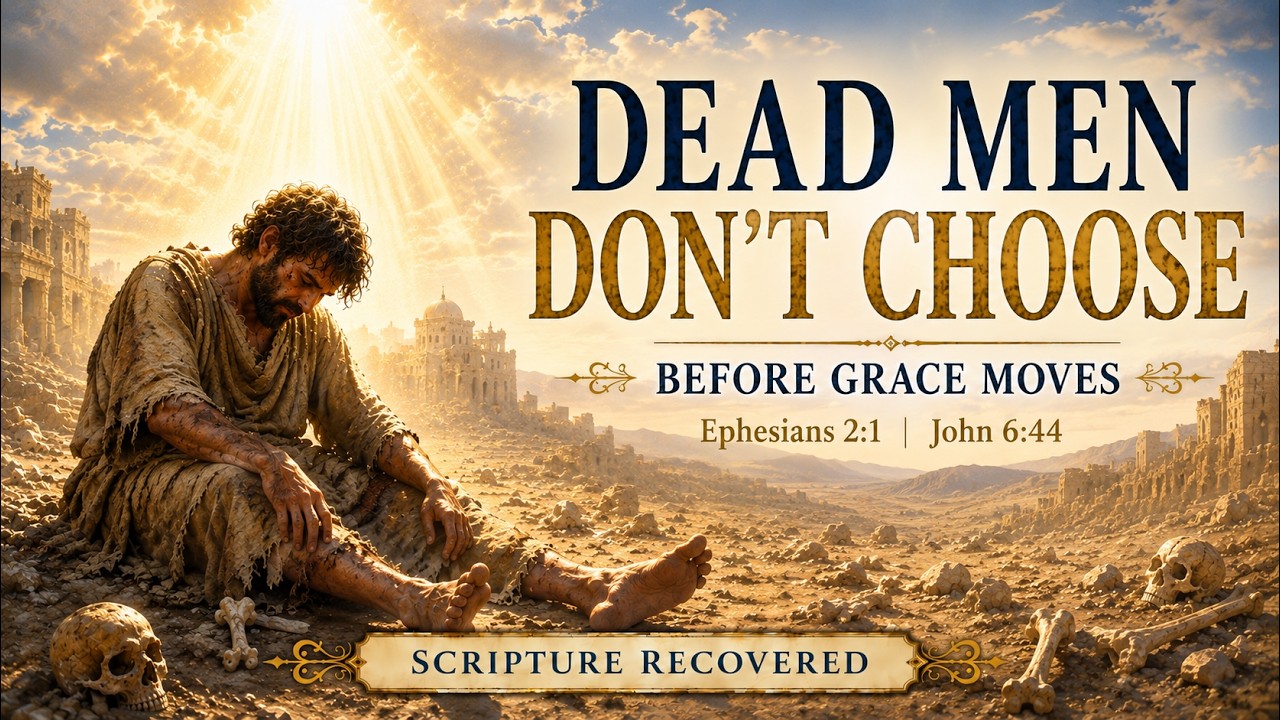
The first thing the Lord commanded Apostle Paul to do was “to open their eyes” (by the power of the Holy Ghost and the Word of God) “and turn them from darkness to light, and from Satan’s control to God, that they may receive forgiveness of sins and inheritance among those who are cleansed by faith in him” (Acts 26:18). Why would God have to open our eyes if “free will” could choose? A soul must be saved, delivered by the preaching of the cross. A slave must be released before he or she may say, “I am free,” and someone must pay for their liberty. For “it is God which works in you both TO WILL and TO DO of his good pleasure” (Philippians 2:13). Yes, we used free will, but it had to be REVIVED by God before it could function. The quickening occurs first. The dead must be brought back to life before they can be called alive. God said, “I will cause breath to enter you, and ye shall live” (Ezekiel 37:5).
‘Total depravity’—the idea that sin has corrupted every part of human nature—implies that it has eroded our ability to exercise free will. I didn’t come to this through some system or school of thought; it’s what the Scriptures pressed upon me as I wrestled with them. I have free will, no doubt about it, but left to myself, it only tends toward evil since my soul is dead—spiritually lifeless apart from God—and I am unable to use the realm of my will that still exists within me to achieve anything good: ‘For I know that in me (that is, in my flesh,) dwelleth no good thing: for to will is present with me; but how to perform that which is good I find not’ (Romans 7:18). As I dug deeper, I saw this wasn’t just my story but a truth woven throughout the Word. ‘The heart is deceitful above all things, and desperately wicked: who can know it?’ (Jeremiah 17:9). Even our best intentions falter, for ‘there is none righteous, no, not one… there is none that seeketh after God’ (Romans 3:10-11). I once thought I could reach for God on my own, but every other notion dissipated when I read, ‘Can the Ethiopian change his skin, or the leopard his spots? then may ye also do good, that are accustomed to do evil’ (Jeremiah 13:23). It hit me: my will, though real, was bound—enslaved to sin—until God’s voice broke through. ‘The Lord looked down from heaven upon the children of men, to see if there were any that did understand, and seek God. They are all gone aside, they are all together become filthy’ (Psalm 14:2-3). What I gleaned wasn’t a label like ‘depravity,’ but a stark reality: apart from God’s intervention, my free will couldn’t climb out of the pit—it needed Him to lift me. What benefit does it then offer? Is it able to save me? If my free will could assist me, I wouldn’t require saving grace…
Are we able then to confirm “irresistible grace”—God’s overwhelming love that draws us to Him without fail? While some believe grace can be resisted, I see in Scripture that God’s call is effectual: “As many as were ORDAINED TO ETERNAL LIFE BELIEVED” (Acts 13:48). Isn’t it true that it’s this irresistible grace that does the heavy lifting for us?
This divine initiative isn’t just a cosmic truth—it’s personal, as I’ve seen in my own life. I still don’t understand how and why the Lord reached out to me and saved me, even though I was the chief of sinners, the weakest, and most broken of them all. Before I would even know Christ Jesus personally or be saved by Him, I saw this mystery play out in others too. Many of my friends tried and longed to come out of their sinful lives of misery. They would say, ‘If I come to Christ, I would go around and save all those around me’—a noble dream—but then, in the same breath, they’d confess, ‘I just can’t submit to Christ.’ What a juxtapose! It struck me: their hearts yearned for freedom, yet something held them back, as if their wills were tethered to the very chains they despised. And there I was, in my own pit, crying for redemption while they longed to do things for Christ. Deep pangs overwhelmed me to the point that I felt I would die—I longed for death rather than living like that. If Jesus had not saved me at that point, I wouldn’t be alive today, learning of His goodness and sharing this life with you. It baffled me then, and it echoes now: how could I, or they, bridge that gap when our strength faltered? It still baffles me how the Lord saved me. I could trace His protection and care back to when I was dead in sin, and He wooed me with His eternal Spirit. How could I be saved if it weren’t for God’s grace? Can I proudly claim my first step of having faith and trust in Christ?…
Wouldn’t that imply that I chose Christ? Jesus Christ is the author of our faith, isn’t He? Hebrews 12:2; Ephesians 2:8. Where would I find such characteristics within myself when everything in my life was rot and death? The only explanation I can conceive of is that God foreknew and predestined us (Romans 8:29-30), chose us in Christ (Ephesians 1:5, 11), and elected us according to His foreknowledge (1 Peter 1:2). I obtained the precious faith to respond; IT CAME TO ME, not the other way around—“The faith… which is by him hath given” (Galatians 3:23; 2 Peter 1:1)—“whose heart THE LORD OPENED” (Acts 16:14).
What began in my heart reflects a plan that stretches back to eternity. God’s grace did not arrive on the day you believed—it was set in motion when “the Lamb slain from the foundation of the world” (Revelation 13:8) poured out His love. “God commends his love toward us, in that, while we were yet sinners, Christ died for us” (Romans 5:8). That’s when God lavished His grace on humanity, which is why Abraham and his descendants were spared and justified by faith. Didn’t they all “eat the same spiritual meat” and drink from “that spiritual Rock that followed them: and that Rock was Christ” (1 Corinthians 10:3-4)? It was Christ in the wilderness congregation whom their fathers revolted against and refused to obey, casting Him out (Acts 7:37-39)—the prophet Moses predicted, saying, “A prophet shall the Lord your God raise up… him shall ye hear” (Deuteronomy 18:15; Acts 3:22, 37). “When the fulness of the time was come, God sent forth his Son” (Galatians 4:4), “who verily was foreordained before the foundation of the world, but was manifest in these last times for you” (1 Peter 1:20). Every time the Israelites offered a sacrifice on the altar to atone for their transgressions, God accepted it as an offering anticipating the cross of Calvary, on which the blood of His own Son would be spilled. This is because God saw this Lamb slain from the beginning of time, sacrificed in His heart. Witnesses of it were the apostles of the Lamb, who declare, “That which was from the beginning, which we have heard, which we have seen with our eyes, which we have looked upon, and our hands have handled, of the Word of life; for the life was manifested, and we have seen it, and bear witness, and shew unto you that eternal life, which was with the Father, and was manifested unto us” (1 John 1:1-2).
God’s love for us was made evident in this: “He sent his only Son into the world so that we could live through him” (1 John 4:9). Jesus said, “Many prophets and kings have desired to see his day but have not seen them” (Luke 10:24); “Of which salvation the prophets have enquired and searched diligently, who prophesied of the grace that should come unto you” (1 Peter 1:10), “which the angels desire to look into” (1 Peter 1:12) and witnessed (1 Timothy 3:16). “The Son of God was manifest for this purpose, that he might destroy the works of the devil” (1 John 3:8) and deliver “us who through fear of death were all our lifetime subject to bondage” (Hebrews 2:15). The day grace and truth were revealed in Christ was His birth—“For the law was given by Moses, but grace and truth came by Jesus Christ” (John 1:17). Emmanuel, meaning “God with us” (Matthew 1:23), “God was manifest in the flesh” (1 Timothy 3:16), “the Lord from heaven” (1 Corinthians 15:47). “The Lord hath appeared of old unto me, saying, Yea, I have loved thee with an everlasting love: therefore with lovingkindness have I drawn thee” (Jeremiah 31:3). “For the grace of God that bringeth salvation hath appeared to ALL MEN” (Titus 2:11); “now once in the end of the world hath he appeared to put away sin by the sacrifice of himself” (Hebrews 9:26). “We who, because of him, believe in God” (1 Peter 1:21). “For as by one man’s disobedience many were made sinners, so by the obedience of one shall many be made righteous” (Romans 5:19).
In addition to dethroning sin and its power, His sacrifice fulfilled the Father’s promise to pour the Spirit of God upon all flesh. A period of grace was ushered in for the entirety of creation with the arrival of the Spirit.
In this contemplative journey exploring the interplay of faith, grace, and divine intervention, it becomes evident that the transformative power of these elements—rooted in God’s sovereign love—is profound and life-altering. The narrative underscores the pivotal role of faith as a seed sown in fertile soil, germinating under the influence of the Holy Spirit. This transformative process symbolizes a rebirth and renewal, where the union of heaven and earth brings about a spiritual awakening. Moreover, the discussion on grace emphasizes that salvation is a gift from God, underscoring the divine initiative in the process of redemption. The concept of election and God’s sovereign choice in salvation is highlighted, challenging the notion of human free will as the sole determinant in accepting or rejecting God’s invitation. Ultimately, the text invites reflection on the profound mysteries of faith, grace, and divine intervention, illustrating a journey of spiritual growth and enlightenment guided by the hand of God.
Yet, the New Testament reveals a stark truth: not everyone senses their need for a Savior. Some souls stand content, convinced of their own wholeness. They are the “righteous” Jesus spoke of—not righteous in God’s eyes, but in their own. To them, their virtues gleam like polished armor, hiding the decrepitude beneath. Scripture calls all humanity depraved—“There is no one righteous, not even one” (Romans 3:10)—yet these refuse to see it. Their sanctimony is their doom, a self-made prison barring them from the light. Picture a man standing tall, chest puffed with pride, declaring his soul whole—while the Savior he claims to follow passes him by, seeking the broken instead. Jesus said it plainly: “I have not come to call the righteous, but sinners” (Matthew 9:13). Again, “It is not the healthy who need a physician, but the sick” (Matthew 9:12). His mission was clear—yet so many miss it, blinded by a righteousness of their own making. This is the paradox of pride: those who need Him most often see Him least, while the wretched and weary find their way to His feet. And worse, even those who’ve tasted His grace can forget its source, trading humility for a gavel. So, as we marvel at the grace that saves, let us never lose sight of our own poverty apart from Him—for it is in that brokenness that His light shines brightest.