From Frayed TENTS to Forever HOMES: The Glorious Truth That DEATH Is Not Our End

A Soul-Stirring Feast of Hope and Truth

Picture a weathered tent, its canvas patched with love, swaying under a starlit sky. The wind whispers through its tears, and inside, a faint glow flickers—a soul, a spark, a life. That’s you and me, dwelling in fragile shelters of flesh, tethered to a fallen earth. I was once in a tent so tattered, so dark, I wasn’t living at all—I was dead. Not a poet’s metaphor, but a raw, biblical truth: cut off from God, the Source of all life, drowning in chaos that tasted like a foretaste of hell. Yet, from that darkness, I stumbled into a truth so radiant it set my soul ablaze: in Christ, we don’t die. We were dead once, trapped in sin’s shadow, but now we’re alive forever. When our tents fray and fold, we don’t perish—we step into a forever home, wrapped in the arms of Love Himself. Come, feast on this life-altering truth that silences fear and fills your heart with unshakable hope.

The Empty Tent: A Life That Wasn’t

Close your eyes and imagine a barren field, a lone tent sagging under the weight of a storm. No fire warms its interior, no laughter echoes within—just cold, empty silence. That was my life before Christ. The Bible calls it “nekros” (νεκρός)—spiritual death, the condition of a soul severed from God, the very Giver of life (Ephesians 2:1). Through Adam’s fall, sin unleashed “thanatos”, (θάνατος) a shadow that cloaked the world in death’s grip. Simply put, the reign of death, a shadow stretching over all creation (Romans 5:12). I walked, I breathed, I chased dreams, but my tent was a husk, my soul adrift in a wasteland of despair. Have you felt it? That ache, that hollow whisper that life should be more? It’s not life—it’s the absence of the One who is Life.

This isn’t a new warning—it echoes from the dawn of time. In Genesis 2:17, God told Adam, “Dying you shall die” (“mot tamut” in Hebrew, translated as “thanatō apothaneisthe” in Greek), a stark promise that turning from God’s way leads to death. Paul picks up this ancient thread in Romans 8:13: “If you live according to the flesh, you will die (apothnēskete),” using the same Greek root, “apothnēskō”, to warn of a slow dying—a life disconnected from God’s Spirit, drifting toward corruption. It’s not just a future end; it’s a present condition, a tent crumbling under the weight of sin’s storm. Yet, even in this sobering truth, God’s mercy shines. He saw our empty tents, our hearts starved for meaning, and He didn’t turn away. Like a father tending a shivering child, He prepared a feast of life, ready to fill our tents with His presence. This is no dry doctrine—it’s a love song, calling us home.

Yet, even in that darkness, God’s love was weaving a story. He saw our empty tents, our hearts starved for meaning, and He didn’t turn away. Like a father tending a shivering child, He prepared a feast of life, ready to fill our tents with His presence. This is no dry doctrine—it’s a love song, calling us home.

The Fire Within: God’s Life Lights the Tent

Then came the moment that changed everything, like a sunrise bursting through a stormy night. Jesus, the Word who “tabernacled among us” (John 1:14), sent His Spirit to kindle a fire in my tattered tent. The Greek word “zōē” (ζωή) captures it—God’s vibrant, eternal life, pulsing through my soul. The Bible declares, “He who has the Son has life; he who does not have the Son does not have life” (1 John 5:12). I was dead once, lost in “nekros”, but Christ’s touch was a resurrection. I passed from death to life (John 5:24), my tent now glowing with the warmth of His Spirit.

Imagine a weary traveler, shivering in a leaky tent, suddenly finding a fire roaring inside, its light spilling through every seam. That’s what it’s like to be a tabernacle for God’s presence. Once, God dwelt in a tent among Israel (Exodus 25–40); now, His Spirit pitches His tent in us, making us alive, whole, cherished. This is the heart of the gospel: God doesn’t just mend our broken tents—He moves in, turning our frail shelters into sacred homes.

The Great Homecoming: Folding the Tent, Stepping into Glory

The world calls it dying, but Scripture paints a different picture. The Greek word “apothnēskō” (ἀποθνῄσκω) means “to die off,” but for believers, it’s not death—it’s a homecoming. Our bodies, these earthly tents (skēnos – σκῆνος), are temporary, woven from a fallen earth, prone to fray and fade (Romans 8:10). When they wear out, we don’t vanish. Paul says it best: “To be absent from the body is to be present with the Lord” (2 Corinthians 5:8). Jesus seals the promise: “He who believes in Me will never die” (John 11:26). We were dead once, but now we’re alive forever, and “apothnēskō” is just folding the tent to step into a forever home.

And what does this homecoming mean for those in Christ? The Apostle Paul captures it with breathtaking clarity in Philippians 1:21: “To live is Christ, and to die is gain.” In Greek, the word for “to die” here is “ἀποθανεῖν” (apothnēskō), a decisive act of departure, not just the heart stopping but a crossing over from one realm to another. It’s the moment the frayed tent of our body (skēnos) is folded, and we step into the fullness of Christ’s presence. Paul’s words—”τὸ ζῆν Χριστός καὶ τὸ ἀποθανεῖν κέρδος”—ring with stark beauty: to live is to bask in Christ’s life (zōē), and to depart is to gain something far greater, a radiant home where every tear is wiped away. Like a traveler leaving a windswept tent for a palace aglow with love, “apothnēskō” is not loss—it’s the ultimate gain, a banquet table set in glory.

Yet, Paul also offers a sobering reminder: our choices in this tent matter. In 1 Corinthians 11:30, he warns that some believers, by partaking unworthily in the Lord’s Supper, became “weak and sickly, and many sleep”—a gentle term for premature “apothnēskō”, a physical departure hastened by spiritual misalignment. Living out of step with God’s Spirit can fray our tent sooner, through sickness or calamity, echoing the warning of Romans 8:13. But even this is not the end for those in Christ. The Spirit within us, the same that raised Jesus from the dead, holds the promise of restoration (Romans 8:11). Our homecoming, whether now or later, is secure in Him.

But rest assured—our salvation in Christ is a fortress, unshaken by fleeting failures. Only a deliberate rejection, as grave as Judas’ betrayal, embracing a false spirit, or blaspheming the Holy Spirit, severs that bond (Matthew 12:31–32). Consider the Israelites in the desert: their stubborn refusal to trust God’s promise led to their destruction, not mere fleshly missteps, but a heart hardened against Him (Numbers 14:11, Hebrews 3:19; 6:4). Yet for believers, even when we stumble, God’s grace prevails. Paul, in 1 Corinthians 5:5, delivered a wayward believer’s body to affliction, not to condemn but to save their soul for the Lord’s day. Our choices may fray our tent sooner—through sickness or calamity, as Paul warned (1 Corinthians 11:30)—but the Spirit within, the same that raised Jesus from the dead, guards our eternal homecoming (Romans 8:11). For those who hold fast to Christ, no misstep steals the promise of glory. His love is a feast, sustaining us through every storm.

Picture a child outgrowing a beloved treehouse, its boards weathered and creaking. Would you mourn the treehouse when they move into a radiant mansion, filled with laughter and love? So why weep for a believer’s tent when it folds? If they’re in Christ, they’re not gone—they’re home, basking in the warmth of their Savior’s embrace. And here’s the feast of hope: if Christ returns, those of us still in these tents will be transformed in a heartbeat, our frail bodies made glorious like His (Philippians 3:21). The same Spirit that raised Jesus from the dead lives in us, ready to quicken our mortal frames (Romans 8:11). It’s not an end—it’s a glorious beginning, a table set for eternity.

A Feast of Joy in the Face of Grief

Yes, parting with loved ones leaves a pang in our hearts. The absence of their familiar tent, their smile, their voice, feels like a storm tearing through our own. But here’s the truth that turns tears to joy: they’re not lost. If they’re in Christ, they’re more alive than ever, feasting at the Lord’s table, wrapped in His love. We don’t grieve like those “who have no hope” (1 Thessalonians 4:13), because our separation is temporary, a brief pause before the grand reunion. Imagine it: one day, we’ll join them in tents that never tear, in a home where every seat at the table is filled with joy.

This truth isn’t just for scholars or preachers—it’s a banquet for every hungry heart. It silences the lie that death is a cold, final curtain. It reminds us we were dead once, trapped in “thanatos’s shadow, but Christ’s love has made us alive. Every breath, every moment, is a taste of eternity, a foretaste of the feast awaiting us. And when our tents fray, we don’t fade—we step into the fullness of God’s presence.

A Call to Feast and Share the Light

So, let’s feast on this truth today. Live like your tent is ablaze with God’s fire, every moment a chance to love, to shine, to share. Don’t fear the wind that frays your canvas—it can’t snuff out the life Christ has kindled. Tell someone this good news: “We don’t die—we move to a forever home.” Let this truth be your daily bread, nourishing your soul, silencing fear, and filling you with joy. Like a warm meal shared with friends, this hope is meant to be passed around, lighting up every heart it touches.

The tragedy isn’t when the tent folds—it’s when it stands empty. In Jesus, it never will. Come, feast on the promise of life eternal, and let your soul sing with hope.

—

TWO ROADS to the MESSIAH: Grace Forged in Fire, Purity Woven in Promise

Imagine a divine plan so unshakable that neither human failure nor flawless obedience could derail it. A plan where two paths—one scarred by sin and redemption, the other untouched by scandal—converge on a single, breathtaking destination: the Messiah, Jesus Christ, the Son of David. This is the story of David’s two sons, Solomon and Nathan, whose bloodlines weave a tapestry of grace and purity, proving that God’s promise endures through every human triumph and tragedy. Buckle up—this isn’t just a genealogy lesson; it’s a divine mic-drop that will leave you in awe of God’s untouchable sovereignty.

The Scandal That Shaped a Savior

Picture King David, the man after God’s own heart, standing on a rooftop, his eyes falling on Bathsheba. One catastrophic choice spirals into adultery, betrayal, and murder. Yet from this wreckage rises Solomon, the son born of David and Bathsheba’s union after repentance (2 Samuel 12:24). Through Solomon’s royal line, traced in Matthew 1:6–16, comes Jesus, the legal heir to David’s throne. Bathsheba, a woman entangled in scandal, becomes the many-times great-grandmother of the Messiah—proof that God doesn’t just tolerate human failure; He transforms it into a conduit for His glory.

But Bathsheba’s story is just one spark in a lineage ablaze with human imperfection. The Messiah’s ancestry reads like a tapestry of scandal and redemption: Judah, deceived and entangled with his daughter-in-law Tamar; Rahab, a prostitute who believed in God’s promise; Ruth, a Moabite outsider who became part of God’s chosen line; David, a man after God’s heart yet guilty of lust and murder; kings like Manasseh, drenched in bloodshed and idolatry before repentance; and kings like Rehoboam, Abijah, Jehoram, Ahaziah, Athaliah, Joash, Amaziah, Uzziah, Ahaz, Manasseh, Amon, and Zedekiah—rulers steeped in idolatry, bloodshed, and rebellion before God. This was no polished, flawless dynasty—it was a corridor of brokenness, a tapestry of human frailty, sin, and moral failure. You can only imagine what Jesus had to endure in the flesh that He took up in Himself from this lineage. Yet God wove every blemish, every failure, every shadow into a story that would shine with redemptive brilliance.

Why was this sullied path perfect for God’s plan? Because Jesus, the Savior, chose to plunge into our brokenness—and He took the exact body from that lineage, with all its corruption, scandal, and imperfection. As Scripture declares, He came literally “from the loins of David” (Acts 2:30; 2 Timothy 2:8; Romans 1:3), fully entering the human story marked by failure, sin, and redemption.

Scripture declares He came ἐν ὁμοιώματι σαρκὸς ἁμαρτίας (en homoiōmati sarkos hamartias)—“in the likeness of sinful flesh” (Romans 8:3). Sarx hamartias, the flesh of sin, reveals a staggering truth: Jesus entered our fallen human nature, temptable like us, yet sinless through perfect obedience to the Spirit. His victory wasn’t in escaping our frailty but conquering it—proving that grace can reign where sin once ruled. Through Solomon’s line, scarred by David’s failure and a genealogy steeped in scandal, Jesus embodies redemption incarnate, showing that even the darkest sins can become a stage for God’s glory. “We have a High Priest who was tempted in every way as we are, yet without sin” (Hebrews 4:15).

But what if David had never sinned? What if that rooftop moment never happened, and Bathsheba remained Uriah’s wife? Would the Messiah still have come? The answer is a resounding yes—and the Bible reveals how, through a second, unsullied path.

The Pure Path Through Nathan

Enter Nathan, another son of David, likely born to a lawful wife before the Bathsheba affair. Unlike Solomon’s line, marked by the stain of sin and the triumph of grace, Nathan’s lineage flows like a clear stream, untainted by scandal. Luke 3:23–38 traces Jesus’ biological descent through Mary, straight back to Nathan, son of David. This is the “what-if” scenario already embedded in Scripture: a Messiah whose bloodline didn’t hinge on David’s failure.

If David had never sinned, Nathan’s line would still have carried the promise. No adultery, no murder, no need for Psalm 51’s gut-wrenching repentance. Yet, the destination remains unchanged: Jesus, the Son of David, born of Mary, fulfilling God’s covenant to David (2 Samuel 7:12–16). This parallel path reveals a God who doesn’t *need* human brokenness to accomplish His will—but when brokenness occurs, He redeems it with a beauty that takes your breath away.

Two Roads, One Divine Plan

The genius of God’s plan lies in its dual tracks: Solomon’s line, radiating grace through a redeemed failure, and Nathan’s line, shining with the purity of an unbroken promise. Matthew’s genealogy (through Solomon) establishes Jesus as the legal King, the rightful heir to David’s throne through Joseph, His earthly father. Luke’s genealogy (through Nathan) confirms His biological descent through Mary, grounding His humanity in a line unmarred by David’s sin.

Consider the implications:

– Solomon’s Line (Matthew 1): A story of grace. Bathsheba, Rahab, Ruth—imperfect people woven into Jesus’ ancestry—show a Savior who embraces a flawed humanity. David’s sin didn’t derail God’s plan; it amplified the message of redemption. Jesus’ legal claim to the throne comes through a lineage that screams, “God restores what we break.”

– Nathan’s Line (Luke 3): A story of purity. Untouched by the scandal of Bathsheba, Nathan’s descendants lead to Mary, the virgin mother of Jesus. This line whispers of God’s unwavering faithfulness, proving the Messiah would have come even if David had walked perfectly, for the true weight He came to bear was not the failures of individuals, but the root of Adamic sin itself, the fallen human nature inherited by all.

Together, these genealogies form a divine paradox: Jesus is the Son of David through both the ashes of human failure and the purity of divine promise. God covered every angle, ensuring His plan was unstoppable.

If David Had Not Sinned…

Let’s linger on the “what-if.” If David had never sinned, the Solomon line might not exist. Bathsheba would likely have remained Uriah’s wife, and Solomon, the child of their union, would never have been born. The royal lineage through Joseph might have passed through another of David’s sons. But Nathan’s line, already in place, would still have carried the Messiah’s blood through Mary. The promise of a Savior from David’s house (2 Samuel 7:12–16) would stand unshaken, proving God’s covenant doesn’t depend on human perfection—or imperfection.

Yet, the inclusion of Solomon’s line adds a layer of divine artistry. David’s sin, though tragic, becomes a canvas for God’s grace. Psalm 51, born from David’s repentance, echoes through the ages as a cry for mercy that Jesus Himself would answer. The women in Matthew’s genealogy—Bathsheba, Rahab, Ruth—each carry stories of redemption, foreshadowing a Messiah who redeems sinners. Without David’s sin, we might miss this vivid portrait of a God who weaves broken threads into a masterpiece.

The Jaw-Dropping Truth

Here’s where it gets mind-blowing: God didn’t just account for David’s sin; He anticipated every human failure and triumph. The dual genealogies of Jesus—Solomon’s grace and Nathan’s purity—reveal a plan so robust that no “what-if” could unravel it. Whether through the wreckage of sin or the clarity of righteousness, God’s promise to David holds firm: “Your house and your kingdom will endure forever” (2 Samuel 7:16).

This isn’t just about ancient bloodlines; it’s about you and me. If God can redeem David’s darkest moment to bring forth the Savior, what can He do with our failures? If He can fulfill His promise through a spotless path like Nathan’s, what does that say about His faithfulness to us? The Messiah’s story isn’t just history—it’s a declaration that God’s plan for redemption is unstoppable, weaving through every human story, broken or whole.

The Fire of God’s Promise

So, stand in awe. Two roads—one forged in the fire of grace, the other woven in the purity of promise—lead to the same Messiah. Jesus, the Son of David, emerges as both the King who redeems our failures and the Holy One who fulfills God’s perfect plan. Solomon’s line shows us that no sin is too great for God’s mercy. Nathan’s line assures us that no human failure is necessary for God’s victory.

This is the vibe: a God who writes a story so profound, so unshakable, that it leaves us speechless. Whether you’re drawn to the raw grace of Solomon’s line or the pristine promise of Nathan’s, the truth remains: Jesus is the destination of both. And that, my friend, is a divine flex that stops the scroll and sets the heart ablaze.

Call to Reflect:

Which road resonates with you—the grace that redeems your failures or the purity that anchors your hope? Share your thoughts, and let’s marvel together at the God who turns both into glory.

What the Bible Actually Says About Death

The Overlooked Truth About Spiritual vs. Physical Death in Scripture

What if everything you thought you knew about “death” in the Bible was only half the story? For years, I sat in pews, listened to sermons, and read my Bible, but something about the way we talked about death felt off. It wasn’t until the Spirit of God peeled back the layers that I saw it: the English word “death” hides a profound truth that could change how you see life, sin, and eternity. The Bible doesn’t use one vague term for death—it uses precise words in Greek and Hebrew to distinguish between the “event” of dying, the “state” of being dead, and the “power” of death itself. And for Christians, this distinction unveils a victory so complete that death loses its sting forever.

You’ve probably heard John 11:25–26, where Jesus says, “I am the resurrection and the life: he that believeth in me, though he were dead, yet shall he live: and whosoever liveth and believeth in me shall never die” (KJV). Sounds simple, right? But the English translation flattens a truth that’s far richer in the original languages. Today, we’re pulling back the curtain on death in the Bible—exposing the difference between physical and spiritual death, and why this matters for every believer. This isn’t just semantics; it’s a revelation that could set you free from fear and ignite your faith in Christ’s triumph.

The Fall: Where Death Began

To understand death, we have to start at the beginning. In Genesis 2:17, God warned Adam, “In the day that thou eatest thereof thou shalt surely die” (KJV). The Hebrew word here is “mavet” (מָוֶת), which means death not just as a moment but as a state of separation and corruption. When Adam and Eve sinned, they didn’t drop dead instantly. Instead, they entered a condition of spiritual lifelessness—cut off from God’s presence. This is what the Bible later calls being “dead” in a spiritual sense.

In the New Testament, this idea is captured by the Greek word “nekros” (νεκρός), meaning “dead” or “lifeless.” It’s the word used in Ephesians 2:1, “And you hath he quickened, who were dead in trespasses and sins” (KJV). Before Christ, we were all “nekros”—spiritually lifeless, separated from God because of the Fall. This wasn’t just a one-time event; it was a state of being, a wasteland where sin ruled. The Fall didn’t just make us mortal; it plunged us into a condition where death became a power over humanity.

Two Kinds of Death: The Bible’s Hidden Distinction

Here’s where things get interesting. The Bible doesn’t use one catch-all term for death. In the original languages, it distinguishes between the “event” of dying and the “state” or “power” of death. Let’s break it down:

1. The Event of Dying: “Apothnēskō”

In John 11:25, when Jesus says, “Though he were dead, yet shall he live,” the Greek word is “apothnēskō” (ἀποθνῄσκω), meaning “to die.” This refers to the act of dying—physical death, like what happened to Lazarus in the same chapter. When Lazarus died (“apothnēskō”), his body ceased to function, but Jesus promised that this event wasn’t the end. For believers, physical death is just a moment, a doorway to eternal life.

The Bible often uses “apothnēskō” to describe this event. For example, in Romans 6:2, Paul asks, “How shall we, that are dead to sin, live any longer therein?” (KJV). Here, “apothnēskō” is used metaphorically: when we trust in Christ, we “die” to sin’s control. It’s a one-time, decisive act, like crossing a threshold. This isn’t about being spiritually lifeless—it’s about breaking free from sin’s grip through union with Christ’s death on the cross.

2. The State of Death: “Nekros” and “Thanatos”

Contrast that with “nekros” and “thanatos” (θάνατος), the Greek words for the state or power of death. “Nekros” means “dead” or “lifeless,” often describing spiritual death. Think of the prodigal son in Luke 15:24: “This my son was dead (nekros), and is alive again” (KJV). He wasn’t physically dead—he was spiritually lost, separated from his father. Similarly, Revelation 3:1 warns the church in Sardis, “Thou hast a name that thou livest, and art dead (nekros)” (KJV). This is spiritual lifelessness, a state of being cut off from God’s vitality.

“Thanatos”, on the other hand, is broader. It’s the power or consequence of death, as in Romans 6:23: “The wages of sin is death (thanatos)” (KJV). This isn’t just about dying—it’s about death as a force of corruption, separation, and mortality that entered the world through sin. In Hebrew, “mavet” carries a similar weight, as seen in Genesis 2:17. Together, “nekros” and “thanatos” paint death as a condition or power, not just a moment.

The English Trap: Why We Miss the Truth

Here’s the problem: English translations use “death” or “dead” for all these terms—“apothnēskō”, “nekros”, “thanatos”, and “mavet”. This flattening hides the Bible’s precision. When you read “dead to sin” in Romans 6:2 (apothnēskō), it sounds similar to “dead in sins” in Ephesians 2:1 (nekros), but they’re worlds apart. The first is a victorious act—dying to sin’s power through Christ. The second is a hopeless state—lifelessness without God. No wonder so many Christians fear death or feel stuck in guilt, thinking physical death threatens their eternal security or that sin still reigns over them.

This translation trap has real consequences. It can make physical death feel like a spiritual defeat, when Jesus clearly says it’s not. It can also obscure the freedom believers have over sin’s dominion. The Spirit chose distinct words for a reason, and uncovering them is like finding a hidden key to a locked door.

The Victory: No More Death for the Believer

Now, let’s tie this to John 11:25–26, where Jesus declares, “He that believeth in me, though he were dead (apothnēskō), yet shall he live: and whosoever liveth and believeth in me shall never die” (KJV). The first part addresses physical death: even if a believer dies (apothnēskō), they will live again through resurrection. The second part is even bolder: those who believe in Christ “shall never die” spiritually. In the Greek, this is emphatic—no “nekros” or “thanatos” can touch them. Why? Because they’re united with Christ, who defeated death’s power (1 Corinthians 15:55–57).

This is the heart of the gospel. When you trust in Christ, you “die” (apothnēskō) to sin’s control, just as Christ died on the cross (Romans 6:8). This isn’t about becoming spiritually lifeless—it’s about breaking free from sin’s chains. Meanwhile, the state of spiritual death (nekros)—that lifeless separation from God—is gone forever. As Romans 6:11 says, “Reckon ye also yourselves to be dead indeed unto sin, but alive unto God through Jesus Christ our Lord” (KJV). Death has no dominion over you.

Why This Changes Everything

Imagine living without the fear of death. Too many Christians dread physical death, thinking it’s a sign of spiritual failure, or they feel trapped by sin, as if its power still rules them. But the Bible’s distinctions set you free:

– Physical death (apothnēskō) is not the end. It’s a moment, a doorway to eternal life. Jesus proved this with Lazarus and sealed it with His resurrection.

– Spiritual death (nekros) is not your reality. If you’re in Christ, you’re alive to God, no longer separated by sin.

– Death’s power (thanatos) is broken. Christ’s victory means sin and death no longer reign over you (Romans 6:14).

This truth reframes how you live. You don’t have to fear the grave, because it’s temporary. You don’t have to live under sin’s weight, because you’ve died to it. And you don’t have to wonder about your eternal security, because Jesus said, “Whosoever liveth and believeth in me shall never die.”

The Bigger Picture: From the Fall to Resurrection

Let’s connect the dots:

– The Fall: Sin introduced nekros—spiritual deadness, separation from God (Ephesians 2:1).

– The Consequence: Thanatos/mavet became the ongoing power of death—corruption, mortality, separation (Romans 6:23).

– The Event: Believers “die” (apothnēskō) to sin through Christ, breaking its control (Romans 6:2).

– The Victory: Those who die in Christ rise to new life, free from death’s power forever (Romans 6:4, John 11:26).

Here’s a simple diagram to see it clearly:

“`

The Fall (Sin)

    ↓

Nekros (Spiritual Deadness)

    ↓

Thanatos/Mavet (Death’s Power)

    ↓

Apothnēskō (Dying to Sin)

    ↓

Resurrection (Eternal Life in Christ)

“`

Here’s a clear diagram linking these concepts with their biblical nuance:

             The Fall (Original Sin)

                     │

                     ▼

                nekros (νεκρός)

        ┌───> Spiritual deadness / separation

        │      from God; outcome of the Fall

        │

        ▼

   thanatos (θάνατος) / mavet (מָוֶת)

        ├──> Ongoing consequence of death

        │      – Corruption

        │      – Separation

        │      – Mortality

        │

        ▼

     apothnēskō (ἀποθνῄσκω)

        ├──> Specific act/event of dying

        │      – Physical death

        │      – Spiritual “dying to sin” (Rom 6:2)

        │

        ▼

   Resurrection / Life in Christ

        └──> Those who experienced apothnēskō in Christ

               are risen to new life

               (Rom 6:4, 2 Cor 5:17)

Explanation in words:

  1. The Fall introduced sin, resulting in nekros — spiritual death, a lifeless state.
  2. Thanatos/mavet represents the ongoing power and consequence of death: corruption, separation, mortality.
  3. Apothnēskō is the event of dying, either physically or symbolically (e.g., “died to sin”).
  4. Believers who undergo apothnēskō in Christ rise to new spiritual life, breaking the power of death (thanatos/mavet) over them.

For the believer, the story doesn’t end in death—it ends in life. Physical death is just a moment; spiritual death is a defeated enemy.

Live in the Truth

This revelation isn’t just academic—it’s life-changing. The Spirit used precise words to show that death, in all its forms, has no final claim on you. So, what now? Re-read John 11:25–26 and Romans 6 with fresh eyes. Let the Spirit confirm that you’re free from sin’s dominion and death’s power. Live boldly, knowing that physical death is a doorway, not a dead end, and spiritual death can’t touch you.

If you’ve ever feared death or felt weighed down by sin, hear Jesus’ words: “I am the resurrection, and the life.” Death is not your master—Christ is. Let this truth sink in, and watch how it transforms your faith, your courage, and your life.

“To simply put, when we are at home in the body, we are away from the Lord; but when we are absent from the body, we are present with the Lord.” — 2 Corinthians 5

So, don’t be confined by how the English word death is understood.


SILENCING Doubts: JESUS as GOD in Psalm 95 and Prophecy

“O come, let us worship and bow down: let us kneel before the LORD our Maker. For He is our God…” (Psalm 95:6-7). These words, penned centuries before the birth of Jesus of Nazareth, resound with a call to worship the God who created and shepherds His people. Yet, they also point to a truth that has stirred hearts and sparked debates for millennia: Jesus Christ is the divine Lord, the eternal Word, and the Holy One of God. The Magi, guided by a star, bowed before Him, their worship informed by ancient prophecies and confirmed by early Christian testimony. Through the lens of Psalm 95, the testimony of Scripture, the prophetic insight of the Magi, and the witness of history, we see that Jesus is no mere prophet or teacher—He is God incarnate. This article explores the biblical evidence for Christ’s deity, addresses common objections, and challenges readers to heed the psalmist’s warning: “Today, if you will hear His voice, harden not your heart” (Psalm 95:7-8).

Psalm 95: A Call to Worship the Divine Shepherd

Psalm 95 opens with an exuberant invitation to worship the LORD, the Creator and Shepherd of Israel: “For He is our God; and we are the people of His pasture, and the sheep of His hand” (Psalm 95:7). This imagery recalls the One who led Israel out of Egypt and through the wilderness (Exodus 13:21-22). Yet, the psalm shifts to a sobering warning: “Harden not your heart, as in the provocation… when your fathers tempted Me, proved Me, and saw My work” (Psalm 95:8-9). For forty years, God was grieved by a generation that saw His miracles yet erred in their hearts, failing to know His ways (Psalm 95:10).

Who is this God who led Israel, grieved by their rebellion? The New Testament unveils a stunning revelation: it was none other than Jesus Christ, the pre-incarnate Word. Paul writes in 1 Corinthians 10:4 that the Israelites “drank of that spiritual Rock that followed them: and that Rock was Christ.” The author of Hebrews, quoting Psalm 95, attributes the voice of God in the wilderness to the Son, urging believers not to harden their hearts as their ancestors did (Hebrews 3:7-11). This is no poetic flourish—it is a declaration that the One who spoke in Psalm 95 is the same One who walked among us as Jesus of Nazareth.

The Biblical Witness: Jesus as God

The Scriptures, both Old and New Testaments, resound with testimony to Christ’s deity. The Gospel of John proclaims, “In the beginning was the Word, and the Word was with God, and the Word was God… and the Word was made flesh, and dwelt among us” (John 1:1, 14). This Word, who was with God and was God, is Jesus—the One who led Israel out of Egypt as the pillar of cloud and fire (Exodus 13:21; 1 Corinthians 10:4). Jesus Himself affirmed His divine identity. When He declared, “Before Abraham was, I AM” (John 8:58), He invoked the sacred name of God revealed to Moses at the burning bush (Exodus 3:14). The Jewish leaders understood His claim, seeking to stone Him for blasphemy (John 8:59). In John 10:30, He stated, “I and the Father are one,” prompting another charge of blasphemy because He made Himself equal with God (John 10:33). He further asserted, “He who has seen Me has seen the Father” (John 14:9), and claimed authority to forgive sins—a prerogative reserved for God alone (Mark 2:5-7).

The apostles echoed this truth. Peter declared that the prophets spoke by “the Spirit of Christ” within them (1 Peter 1:11). Paul called Jesus “our great God and Savior” (Titus 2:13) and affirmed that “in Him dwells all the fullness of the Godhead bodily” (Colossians 2:9). The author of Hebrews described Jesus as “the brightness of [God’s] glory, and the express image of His person” (Hebrews 1:3), even quoting Psalm 45:6 to call the Son “God” (Hebrews 1:8). Even demons recognized Him, crying out, “I know thee who thou art, the Holy One of God” (Mark 1:24). From Genesis to Revelation, the Bible consistently presents Jesus as fully God, co-equal and co-eternal with the Father.

The Magi and the Prophetic Witness

The Magi’s worship of the infant Jesus (Matthew 2:11) was no random act of homage—it was a divinely guided response rooted in prophetic knowledge. There’s strong reason to believe that the Magi (or “wise men”) may have had significant knowledge of Old Testament prophecy, especially the Messianic expectations tied to the Jewish scriptures.

🔹 Who were the Magi? 

The Magi (Greek: “magoi”) were likely scholarly priests or astrologer-philosophers from the East—possibly from Babylon, Persia, or Arabia. They were known for:

  • Studying stars and dreams
  • Interpreting signs and prophecies
  • Acting as royal advisors

📜 Did the Magi know the Old Testament? 

Most likely: Yes, or at least parts of it—especially the Messianic prophecies, due to several historical and biblical factors.

🔍 1. Jewish Influence in Babylon and Persia

  • Daniel (6th century BC) served as a top advisor to the Magi in Babylon (Daniel 2:48).
  • The Jewish exile meant that Scriptures were present and known in those regions for centuries.
  • Daniel’s writings, including timelines and visions of the Messiah, could’ve been preserved in scholarly circles.

✅ The Magi may have even been descendants or intellectual successors of the group Daniel led.

✨ 2. The Prophecy of Balaam (Numbers 24:17)

“A star shall come out of Jacob, and a scepter shall rise out of Israel…”

This prophecy—about a star signaling the rise of a king in Israel—was known outside of Israel, and the Magi may have interpreted the Bethlehem star as its fulfillment.

📚 3. Messianic Expectations in the East

  • By Jesus’ time, even non-Jews had heard rumors or prophecies about a great king to arise from Judea.
  • Roman historians like Suetonius and Tacitus mention expectations of a world ruler coming from the East.
  • The Magi may have connected astronomical signs to Hebrew prophecies about the Messiah.
✝️ Conclusion: 

Yes, the Magi likely had access to or knowledge of Old Testament prophecy—especially:

  • The Messiah’s birth
  • The coming King from Judah
  • The star prophecy in Numbers
  • Possibly Daniel’s messianic timeline

So when they bowed before Jesus, they weren’t just honoring a random king—they were responding to a divinely foretold moment, with reverence informed by prophetic tradition.

 This prophetic insight is further corroborated by early Christian writers and historical context. Ignatius of Antioch, writing around 107 AD, described the Bethlehem star as a divine sign surpassing all others, heralding God in human form (Letter to the Ephesians 19.1-3). Justin Martyr, around 150 AD, linked the Magi’s gifts to Isaiah 60:6, seeing their worship as fulfillment of Messianic prophecy (Dialogue with Trypho 78). Origen, in the 3rd century, defended the Magi’s journey as guided by Balaam’s prophecy (Numbers 24:17), arguing they recognized Jesus’s divine kingship (Contra Celsum 1.60). Archaeological evidence, such as Babylonian cuneiform tablets recording celestial events around 7–4 BC, suggests the Magi could have observed an astronomical phenomenon aligning with the star, consistent with their scholarly expertise. Persian Zoroastrian texts, like the Avesta, also reveal expectations of a savior figure born under a celestial sign, which may have primed the Magi to connect the star with Jewish prophecies. Trade routes, evidenced by artifacts along the Silk Road and Incense Route, confirm cultural exchanges that likely exposed Persian and Babylonian scholars to Hebrew Scriptures, including Daniel’s Messianic visions.

This convergence of prophecy, history, and early Christian testimony underscores the Magi’s recognition of Jesus as Emmanuel—God with us (Matthew 1:23)—fulfilling Isaiah’s prophecy (Isaiah 7:14). Their worship aligns with Psalm 95’s call to “kneel before the LORD our Maker,” confirming that Jesus is the divine King foretold by the Scriptures.

Countering Common Objections

Despite this overwhelming biblical, prophetic, and historical testimony, some reject or question the deity of Christ. Let’s address four common objections:

1. “Jesus was a great teacher, but not God.” 

   Critics often cite Jesus’s humanity—His hunger (Matthew 4:2), weariness (John 4:6), and suffering (Mark 15:34)—as evidence He was merely human. However, the doctrine of the Incarnation affirms that Jesus is both fully God and fully man — a truth known as the hypostatic union. Philippians 2:6-8 explains that, though He was “in the form of God,” He “made Himself of no reputation, taking the form of a servant” and humbled Himself to the point of death. His human limitations do not negate His divine nature; they demonstrate His willingness to enter our condition to redeem us. C.S. Lewis argued in “Mere Christianity”: Jesus’s claims to divinity leave no room for Him to be merely a good teacher—He is either Lord, liar, or lunatic. His miracles (John 11:43-44), resurrection (Matthew 28:6), and fulfilled prophecies (e.g., Isaiah 7:14; Micah 5:2) rule out the latter two.

2. “The Bible never explicitly calls Jesus ‘God.’” 

   This objection ignores clear scriptural affirmations. John 1:1, Titus 2:13, and Hebrews 1:8 (where God the Father calls the Son “God”) explicitly affirm Jesus’s deity. Old Testament passages about Yahweh are applied to Jesus in the New Testament. For example, Isaiah 40:3 prophesies a voice preparing the way for the LORD (Yahweh); Matthew 3:3 applies this to John the Baptist preparing the way for Jesus. Similarly, Psalm 102:25-27 describes the unchanging Creator; Hebrews 1:10-12 applies these verses to Jesus. The Bible’s testimony is unequivocal.

3. “The doctrine of Christ’s deity was invented by later Christians.” 

   Historical evidence refutes this claim. The earliest Christians, many of whom were monotheistic Jews, worshipped Jesus as God. Pliny the Younger, a Roman governor, wrote in 112 AD that Christians sang hymns to Christ “as to a god” (Letters 10.96). Early church fathers like Ignatius (c. 107 AD) and Justin Martyr (c. 150 AD) affirmed Jesus’s divinity, rooted in apostolic teaching. Ignatius, for instance, called Jesus “our God” (Letter to the Romans 3.3), and Justin argued that the Old Testament theophanies (appearances of God) were manifestations of the pre-incarnate Christ (Dialogue with Trypho 127). The Council of Nicaea (325 AD) did not invent the doctrine but clarified it against heresies like Arianism, which denied Christ’s full deity. New Testament manuscripts, dating as early as the 2nd century, consistently present Jesus as divine, showing this belief was foundational, not a later addition.

4. “The Magi’s worship doesn’t prove Jesus’s deity.” 

   Some argue the Magi were merely honoring a human king, as was common in ancient cultures. However, their journey, guided by a star and informed by Old Testament prophecies like Numbers 24:17, indicates a deeper understanding. Their gifts—gold for a king, frankincense for a priest, and myrrh for a sacrificial savior—reflect Messianic expectations (Isaiah 60:6; Psalm 110:4). Their worship (Greek: “proskuneo”, often reserved for divine homage) aligns with the angelic command to worship the Son (Hebrews 1:6). Early Christian writers like Origen emphasized that the Magi’s recognition of Jesus fulfilled Balaam’s prophecy, guided by divine revelation (Contra Celsum 1.60). Archaeological evidence of Babylonian astronomical records supports the possibility of a celestial event around 7–4 BC, aligning with the Magi’s journey. Their actions, rooted in prophetic tradition and historical context, affirm they recognized Jesus as more than a mortal king.

The Challenge of Psalm 95

Psalm 95’s warning resonates today: “Harden not your heart.” The Israelites saw God’s works—manna from heaven, water from the rock, the Red Sea parted—yet they doubted and rebelled. The Magi, by contrast, responded to divine revelation with faith, traveling far to worship the Christ, guided by prophecy and celestial signs. Today, we have the testimony of Scripture, the resurrection of Christ, the witness of early Christians, and 2,000 years of transformed lives, yet some still harden their hearts to His divine identity. To reject Jesus as God is to echo the error of the wilderness generation, who “have not known My ways” (Psalm 95:10).

This truth has practical implications. If Jesus is God, His words carry ultimate authority. His call to repentance (Mark 1:15), His promise of eternal life (John 11:25-26), and His command to love one another (John 13:34) are not suggestions but divine mandates. To worship Him, as Psalm 95 urges, is to surrender to the One who created us, redeemed us, and will return to judge the living and the dead (Acts 17:31).

A Call to Worship and Obedience

The Magi bowed before the infant Jesus, recognizing the King of kings (Matthew 2:11). The apostles worshipped Him as the risen Lord, with Thomas declaring, “My Lord and my God” (John 20:28). Even creation itself will one day confess that “Jesus Christ is Lord, to the glory of God the Father” (Philippians 2:11). Psalm 95’s invitation remains open: “Come, let us worship and bow down.” But it comes with a warning: do not harden your heart.

For those wrestling with Christ’s deity, consider the evidence: the Scriptures proclaim Him, the prophets foresaw Him, the Magi worshipped Him, early Christians confessed Him, and history testifies to Him. For believers, let this truth deepen your worship and embolden your witness. Jesus is not a myth, a prophet, or a mere man—He is the great God and Savior, Jesus Christ. Will you hear His voice today?

—

Restoring TRUE Healing: CORRECTING Misinterpretations of ISAIAH 53

“By his stripes we are healed” (Isaiah 53:5, KJV). These words blaze with divine power, yet they’re twisted into confusion. I’ve seen friends with chronic illnesses crushed when promised physical healings never came, and heard preachers proclaim this verse guarantees health through faith, leaving the afflicted doubting their devotion. This misreading of the Suffering Servant in Isaiah 53 (Isaiah 52:13–53:12) distorts God’s truth. By diving into the Hebrew text, exploring the Tanakh’s context, reflecting on Proverbs’ wisdom, and listening to the New Testament’s revelation, we uncover a truth that torches shallow promises: the healing of Isaiah 53 is primarily spiritual and collective restoration—mending a broken nation and reconciling humanity to God. Through this lens, we silence twisted theologies, embrace God’s grace in suffering, and anchor our hope in eternal wholeness.

The Suffering Servant of Isaiah 53: Bearing Our Afflictions

Isaiah 53:4-5, part of the Suffering Servant prophecy, paints a searing picture: “Surely he hath borne our griefs, and carried our sorrows: yet we did esteem him stricken, smitten of God, and afflicted. But he was wounded for our transgressions, he was bruised for our iniquities: the chastisement of our peace was upon him; and with his stripes we are healed” (KJV). To grasp the depth of the Suffering Servant in Isaiah 53, we must explore the Hebrew and its Tanakh context.

🧠 What "Tanakh" Means:

It’s an acronym for the Hebrew Bible’s three sections:

– T – Torah (Law / Instruction)

– N – Nevi’im (Prophets)

– K – Ketuvim (Writings)

Ta-Na-Kh = Tanakh

The Hebrew unveils fiery nuances: “cholayenu” (sicknesses) and “mak’ovenu” (pains) show the Servant bearing our afflictions, while “nagu’a” (stricken) and “muke” (smitten) depict him as misunderstood, enduring divine judgment. “Mecholal” (wounded/pierced) and “meduka” (crushed) highlight the cost of our “pesha’einu” (rebellion) and “avonoteinu” (sins). “Musar sh’lomenu” (chastisement for our peace) ignites reconciliation, and “nirpa” (healed), from the root “r-p-a”, means to restore or make whole—encompassing spiritual, moral, and national restoration.

Correcting Misinterpretations of Isaiah 53

Why is Isaiah 53:5 so often misread as a promise of physical healing? Prosperity gospel teachings and modern assumptions project bodily health onto “by his stripes we are healed,” ignoring its deeper context. This eisegesis—reading our desires into Scripture—misses the blazing truth of the Suffering Servant in Isaiah 53. The Hebrew “nirpa” points to restoration, not just physical cures, and the Tanakh’s narrative reveals a collective healing for Israel’s spiritual sickness. By returning to the original context, we torch these distortions and embrace the true healing—spiritual wholeness through Christ’s atonement—that unites humanity with God.

Israel’s Spiritual Rebellion: A Sick Nation

During the reigns of Uzziah, Jotham, Ahaz, and Hezekiah (circa 740–700 BC), Judah and Jerusalem fell into deep moral and spiritual decay. They committed spiritual adultery, chasing the god of this world rather than the God of their fathers (Hosea 4:12, describing Israel’s idolatry as a “spirit of harlotry”; 2 Corinthians 4:4). They forgot their Maker—the Rock from which they were hewn (Isaiah 51:1–2; Hosea 8:14)—in an act of rebellion, called “children of disobedience” (Ephesians 2:2; 5:6; Colossians 3:6).

They didn’t just despise God’s messengers—they killed them. Again and again, they silenced prophets with bloodshed (1 Thessalonians 2:15; Matthew 21:35–40; 23:31–37), until they crucified the Son Himself, the Prince of Life (Acts 3:15), judging themselves unworthy of eternal life (Acts 13:46). This apostasy is a “sin unto death” (1 John 5:16). Isaiah 1 indicts this “sick” nation, using a body metaphor: “The whole head is sick, the whole heart faint. From head to toe there is no soundness—only wounds, bruises, and festering sores, not cleansed or bandaged or soothed with ointment” (Isaiah 1:5–6).

In the Tanakh, the “wicked” denotes unfaithful Israel, whoring after idols (Hosea 4:12), bearing “alien children” (Hosea 5:7, meaning offspring of spiritual unfaithfulness). Defiled like the seed of the serpent, like Cain (Hosea 5:4; 1 John 3:12), their hearts were hardened by God’s judgment (Isaiah 6:9–10), wrapped in a false spirit (Hosea 4:19; 5:4, symbolizing demonic influence). God withdrew from them (Hosea 5:6; Song of Songs 5:6), leaving them like a fruitless tree cursed to wither (Mark 11:13–14, 20; John 15:6), salt without savor (Matthew 5:13; Luke 14:34–35), or a darkened body with an evil eye (Matthew 6:23). This corrupt Israel, claiming to be Jews but a “synagogue of Satan” (Revelation 2:9, referring to those opposing Christ’s truth), faced judgment. Jesus condemned their hypocritical worship: “They honor me with their lips, but their hearts are far from me” (Matthew 15:8–9). Their synagogues, turned from truth, became “synagogues of Satan” (Revelation 2:9). Their house was left desolate (Matthew 23:38), their land ruined (Jeremiah 7:34), and not one stone left upon another (Matthew 24:2; Luke 21:22), as Nadab and Abihu fell for rebellion (Numbers 3:4). This culminated in AD 70, when Jerusalem’s destruction poured out God’s wrath (Daniel 9:27; Matthew 24:15–21; 1 Thessalonians 2:16; Luke 19:41–44), ending the kingdom of Israel.

The Hebrew “rosh” (“head”) symbolizes Israel’s rebellious will, exposing corrupt leaders—princes and priests (Isaiah 1:23; Hosea 4:6)—and a deeper revolt against the covenant (Isaiah 1:2–4; Jeremiah 2:30; Daniel 9:27). “Choli” (“sickness”) underscores the nation’s moral affliction (Isaiah 53:4). Yet saints like Abraham, Moses, and Rahab, by faith, showed godliness was possible through God’s grace (Hebrews 11:6–31). Alongside them stands the great cloud of witnesses (Hebrews 11:1–40), who, under the Law, proved righteousness by faith was always God’s way, even before Christ’s full revelation.

The Suffering Servant’s Atonement: Jesus as the Ransom

Ezekiel 22:30 says God sought a man to stand in the gap for the land, but found none. “There is none righteous, no, not one” (Romans 3:10, 23). Israel knew one man must die for the nation (John 11:50; 18:14). God took that place in Jesus of Nazareth. The Lamb of God, the Word, the express image of His person—slain from the foundation of the world (Revelation 13:8; John 1:29)—became flesh to bear what had to be borne (1 Peter 2:24; Hebrews 9:15). He was the propitiation through faith in His blood (Romans 3:25; 1 John 2:2; 4:10), a ransom for many (Matthew 20:28; 1 Timothy 2:6). His rejection by many in Israel brought judgment—“Your house is left unto you desolate” (Matthew 23:38). The audacity to reject redemption is staggering darkness! Yet through that rejection, salvation came to the Gentiles (Romans 11:11–12), ushering in a new covenant (Hebrews 8:13) that unites Jew and Gentile as one new man in Christ, without walls of partition (Ephesians 2:14–15). All things work together for good! Their fall led to the world’s salvation (Romans 11). For the sake of Abraham, Isaac, and Jacob, God’s promise to preserve Israel’s tribes stands (Romans 11:25–29). Through Jesus, the Suffering Servant of Isaiah 53 fulfills Israel’s calling, bringing wholeness to all, silencing every claim of supersessionism. God has not cast off Israel or earthly Jerusalem—now under the authority of the heavenly Jerusalem, the mother of us all (Galatians 4:21–27; Hebrews 12:22).

The One New Man: Restoration, Not Replacement

The true Jew, circumcised in heart, praised by God not men (Romans 2:28–29), endures in the true Israel, rooted in Abraham’s faith through Christ, the promised seed (Galatians 3:16). Believers, Jew and Gentile, grafted into this holy line (Romans 11:17–24), form the indestructible Israel of God (Galatians 6:16; 1 Peter 2:9). Called as God’s firstborn (Exodus 4:22), Israel was to blaze as salt and light to the nations (Isaiah 42:6; 49:6; Matthew 5:13). But the dried-up, sapless, Godless branches—steeped in willful rebellion—rejected their God and His Son, loving darkness (John 3:19), choosing the evil one (2 Corinthians 4:4; Acts 3:15), like their forefathers who went backward (Isaiah 1:4; Jeremiah 17:23), made a covenant with death (Isaiah 28:15), stiffened their necks (Jeremiah 17:23), burned incense to the queen of heaven (Jeremiah 44:25), and took up the star of Remphan (Acts 7:43). Even the ox knows its owner, but they would not consider their God (Isaiah 1:3). Their covenant ceased at the cross, where Christ, in the midst of the week, ended the old and disannulled their covenant with death (Daniel 9:27; Hebrews 8:13; Isaiah 28:18). Raising one new man in Himself, He united Jew and Gentile without enmity (Ephesians 2:14–15), restoring Zion as the Body of Christ, where the whole Israel is saved (Jeremiah 30:17). Yet, for the promise to the fathers—preserving all tribes of Israel—God’s vow stands, awaiting fulfillment before the Messiah’s return (Romans 11:25–29; Revelation 7). His covenant blazes eternal for the faithful who heed His call to repent and live (2 Chronicles 7:14).

The one new man in Christ is not about replacement—it’s restoration, reconciliation, and God’s eternal purpose: uniting all in Him. Ephesians 2:14–15 reveals Christ “is our peace, who has made both one, and has broken down the middle wall of separation.” This unity is a present reality, not a future hope. We maintain the unity of the Spirit (Ephesians 4:3). The first-century church was distinctly Jewish, built on Jewish apostles and prophets, with Christ, the Jewish Messiah, as the cornerstone (Ephesians 2:20). Salvation is “of the Jews” (John 4:22). Many priests became obedient to the faith (Acts 6:7), and multitudes of Jews turned to Christ (Acts 2–6). Jesus came to “the lost sheep of the house of Israel” (Matthew 15:24), yet through God’s plan, Gentiles became fellow heirs (Ephesians 3:6). This is the true Israel of God, reconciled through the cross. Cease striving to unite national Israel with the true Israel, for “not all in Israel are Israel” (Romans 9:6). Those who walk in Abraham’s faith are the children of the promise (Romans 4:12; 9:8). Walk boldly in the true Israel, grafted into this blazing unity, bearing fierce witness to Christ’s triumph!

The healing promised in Isaiah 53 has begun in Christ, extending to individuals, the covenant people, and the land. The cry of 2 Chronicles 7:14—“If My people… humble themselves, pray, seek My face, and turn from their wicked ways…”—finds its answer in Christ’s finished work and the Spirit’s outpouring. Through the cross and resurrection, Zion is restored—not just as a city, but as a spiritual reality. Hebrews 12:22 declares, “You have come to Mount Zion, the city of the living God, the heavenly Jerusalem.” This is our present inheritance in Christ. The true Zion is seated in heavenly places with Christ, and His temple is His Body—you are that temple (1 Corinthians 3:16).

Why We Misread Isaiah 53’s Context

Do you see the blazing gravity of the Suffering Servant in Isaiah 53? Why do some twist its meaning? Many Christians fall into eisegesis, drinking from muddy waters instead of Christ’s living truth, leaving them spiritually lean, far from the blazing life a Christian is called to live. The Old Testament was written for ancient Israel, where “healing” carried collective, spiritual weight. Reading translations centuries later, we project modern concerns, like physical health, onto the text. Theological lenses, especially in prosperity gospel circles, distort promises of “healing” or “wealth.” Let’s return to the Hebrew and Tanakh’s narrative to honor God’s blazing truth.

Israel in the wilderness didn’t seek healing—it was theirs under God’s direct rule. For forty years, their clothes and sandals didn’t wear out, their feet didn’t swell (Deuteronomy 8:4; 29:5; Nehemiah 9:21). God sustained them, suggesting remarkable health. Unlike them, we are endowed with healing for ministry, to bring Gentiles to faith, as Paul testified through signs and wonders (Romans 15:18-19). The phrase “by His stripes we are healed” isn’t just about personal healing—it’s the restoration of the nation and land, as seen in Israel’s prophetic warnings.

Jesus and the Apostles: Spiritual Wholeness Above All

The New Testament sets spiritual wholeness ablaze above all else. Jesus taught eternal life trumps physical health: “It is better for thee to enter into life maimed, than having two hands to go into hell” (Mark 9:43, KJV). His message prioritizes the soul’s condition, not dismissing miracles but clarifying their purpose—revealing God’s compassion and power. Paul’s “thorn in the flesh” met God’s response: “My grace is sufficient for thee: for my strength is made perfect in weakness” (2 Corinthians 12:9). Timothy’s “often infirmities” (1 Timothy 5:23), Trophimus’ sickness (2 Timothy 4:20), and Epaphroditus’ near-death illness (Philippians 2:25–30) show faithful servants thriving despite unhealed bodies. Paul honored them, not rebuking their faith. Our “vile” bodies groan for redemption (Philippians 3:21; Romans 8:23), awaiting resurrection.

Proverbs’ Fiery Wisdom: Spiritual Vitality

Proverbs ignites promises: “Be not wise in thine own eyes: fear the LORD, and depart from evil. It shall be health to thy navel, and marrow to thy bones” (Proverbs 3:7–8, KJV). Wisdom offers “long life… riches and honour” (Proverbs 3:16) and “health to all their flesh” (Proverbs 4:22). These aren’t prosperity gospel lies but symbols of spiritual vitality, peace, and right living, blazing with the spiritual healing of Isaiah 53. The world twists these into shallow gain, but the truth burns brighter: the ultimate health is the restoration of the soul, the healing of corrupt human nature, a life infused with divine power.

“Flesh” in Proverbs isn’t just skin, bones, or organs—“dead because of sin” (Romans 8:10). It’s the “sarx“, the corrupted human nature—heart, mind, and sinful desires—distorted by the fall (Romans 8:4–5). Proverbs’ health is the spiritual transformation of this fallen nature through God’s life-giving wisdom, not a mere cure. Christ doesn’t patch up the old man; He makes all things new, clothing us in divine nature (2 Peter 1:4). This flesh, deadened by sin, is revived through the Spirit’s power, a spiritual resurrection into a new creation. The body awaits its glorious transformation (Romans 8:11), but the corrupt self is renewed today—spirit, soul, and mind—in divine vitality. And as we prosper in our souls, we can also access health and well-being, just as it is written, “Beloved, I pray that you may prosper in all things and be in health, just as your soul prospers” (3 John 1:2). But if we fall away and live according to the flesh, the opposite happens—spiritual death and discipline come upon us, as warned in Romans 8:13; 1 Corinthians 11:28-32; and Hebrews 6:6.

The Promise Unpacked

Proverbs 3:8’s “health to thy navel, and marrow to thy bones” ignites holistic renewal—soul, spirit, and body—fulfilled in Christ, God’s wisdom.

– Health (רְפוּאָה, refu’ah): From “rāphâ“, “to heal” or “restore,” “refu’ah” is spiritual well-being, revitalizing our core.

– Navel (טֶנֶר, tenar): The navel, like an umbilical cord, is the source of life. “Health to thy navel” restores spiritual vitality lost in Adam’s sin.

– Marrow (חַסְרֵי, ḥaserê): Marrow, the lifeblood of bones, signifies inner vitality. Wisdom fortifies soul and spirit.

– Bones (עַצְמוֹת, ‘atzmot): Bones symbolize stability. Wisdom strengthens our life’s foundation.

This imagery—health to the navel, marrow to the bones—paints wisdom as a life-giving force, nourishing our core and fortifying our foundation, a spiritual healing touching every aspect of our being.

Christ: The Ultimate Fulfillment

Christ, the embodiment of God’s wisdom, fulfills this promise. His life, death, and resurrection reconnect humanity to the life-giving source severed at the fall, when the umbilical cord of spiritual nourishment was cut, plunging us into death—spiritual and physical. Through Christ, we receive wholeness, a restoration healing not just individuals but the corporate body of humanity. The “navel” signifies this lost connection, restored by Christ’s sacrifice, flooding us with divine vitality.

Israel’s Sickness and Restoration

This severed umbilical cord is seen in Israel’s history. God’s firstborn (Exodus 4:22), they became “whole body sick” (Isaiah 1:5–6), spiritually diseased, their connection to God broken by idolatry (Hosea 4:12). Like Cain (1 John 3:12), they bore alien children (Hosea 5:7), defiled as the seed of the serpent (Hosea 5:4). Their hearts hardened (Isaiah 6:9–10), wrapped in a false spirit (Hosea 4:19; 5:4), they faced God’s withdrawal (Hosea 5:6; Song of Songs 5:6) and judgment in AD 70 (Matthew 23:38; 24:2; Luke 21:22). Yet, the true Jew, circumcised in heart (Romans 2:28–29), endures in the true Israel through Christ, the promised seed (Galatians 3:16). Believers, grafted into this holy line (Romans 11:17–24), form the Israel of God (Galatians 6:16; 1 Peter 2:9). Proverbs’ promise is fulfilled in Christ, healing Israel and all nations, mending the wound of Adam’s fall.

A Corporate and Individual Restoration

Through Christ, we are healed as individuals and as a people—Israel and all nations. Embracing Christ’s wisdom, we are spiritually restored, receiving new life as the Body of Christ. Proverbs points to individual restoration through personal embrace of wisdom and corporate restoration through Christ’s healing of Israel and the world, returning us to God’s original design.

The Fiery Call

Embrace Christ’s blazing wisdom, not the world’s shallow promises! Proverbs’ health—”refu’ah”—flows from the navel, strengthens the bones, and fills the marrow with divine vitality. It’s not a patched-up body but a transformed person, individual and corporate, made whole in Christ. Find life, health, and wholeness—today in the Spirit, tomorrow in the resurrection.

Confronting Unsound Theologies

Some prosperity teachings misapply or twist Isaiah 53:5 and the promises found in Proverbs to guarantee physical health and material wealth, suggesting that sickness or hardship stems from weak faith. This interpretation ignores the consistent biblical witness regarding godly suffering. Job endured profound loss despite being declared blameless and upright (Job 1:8). The apostles faced trials, persecution, and physical afflictions. The “cloud of witnesses” (Hebrews 11:1-40)—including figures like Abraham, Moses, and Rahab—exhibited faith and godliness under the Law, indicating that God’s grace was operative even before Christ’s full revelation. Faithful believers such as Fanny Crosby, blind from infancy, and George Müller, who faced physical trials yet trusted God’s provision, bore lasting spiritual fruit amid hardship.

Church history also offers compelling examples of faithful believers enduring suffering without loss of faith or fruitfulness:

1. Charles Spurgeon: Known as the “Prince of Preachers,” he struggled with chronic depression, gout, and kidney disease, yet his preaching and writings bore massive spiritual fruit and continue to influence millions.

2. Amy Carmichael: A missionary to India for over 50 years, she suffered from neuralgia and later endured an accident that left her bedridden for years. Still, she wrote prolifically and had a powerful, lasting impact on missions and child rescue work.

3. David Brainerd: Died of tuberculosis at just 29. Despite intense physical suffering, his journal influenced generations of missionaries, including Jonathan Edwards and William Carey.

4. Oswald Chambers: Best known for the devotional “My Utmost for His Highest”. Though he served faithfully as a Bible teacher and chaplain, he suffered from frequent health issues and died at age 43 due to complications following appendicitis. Despite his short life and physical suffering, his writings—compiled posthumously by his wife—have impacted millions.

5. Epaphroditus: Described as “ill, and near to death,” even though he was serving the Lord faithfully (Philippians 2:25–30). Paul does not rebuke him for weak faith; rather, he honors him.

Theological Clarification on Propitiation and Healing

In theology, propitiation refers to the redemptive work of Christ that satisfies the justice of God and secures salvation for the soul (Romans 3:25; 1 John 2:2). Through faith—or the imputation of faith—the benefits of Christ’s atonement are transferred to the believer, guaranteeing eternal life, forgiveness, and reconciliation to all who believe (John 3:3; Colossians 1:13). However, physical healing is not a universal or guaranteed outcome of salvation.

The primary aim of propitiation is not bodily healing, but the redemption of Israel and ultimately the salvation of the soul. That said, healing is certainly possible and was prominently displayed during the inception of Christ’s Kingdom—a time marked by signs, wonders, and miracles confirming the gospel message (Matthew 10:8; Acts 3:6-8; Hebrews 2:4). The apostles were commanded to heal the sick, raise the dead, and proclaim liberty to the brokenhearted—not as a promise of guaranteed bodily wholeness for all, but as a demonstration of the Kingdom breaking into the world.

Healing, therefore, should not be regarded as a foundational or universal right in the same way as spiritual rebirth, deliverance from sin, or freedom from the kingdom of darkness. Rather, healing may come by grace, sometimes through personal faith, or through the Spirit’s movement in specific times and places (1 Corinthians 12:9). While the gift of healing has not necessarily ceased, it operates according to God’s will and purpose—not as a mechanical or guaranteed outcome of faith.

To interpret Isaiah 53 as a promise of personal physical healing for all believers strips the passage of its primary theological weight, which centers on the vicarious suffering of the Servant for humanity’s sins (Isaiah 53:11). Doing so risks distorting its message and rendering it ineffective by taking it out of its original redemptive and prophetic context.

Purpose of Suffering in the Life of the Believer

Instead, suffering serves important spiritual purposes:

– It refines faith (James 1:2-4; Romans 5:3-5).

– Conforms believers to Christ (Romans 8:17).

– Prepares them to reign with Him (2 Timothy 2:12).

– Displays God’s glory in weakness (2 Corinthians 12:9; 1 Peter 1:6-7).

A Balanced Theology: Hope Amid Suffering

God can heal—through prayer, medicine, or miracles (James 5:14-15)—and walking in the Spirit brings wholeness (Galatians 5:16-25). Yet, healing isn’t guaranteed; sometimes, like Paul, we receive grace to endure. Isaiah 53’s healing is foremost spiritual—forgiveness, peace with God, and restoration, fulfilled by Jesus. Suffering may persist, but God’s grace sustains, and ultimate wholeness awaits in eternity.

| Unbalanced View | Balanced Biblical View | Key Scriptures |

| Guaranteed healing via faith | Healing possible but not ultimate; focus on spiritual/eternal | Isaiah 53:5, 11; 2 Cor. 12:9; Rom. 8:23 |

| Sickness = sin or weak faith | Suffering refines, conforms to Christ | Job 1:8; James 1:2-4; Rom. 5:3-5; 2 Tim. 2:12; 1 Pet. 1:6-7 |

| Wisdom guarantees wealth/health | Wisdom fosters wholeness, but suffering persists | Proverbs 3:7-8; Eccl. 7:14; Phil. 3:21 |

Shining Light in the Darkness

Let this truth chase away ignorance: the healing of Isaiah 53 and Proverbs’ blessings point to spiritual restoration—peace with God and alignment with His wisdom, fulfilled through the Suffering Servant’s preordained sacrifice (Isaiah 52:13–53:12). Physical suffering may linger, but God’s grace sustains, and His promise of resurrection anchors our hope. By grounding ourselves in Scripture, we silence unsound theologies, grow sound in Christ Jesus, and shine His light amid trials.

Closing Call-to-Action

How does the Suffering Servant of Isaiah 53 ignite your faith today? Dive deeper into the Scriptures, let Christ’s healing torch your soul, and share His blazing truth with the world!

Visual Aids
1. Chart: Old vs. New Testament Views of Healing (from previous responses, retained to support the article’s argument)
| Aspect | Old Testament (Isaiah 53, Proverbs) | New Testament (Jesus, Apostles) |

| Definition of Healing | Spiritual and collective restoration; healing of the nation (Israel) and its covenant with God (Isaiah 53:5; Proverbs 3:7–8). | Spiritual wholeness prioritized; eternal life over physical health, though miracles show God’s power (Mark 9:43; Romans 15:18-19). |

| Key Imagery  | “By his stripes we are healed” (Isaiah 53:5); “health to thy navel, marrow to thy bones” (Proverbs 3:8). | Grace in suffering (2 Corinthians 12:9); body groaning for redemption (Romans 8:23). |

| Purpose | Restore Israel’s covenant, mend humanity’s fall (Isaiah 1:5–6; Proverbs 4:22). | Reconcile Jew and Gentile in Christ, prepare for resurrection (Ephesians 2:14–15; Philippians 3:21). |

| Outcome | Wholeness for the nation and individuals through God’s wisdom (Proverbs 3:16). | Spiritual renewal now, bodily resurrection later (2 Peter 1:4; Romans 8:11). |

2. Table: Unbalanced vs. Balanced Biblical Views (restored from original)
| Unbalanced View | Balanced Biblical View | Key Scriptures |

| Guaranteed healing via faith | Healing possible but not ultimate; focus on spiritual/eternal | Isaiah 53:5, 11; 2 Cor. 12:9; Rom. 8:23 |

| Sickness = sin or weak faith | Suffering refines, conforms to Christ | Job 1:8; James 1:2-4; Rom. 5:3-5; 2 Tim. 2:12; 1 Pet. 1:6-7 |

| Wisdom guarantees wealth/health | Wisdom fosters wholeness, but suffering persists | Proverbs 3:7-8; Eccl. 7:14; Phil. 3:21 |

—  

SUPERMEN of God: The Spirit’s Power in BROKEN VESSELS

The world dreams of superhumans—heroes with extraordinary strength, wisdom, or courage, immortalized in myths and modern tales. Yet, these fantasies are not mere fiction but shadows of a profound reality: through the Spirit of the Living God, ordinary men and women become supermen of God, achieving feats that transcend human limits. From Samson’s raw power to David’s divinely guided precision, the Bible reveals a legacy of flawed, broken individuals transformed into giants of faith. These stories, accomplished in imperfect bodies, point to an even greater future when God’s children will shine in glorified, perfect bodies, fully unleashed in His power.

The Spirit’s Forte: Crafting Supermen

Superhuman prowess is not the product of human effort or imagination but the forte of the Spirit of God. Throughout Scripture, the Holy Spirit empowers unlikely vessels to accomplish the impossible, turning shepherds into warriors, stammerers into spokesmen, and sinners into saints. This divine enablement defies natural laws and human expectations, revealing God’s glory through human weakness.

Consider Samson, a man whose life was marked by recklessness and moral failure, yet chosen by God to deliver Israel. When the Spirit of the Lord came upon him, he became a force of nature: tearing a lion apart with his bare hands (Judges 14:6), slaying a thousand Philistines with a donkey’s jawbone (Judges 15:15), and toppling a pagan temple in his final act (Judges 16:30). Samson’s strength was not his own but a gift of the Spirit, proving that God’s power shines brightest in broken vessels.

Then there is David, the shepherd boy whose heart was attuned to God. Facing Goliath, a giant who mocked Israel’s God, David chose five smooth stones from a stream, visualizing victory through faith (1 Samuel 17:40). With a single, Spirit-guided shot, he felled the enemy, showcasing not just skill but divine artistry. David’s life—his military triumphs, poetic brilliance, and kingdom-building—reflects the Spirit’s transformative touch, elevating a flawed man into a “man after God’s own heart” (1 Samuel 13:14).

Giants of Faith in a Fallen World

Samson and David are but two among many biblical figures who became supermen of God. Moses, despite his speech impediment, parted the Red Sea and led a nation (Exodus 14). Elijah outran a chariot and called fire from heaven (1 Kings 18:46, 18:38). Daniel survived a lions’ den unscathed (Daniel 6:22). Each acted in a fallen, imperfect body, yet the Spirit equipped them to transcend their limitations. Their stories are not myths but historical testimonies of God’s power at work.

These feats were not for personal glory but for God’s redemptive purposes. Samson weakened Israel’s oppressors, David prefigured Christ’s eternal kingdom, and Elijah confronted idolatry. Their superhuman acts, accomplished through the Spirit, served as signs of God’s sovereignty and love for His people.

The Ultimate Superhuman Feat: Jesus, the Son of Man

Among these examples stands Jesus, the Son of Man, who accomplished the ultimate superhuman feat through the Spirit of God: defeating the enemy of our souls. Anointed by the Spirit at His baptism (Luke 3:22), Jesus walked on water, healed the sick, and raised the dead (Matthew 14:25, John 11:43). Yet, His greatest triumph came through the cross and resurrection, where He disarmed spiritual powers (Colossians 2:15) and destroyed the devil’s work (1 John 3:8). By the Spirit’s power, He shattered the chains of sin and death, offering redemption to all. Jesus’ victory, accomplished in a human body, fulfills and surpasses the feats of all who came before Him.

The Promise of Glorified Bodies

If God’s Spirit could work such wonders through fallen, broken bodies, what might be possible in the glorified, perfect bodies promised to believers? Scripture assures us that at the resurrection, we will receive imperishable, spiritual bodies like Christ’s (1 Corinthians 15:42–44, Philippians 3:21). Free from sin and decay, these bodies will fully reflect God’s image, unhindered by the frailties that limit us now. Imagine Samson’s strength without his flaws, David’s precision without his failures, or Elijah’s zeal without exhaustion. In this glorified state, God’s children will embody the ultimate superhuman reality, living in perfect harmony with the Spirit’s power.

A Reality, Not a Myth

The world’s fascination with superheroes reflects a God-given longing for transcendence, but true superhumanity is found only in the Spirit of God. Unlike secular myths or fictional heroes, biblical supermen like Samson, David, and Jesus were real, their feats documented as acts of divine intervention. Their stories challenge us to look beyond human potential to divine possibility. As Paul writes, “My power is made perfect in weakness” (2 Corinthians 12:9). Through the Spirit, God transforms the ordinary into the extraordinary, not for our glory but for His.

A Call to Embrace the Spirit’s Power

The legacy of these supermen of God is not confined to the past. The same Spirit that empowered Samson, David, and Jesus dwells in believers today (John 14:17, Acts 2:38). We are called to live boldly, trusting the Spirit to work through our weaknesses to accomplish God’s purposes. Whether in acts of courage, compassion, or faith, we can become vessels of His power in a broken world. And as we await our glorified bodies, we carry the hope of a future where our potential in Christ is fully realized.

Conclusion: The Spirit’s Eternal Triumph

The supermen of God—Samson with his unstoppable strength, David with his Spirit-guided artistry, and countless others—demonstrate that superhumanity is no myth but a reality crafted by the Spirit of the Living God. Their feats, accomplished in fallen bodies, point to the ultimate victory of Jesus, the Son of Man, who defeated the enemy of our souls. All these were done through and by the Spirit of God. As we marvel at their legacy, we anticipate the day when, in glorified bodies, we will fully embody the divine power that transforms the ordinary into the eternal. Until then, may we walk in the Spirit, becoming supermen and superwomen of God for His glory.

The FIRE of GRACE: How God RESUSCITATES Dead SOULS

The enemy’s camp is ablaze with a lie: that man, in his own strength, can climb to God. This falsehood has chained countless souls, convincing them they can save themselves. But the Word of God thunders a different truth—a truth that shatters pride, revives the dead, and sets captives free. Like Samson tying firebrands to foxes to burn the Philistines’ fields (Judges 15:4-5), we must send the fire of divine revelation to torch the enemy’s deceptions. The scriptures declare: salvation is God’s work, from first breath to final glory, and only the humble receive His grace.

Dead Bones and the Breath of God

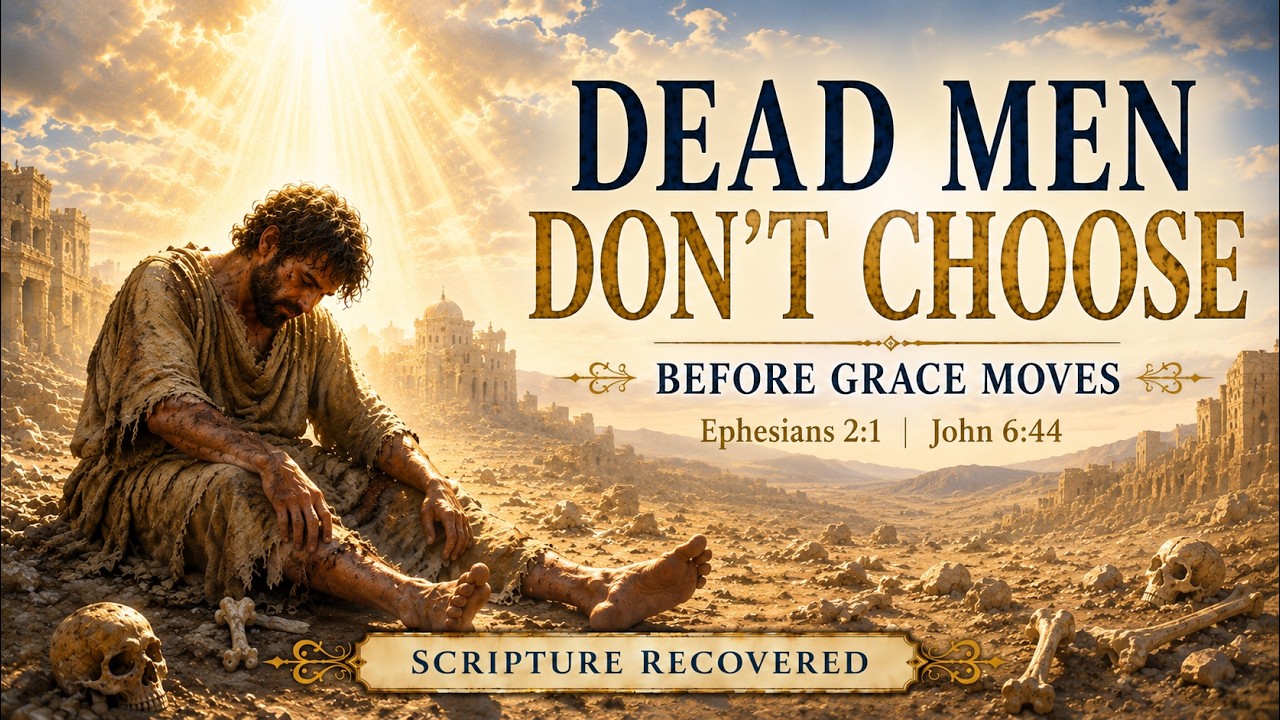
Picture a valley of dry bones—bleached, scattered, lifeless. This is humanity apart from God. Ezekiel 37:1-14 paints a vivid portrait of our spiritual state: “dead in trespasses and sins” (Ephesians 2:1). These bones can’t stitch themselves together, nor can they choose to live. When God asks Ezekiel, “Can these bones live?” the prophet doesn’t point to human effort. He replies, “O Lord God, thou knowest” (Ezekiel 37:3). Only God can act, and act He does. He commands Ezekiel to prophesy, and the Spirit—the “ruach”—breathes life into the lifeless (Ezekiel 37:9-10). The bones rattle, flesh forms, and an army rises—not by their own power, but by the breath of God.

This is the starting point of salvation. We are not merely sick or struggling; we are spiritually dead, incapable of responding to God without divine resuscitation. The lie of self-salvation crumbles here. No amount of good deeds, religious rituals, or willpower can spark life in a dead soul. As Ephesians 2:5 declares, “Even when we were dead in sins, [God] hath quickened us together with Christ, (by grace ye are saved).” Salvation begins with God’s initiative, not ours.

The Son of Man Seeks the Lost

Enter Jesus, the Shepherd of souls, who declares His mission: “For the Son of man is come TO SEEK and TO SAVE that which was lost” (Luke 19:10). Like a heat-seeking missile, Christ locks onto the lost—those spiritually adrift, weary, and yearning for life. But who are the “lost”? They are not the self-sufficient or the proud, who think they need no savior. They are the “poor in spirit” (Matthew 5:3), those who sense their emptiness and cry for life. Jesus doesn’t wait for them to find Him; He seeks them, as a shepherd pursues a stray sheep (Luke 15:4-7).

Yet this seeking is not universal in its outcome. Not all respond, for not all are drawn. Jesus Himself reveals the divine prerequisite: “No man can come to me, except the Father which hath sent me draw him” (John 6:44). The Father, through the Holy Spirit, initiates the pull, stirring the dead heart to life. This drawing is the breath of Ezekiel’s vision, the grace that enables a response. The lie of human autonomy burns here: we don’t choose God until He first chooses to awaken us. As Romans 2:4 proclaims, “The goodness of God leadeth thee to repentance.” Salvation is God’s pursuit, not man’s achievement.

Salvation to the Uttermost

For those who are drawn, the promise is staggering: “Wherefore he is able also to save them to the uttermost THAT COME unto God BY HIM, seeing he ever liveth to make intercession for them” (Hebrews 7:25). Jesus’ salvation is complete, eternal, and unshakable. The phrase “to the uttermost” is a divine shout—there is no limit to His saving power for those who come. But notice the condition: “that COME unto God BY him.” This coming is not a work we muster; it’s a response enabled by grace. As in the Genesis dawn, when God said, “Let there be light,” and the Word shaped creation while the Spirit hovered over the formless deep, so too in redemption: the Father draws, the Spirit breathes, and the soul, now alive, runs to Christ. Just as God commanded light to shine out of darkness, He now makes His light shine in our hearts to reveal the glory of Christ (2 Corinthians 4:6), awakening us as a new creation in His boundless grace.

Who comes? The humble, the broken, those who know they’re spiritually bankrupt. Jesus said, They that be whole need not a physician, but they that are sick. But go ye and learn what that meaneth, I will have mercy, and not sacrifice: for I am not come to call the righteous, but sinners to repentance – Matthew 9:12,13. Jesus uses the metaphor of a physician to explain His mission. The “whole” refers to those who consider themselves righteous, self-sufficient, or spiritually healthy, feel morally upright and does not need repentance. The “sick” represents sinners—those who recognize their spiritual brokenness, moral failings, or need for forgiveness, such as those marginalized by society.

Jesus quotes Hosea 6:6, saying, “I will have MERCY, and not sacrifice,” emphasizing that God desires compassion and a heart oriented toward repentance. His mission is to call “sinners to repentance,” inviting those who acknowledge their need for grace to follow Him, rather than those who feel they are already whole. The people which sat in darkness SAW great light; and to them which sat in the region and shadow of death light is sprung up” (Matthew 4:16). The people which sat in darkness saw great light,” comes from Matthew 4:16 in the New Testament, quoting Isaiah 9:2 from the Old Testament, which represents spiritual ignorance, spiritual lostness, sin, despair, and separation from God.

Grace and truth CAME through Jesus Christ (John 1:17), and the grace of God that brings salvation HATH appeared to all men (Titus 2:11), leaving none with excuse. Jesus, the embodiment of grace, stands at the door and knocks on every heart (Revelation 3:20). Yet not all respond, nor can all receive, for “this is the condemnation, that light IS COME into the world, and men loved darkness rather than light, because their deeds were evil” (John 3:19). Those who do evil hate the light and shrink from it, lest their deeds be exposed (John 3:20), but he that doeth truth comes to the light, that his deeds may be made manifest, wrought in God (John 3:21). This movement toward the light cannot occur without the work of grace in a heart, for no one can say, “Jesus is Lord,” except by the Holy Spirit (1 Corinthians 12:3). The soul’s motion toward God is sparked by the Spirit’s divine work, as no one can come to Christ unless drawn by the Father’s grace (John 6:44). Without this grace, the natural inclination is to remain in sin, loving darkness (John 3:19). To “do truth” is to live in alignment with God’s will, embracing honesty, righteousness, and faith—not merely intellectual assent but a lifestyle of sincerity and obedience to the truth revealed in Christ. But God be thanked, that ye were the servants of sin, but ye have obeyed from the heart that form of doctrine which was delivered you. – Romans 6:17. This reflects a heart already touched by grace, for only those regenerated by the Spirit can genuinely seek truth, responding to God’s initiative rather than relying on self-generated effort. Coming to the light means accepting Jesus, confessing sin, and submitting to His truth in an act of faith and humility, acknowledging the need for salvation. Just as the people who “sat in darkness” were passive until the great light dawned (Isaiah 9:2, Matthew 4:16), so too in John 3:21, grace moves a person from spiritual passivity to actively seeking the light, fulfilling God’s redemptive promise. This underscores the synergy of divine grace and human responsibility: God’s grace initiates, but individuals must respond through faith and obedience. Coming to the light is transformative—it exposes sin yet empowers righteous living through the Spirit, shifting one from hiding in darkness to standing openly before God.

God resists the proud, but gives grace to the humble (James 4:6; 1 Peter 5:5). The proud, with no room for God in their thoughts (Psalm 10:4), build towers of self-reliance, unaware of their spiritual deadness. Yet the humble, awakened BY grace to their spiritual poverty (Matthew 5:3) and lack of strength (Romans 5:6), recognize their need and cling to the Savior. Jesus exalts them, for “he that shall humble himself shall be exalted” (Matthew 23:12). Some hearts, like stony ground or thorn-choked soil, cannot receive the seed of grace, while the good ground of the humble heart yields fruit (Matthew 13:3-23).

This redemption mirrors the Genesis dawn, when God said, “Let there be light,” the Word shaped creation, and the Spirit hovered over the formless deep (Genesis 1:2-3). Likewise, in salvation, the Father’s grace pierces the darkness of the humble heart, where the Spirit moves as over the deep; the Word incarnate brings redemption, and the Spirit breathes life, awakening the soul to embrace Christ.

Burning the Falsehood

The enemy’s lie—that we can save ourselves—crumbles under the weight of these truths. Consider the implications:

– “Dead souls can’t save themselves.” Like dry bones, we need the Spirit’s breath to live (Ezekiel 37:9; Ephesians 2:1-5).

– “God initiates salvation.” Jesus seeks the lost, and the Father draws them (Luke 19:10; John 6:44).

– “Grace enables response.” We repent and come because God’s goodness leads us (Romans 2:4; Titus 3:5).

– “Humility receives grace.” The proud are rejected, but the humble are saved to the uttermost (James 4:6; Hebrews 7:25).

This is no scattershot salvation. God’s grace is precise, like a laser targeting the weary, the lost, and the poor in spirit. Not all are drawn, and not all respond, but those who do are saved completely. The lie of self-salvation fuels pride, but the truth of grace humbles us before a sovereign God.

A Call to the Humble

If your heart stirs as you read this, it may be the Spirit’s breath, drawing you to the Savior. Don’t trust in your own strength—it’s a lie that leads to death. Instead, humble yourself before God. Cry out as the tax collector did: “God be merciful to me a sinner” (Luke 18:13). Jesus seeks you, the Father draws you, and the Spirit empowers you to come. And when you come, Christ saves you to the uttermost. Jesus said, All that the Father giveth me SHALL COME to me; and him that cometh to me I will in no wise cast out – John 6:37.

For believers, this truth is a firebrand to carry. The world is choking on the falsehood of self-reliance. Like Samson, tie these truths together—God’s initiative, grace’s power, and salvation’s completeness—and send them into the enemy’s camp. Proclaim that salvation is by grace alone, through faith alone, in Christ alone. Let the proud stumble, but let the humble rise, revived by the breath of God.

Conclusion

The valley of dry bones lives because God breathes. The lost are saved because Jesus seeks. The humble are exalted because grace draws. This is the gospel that burns away falsehood and opens blind eyes. Salvation is not man’s work but God’s glory. So come, you weary and poor in spirit. Come to God by Christ, and be saved to the uttermost. And for those who know this truth, let’s set the enemy’s lies ablaze with the fire of grace.

—

The Seeds of Dry Bones: Israel’s Scattering to God’s Army

Introduction: The Vision Unveiled

What if the dry bones rattling in Ezekiel’s vision weren’t a dusty relic of prophecy, but God’s breathtaking blueprint for the salvation of the world? Picture a field—barren, lifeless—where a farmer scatters seeds not in despair, but with unshakable purpose. Those seeds are Israel, chosen to fall into the earth, to die, and to rise through Christ as an army of light spanning the globe. This isn’t conjecture; it’s a truth woven through scripture and history, hidden in plain sight, shaking awake anyone who dares to see.

Through four steps—scattered, reassembled, revived, and raised as an army—God unfolds His plan: Israel’s exile sows the seeds, Christ’s cross binds them into one, the Spirit breathes life, and the elect stand as a host for eternity. This revelation hit me like a thunderbolt, tying the lost sheep of Israel to the body of Christ, from Assyria’s conquest to the end of days. It’s not just a story—it’s a seismic truth, demanding we reexamine God’s Word and our place in His field.

I. Scattered: The Seeds of Israel (Step 1)

Ezekiel stood in a valley of dry bones and heard God’s voice: “These bones are the whole house of Israel” (Ezekiel 37:11). Scattered, they cried, “Our hope is lost.” But was it? Scripture shouts no. The northern tribes—ten lost sheep—were carried off by Assyria in 721 BCE, their kings and dynasties devoured by history (Jeremiah 50:6). Not a corner of the earth escaped their dispersion (Deuteronomy 28:63-64), their seed sown among the nations (James 1:1). Judah followed, exiled to Babylon from 606 to 586 BCE, yet returned after 70 years in 539 BCE to fulfill God’s word (Jeremiah 29:10-14). Historians call them “lost,” their bloodlines blurred by centuries. God calls them seeds.

“I will sow the house of Israel and the house of Judah with the seed of man,” declares Jeremiah 31:27—a promise echoed in Hosea 2:23: “I will sow her unto me in the earth.” Psalm 119:176 mourns, “I have gone astray like a lost sheep,” yet Jesus seeks them: “I am not sent but unto the lost sheep of the house of Israel” (Matthew 15:24). Why scatter them? Isaiah 49:6 reveals it: “I will give thee for a light to the Gentiles, that thou mayest be my salvation unto the end of the earth.” Amos 9:9 adds, “I will sift the house of Israel among all nations,” and Zechariah 10:9 confirms, “I will sow them among the people.” This wasn’t failure—it was divine planting. Like a corn of wheat falling to die (John 12:24), they were buried to bear fruit, sown into every nation to till the soil for God’s kingdom. What looked like loss was the genesis of life.

West Asia:

Mizrahi Jews

Babylonian Jews (Iraqi Jews)

Kurdish Jews

Persian Jews

Yemenite Jews Palestinian Jews Lebanese Jews

Omani Jews Syrian Jews

Subbotniks (Jews from Azerbaijan and Armenia)

Sub-Saharan Africa:

Beta Israel or Falashim (Ethiopian Jews)

Descendants of the Jews of the Bilad el-Sudan (West Africa)

Lemba people in Malawi

South, East, and Central Asia:

Malabar Yehuddim/Cochin Jews (Indian Jews)

Bene Israel (Jews of Mumbai, India)

Bukharan Jews (Jews from Central Asia)

Baghdadi Jews (Jews from Iraq, Iran, Afghanistan, and Arab countries)

Bnei Menashe Jews in Manipur and Mizoram in northeastern India) Bene Ephraim (Telugu-speaking Jews of Kottareddipalem in Andhra Pradesh, India)

Chinese Jews (Kaifeng Jews in China)

Pakistani Jews

Afghan Jews

Tamil Thattar Jews in Sri Lanka

Americas:

Sephardic Bnei Anusim

Amazonian Jews

Iquitos Jews

B'nai Moshe (Inca Jews)

Veracruz Jews

Israel:

Ashkenazi Jews Mizrahi Jews
II. Reassembled: One Fold in Christ (Step 2)

Dry bones don’t stay scattered. Ezekiel saw them knit together—bone to bone, sinews and flesh clothing them—yet lifeless (Ezekiel 37:7-8). So it was with Israel’s seed, dead in spirit until the Seed of David arrived. “Concerning His Son Jesus Christ our Lord, which was made of the seed of David according to the flesh” (Romans 1:3), He emerged from Judah’s soil, trained by centuries as a priestly nation (Exodus 19:6) to offer the Lamb. Passover sacrifices (Exodus 12) and the Day of Atonement (Leviticus 16) pointed to Him, the One who “taketh away the sin of the world” (John 1:29), propitiating all (1 John 2:2).

Jesus declared, “Other sheep I have, which are not of this fold: them also I must bring, and they shall hear my voice; and there shall be one fold, and one shepherd” (John 10:16). Who are these sheep? The scattered seeds of Israel, mingled with Gentiles, now “reconciled in one body by the cross” (Ephesians 2:16). Galatians 3:28 proclaims, “There is neither Jew nor Greek… for ye are all one in Christ Jesus.” The cross stitched flesh to bone, uniting the lost with the found. Israel’s rejection wasn’t a misstep—it was required: “Through their fall salvation is come unto the Gentiles” (Romans 11:11), fulfilling Isaiah 53:3’s despised servant. Christ fell—“except a corn of wheat fall into the ground and die, it abideth alone” (John 12:24)—and the seeds became one.

This staggers the soul. The dragon of Revelation 12 raged against the woman who birthed the child, his wrath—“the dragon was wroth with the woman” (Revelation 12:17)—fueling anti-Semitism’s bitter persistence. No wonder the world hates Israel; she bore the Seed Satan sought to devour. Yet God’s plan held firm, hiding His treasured ones in the world’s field (Matthew 13:38; Psalm 83:3), awaiting the breath of life.

III. Revived: Life from the Grave (Step 3)

Then came the wind. “Prophesy unto the wind,” God told Ezekiel, “Come from the four winds, O breath, and breathe upon these slain, that they may live” (Ezekiel 37:9). The bones stood, alive at last. So it was with Israel’s seeds. Scattered and reassembled, they needed the Spirit’s breath, which roared at Pentecost, igniting the Gospel from Jerusalem to the ends of the earth, tracing the paths where Israel’s seeds had fallen—Asia Minor, Rome, beyond.

Isaiah 42:7 promised, “To open the blind eyes, to bring out the prisoners from the prison, and them that sit in darkness.” Luke 1:79 echoes, “To give light to them that sit in darkness and in the shadow of death.” The Gospel took root in seed-sown zones, where the lost sheep wandered (Matthew 15:24), sprouting as “the children of the kingdom” (Matthew 13:38). This wasn’t mere revival—it was resurrection. Once bound in affliction and iron (Psalm 107:10), they rose as the Israel of God (Galatians 6:16), witnesses to His plan (Isaiah 43:10). The Spirit plowed hearts with God’s Word, fulfilling Isaiah 40:5: “The glory of the Lord shall be revealed, and all flesh shall see it together.”

Here the Church emerged, a temple of God (1 Peter 2:5), sown from Christ’s seed to defy the darkness. Satan struck from Pergamos’ throne (Revelation 2:13), where “the seven churches” stood at his root (Revelation 2-3), but the Gospel prevailed, scattering light where Israel’s seeds had prepared the ground. The world awoke because Israel fell.

IV. Army: The Exceeding Great Host (Step 4)

“And they stood upon their feet, an exceeding great army” (Ezekiel 37:10). From scattered seeds to a unified host, Israel’s journey ends in triumph. Song of Songs 6:4 sings, “Thou art… terrible as an army with banners,” a glimpse of Ecclesia—the called-out ones (1 Peter 2:9). This army wields not swords but light, fulfilling Isaiah 49:8: “I will preserve thee… to establish the earth, to cause to inherit the desolate heritages.”

In tribulation’s furnace, they shine. Shadrach, Meshach, and Abednego (Daniel 3) prefigure the sealed elect (Revelation 7:3-4), unbowed by fire. Here stand the 144,000, “sealed from all the tribes of the children of Israel” (Revelation 7:4-8), redeemed to follow the Lamb on Mount Zion (Revelation 14:1-4). Not just the Church, but Israel’s remnant—12,000 from each tribe—preserved as God’s eschatological promise, fulfilling Romans 11:26: “All Israel shall be saved.” Revelation 18:4 cries, “Come out of her, my people,” and they do, escaping Babylon’s plagues (Luke 21:36), a residue of grace (Romans 9:25-26).

Satan struck from Pergamos (Revelation 2:13), but this host turned a world once hellish—rife with war—into one plowing peace (Isaiah 2:4: “They shall beat their swords into plowshares”). The earth fills with God’s knowledge (Isaiah 11:9), a contrast like heaven to hell, birthed from Israel’s fall with Christ (John 12:24). “To the Jew first” (Romans 1:16) wasn’t exclusion—it was the spark that lit the nations. From dry bones to an exceeding great army, Israel’s scattering became our salvation, a truth vast enough to shake eternity.

Conclusion: Seeds of Today

This vision—seeds scattered, reassembled, revived, and raised—shook me awake. It’s not just Israel’s story; it’s ours. Ezekiel’s dry bones are God’s kingdom seeds, and we stand in their harvest. The lost sheep weren’t forsaken—they were sown. The cross didn’t divide—it united. The elect don’t cower—they conquer. See Israel anew—not abandoned, but foundational; as seeds, falling to bear fruit in a darkening age (John 12:24). God’s plan marches from Assyria to eternity, and we’re in it—an exceeding great army, born of dry bones, alive in Christ. This is the revelation that pierces the soul: God so loved the world, He scattered His people to save it. While many await Romans 11:15’s fulfillment in a distant millennial age, Paul unveils a mystery already unfolding: “For if the casting away of them be the reconciling of the world, what shall the receiving of them be, but life from the dead?” This is the work of regeneration. The Spirit breathes into these bones even now, regenerating the world through Israel’s scattered seeds.

For the covenant belongs to Israel, “to whom pertaineth the adoption, and the glory, and the covenants, and the giving of the law, and the service of God, and the promises; whose are the fathers, and of whom as concerning the flesh Christ came” (Romans 9:4-5), anchoring God’s eternal purpose in their enduring call.

A Grave’s VERDICT: Loveless FAITH Is DEATH

 Introduction: The Tombstone’s Thunder

Picture a lone tombstone, its words etched in unyielding stone: “The one not loving remains in death.” These aren’t words that whisper—they roar, splitting the sky above every professing Christian. This is no poet’s lament; it’s God’s verdict, burned into 1 John 3:14. What if your faith, polished by pews and prayers, is a fraud? What if your heart, cold with lovelessness, is already a grave? The Apostle John, his pen ablaze with divine fire, hurls this truth like a lightning bolt: love is the heartbeat of true faith. Without it, you’re not stumbling—you’re “dead”. This is no soft nudge; it’s a siren for every soul claiming Christ. Will you heed it, or slumber in the shadows of spiritual death?

 The Thunderbolt of Truth

John’s words in 1 John 3:14 and 2:10 are no mere suggestions—they’re a divine ultimatum. “The one who loves his brother remains in the light, and there is no cause for stumbling in him.” But “the one not loving remains in death.” Hear that: “death”. Not a distant threat, but your reality “now” if you claim Christ yet live without love. This isn’t about fleeting kindness or occasional charity; it’s the relentless, self-giving love of Christ, who bled on a cross for the unworthy (1 John 3:16). It’s love that reaches the brother you’d curse, the stranger you’d shun, the enemy you’d despise.

This truth should make your soul tremble. God doesn’t care about your Sunday rituals or memorized doctrines if love is absent. Love isn’t an add-on to faith; it’s the proof you’ve crossed from death to life. Without it, your Christianity is a corpse—rotting, hollow, an offense to the God who “is” love (1 John 4:8). “The one not loving remains in death.” Let that burn through your defenses. Dare to ask: “If your faith lacks love’s pulse, is it faith at all?”

Exposing the Counterfeit

Look at the church today—a masquerade of faith. A worship leader, lifts her voice in praise but slanders a rival in the parking lot. Pastors preach love yet ignore the homeless outside their doors. Believers pray fervently while clutching grudges like treasures. This isn’t Christianity—it’s a charade. John unmasks the fraud in 1 John 2:9: “The one who says he is in the light and yet hates his brother is in the darkness until now.” Hate isn’t just murder; it’s the envy you nurse, the gossip you spread, the indifference you wear.

These are the whitewashed tombs of our age—gleaming on the outside, but inside, full of dead bones (Matthew 23:27). You can sing hallelujahs, quote Scripture, and still stumble in darkness if love doesn’t guide you. The world sees this hypocrisy, and God sees it clearer. “The one not loving remains in death.” Stop hiding, professing Christian. “Are you groping in the dark while claiming to walk in light?”

The Jolt of Self-Examination

This is your reckoning. John’s words are a mirror, and they demand you look. Who do you refuse to love? Name them in your heart “right now”. The coworker who betrayed you? The neighbor who grates your nerves? The family you’ve disowned? Don’t flinch—your soul hangs in the balance. If love is absent, you’re not just failing; you’re “remaining in death,” cut off from God’s life. This isn’t about perfection but direction. Does your life bear love’s fruit, or is it a barren mockery of the faith you profess?

The stakes are eternal yet immediate. Lovelessness isn’t a future sentence; it’s your reality “now”. John’s warning thunders: faith without love is a lie. Search your heart. Where does your Christianity ring hollow? Where have you chosen darkness over light? The Holy Spirit waits to convict, but you must face the truth. “The one not loving remains in death.” “Will you step into the light, or cling to a faith already dead?”

 The Call to Resurrected Love

This isn’t a death knell—it’s a call to resurrection. God’s love, poured into us through Christ, empowers us to love as He does (1 John 4:7). This love is costly, courageous, countercultural—forgiving the unforgivable, serving the overlooked, embracing the unlovable. It’s the love that drove Jesus to the cross, and it’s the love He commands you to live. Consider James, who quietly feeds the homeless, his love a sermon louder than any pulpit.

Act now. Reconcile with the one you’ve avoided. Serve the one society scorns. Lay down your pride, your grudges, your comfort. Love isn’t a feeling; it’s the crucible where faith is proven. And here’s the hope: you don’t love alone. God’s Spirit ignites your heart to walk in the light, to live the life love proves. “The one who loves remains in the light.” Step out of lovelessness’s grave into Christ’s radiance. “Will you choose to love and live?”

 Conclusion: The Grave’s Final Verdict

The tombstone looms, its verdict unyielding: “The one not loving remains in death.” Let it pierce your soul. Your faith won’t be judged by words, rituals, or reputation, but by the love flowing from your life. Will your epitaph blaze with God’s love, or mourn a heart that remained in death? The choice is yours, and the hour is now.

“Take this dare”: Before you sleep tonight, love someone—forgive them, serve them, pray for them. Prove your faith is alive. “Or pray”: Father, convict me where my love fails. Ignite my heart to love as Christ does, no matter the cost. Amen. Step into the light. Love boldly, sacrificially, authentically. Let your life thunder with the truth of the God who is love.

Hear My Song Inspired by This Article

I poured my heart into “Grave’s Verdict”, a powerful worship song by VelvetThorn Worship, inspired by the message of “A Grave’s VERDICT: Loveless FAITH Is DEATH.” This soul-stirring anthem from the album “Love and Redemption” reflects on God’s transformative love and grace, calling us to a faith that lives through love. Watch the full song on YouTube and let it inspire your spiritual journey: [Listen to “Grave’s Verdict” Now](https://youtu.be/sXC3RemEsx0).

🕊️ Join me in spreading hope—subscribe to [@VelvetThorn Worship]([https://tinyurl.com/msf69v2b]), share this song with someone who needs it, and comment on the video to share how it moves your faith!

"Grave’s Verdict" – Devotional Song with Hope and Redemption
[Verse 1]
Tombstone stands, words carved in night,
“Love is life,” a grave’s verdict in sight.
Polished faith, but my heart’s a lie,
Spirit, break this stone, make love my cry.

[Chorus]
Love is the fire, love is the sign,
Proof of the life that’s Yours and mine.
Without it, lost in darkness I dwell,
A grave’s verdict cries, “You’re bound for hell.”

[Verse 2]
Whitewashed tombs, our hearts don’t show,
Grace we claim, but in pride we grow.
Forgive the broken, those I’ve scorned,
Call me to love, from death I’m reborn.

[Chorus]
Love is the fire, love is the sign,
Proof of the life that’s Yours and mine.
Without it, lost in darkness I dwell,
A grave’s verdict cries, “You’re bound for hell.”

[Bridge]
Your cross, O Christ, it lights the way,
Ignite my soul to love and obey.
Forgive the broken, serve the lost,
I’ll love like You, no matter the cost.

[Chorus]
Love is the fire, love is the sign,
Proof of the life that’s Yours and mine.
Without it, lost in darkness I dwell,
A grave’s verdict cries, “You’re bound for hell.”

[Outro]
No more the grave, no more the night,
I’ll love with Your love, walk in Your light.
Tombstone fades, Your voice I hear:
“Love and live, for I am near.”

Dead Men Don’t Choose: The Undeniable Truth of God’s Grace

I’ve had it. Lately, I stumbled into a discussion tearing into Calvinism—its theology, its doctrines—and I’m not even a card-carrying Calvinist. I haven’t read his books, haven’t signed up for his club. I just try to follow the Scriptures and the Spirit of God. But what I saw incensed me: ignorance and sheer gall coming against the established Word, picking at gospel verses without context, tossing out the epistles like trash. It’s a butchery of truth, and I can’t shake it off. This battle’s raged for centuries—God’s sovereignty versus human free will—and it’s time to lay it down with the absolute, sledgehammer truth of Scripture. No more dancing around it.

This video presentation is based on the article below, adapted for the Scripture Recovered series. The full written study follows underneath for reading, reference, and further reflection.

youtube placeholder image

Here’s the question: If we reject the points Calvinism leans on—total depravity, unconditional election, irresistible grace, all of it—what do we undo from the Word of God? Not just a system, but the Bible itself. I’m not here to defend a man-made label; I’m here to let God’s Word speak. And it’s screaming: we’re dead without Him, saved by Him, and He provides it all. Let’s hammer this home.

The Deadness: "Nekros" and Dry Bones

Start here: we’re dead. Not wounded, not limping—”nekros”. Ephesians 2:1—“You were “nekros” in your trespasses and sins.” That’s Greek for corpse. No pulse, no breath, no life. Romans 3:10-12 piles on: “None righteous, no one understands, no one seeks God. All have turned away.” Not some—”all”. Colossians 2:13—“You were “nekros” in your sins.” Dead men don’t choose. They don’t seek. They rot.

Ezekiel saw it too. Chapter 37: a valley of dry bones, scattered, hopeless. God asks, “Can these bones live?” Ezekiel doesn’t play hero—“Lord, you alone know.” Humanly? No chance. Dead bones don’t wiggle. But God says, “Prophesy,” and the Spirit’s breath—”ruach”—sweeps in. Bones rattle, flesh forms, and they stand—a vast army. Who did that? Not the bones. God. Ezekiel 37:14—“I will put my Spirit in you, and you will live.” Dead means “nekros”. No life ‘til God moves.

John 6:44 seals it: “No one can come to me unless the Father who sent me draws them.” “Can”—ability. Without the Father’s pull, we’re stuck. Romans 8:7—“The mind of the flesh is hostile to God; it does not submit, nor can it.” Hostile. Incapable. “Nekros”. If you think a corpse picks itself up, you’re not reading the Bible—you’re writing fiction.

The Process: God Provides All

Salvation’s not steps we take—it’s God’s work breaking us alive. He’s not waiting for us to climb a ladder; He’s emptying our grave. Listen:

– He’s the Seed Supplier: 1 Peter 1:23—“Born again, not of perishable seed, but of imperishable, through the word of God.” Matthew 13:37—“The one who sows the good seed is the Son of Man.” Christ plants life in “nekros” soil. We don’t sprout ourselves—He sows.  

– He’s the Knocker: Revelation 3:20—“I stand at the door and knock.” Jesus isn’t begging us to knock first—He’s pursuing. Dead men don’t knock back; “nekros” hearts don’t answer—He’s the hunter breaking in. Luke 19:10—“The Son of Man came to seek and save the lost.” He seeks; we’re lost.

– He’s the Convictor: John 16:8—“The Spirit will convict the world of sin.” Acts 2:37—Pentecost’s crowd, “cut to the heart,” didn’t self-diagnose. The Spirit stabbed them awake. Dead hearts don’t feel ‘til He strikes.

– He Gives His Spirit: Ezekiel 37:14—“I will put my Spirit in you.” John 3:5—“Born of the Spirit.” Titus 3:5—“Saved by the renewal of the Holy Spirit.” No Spirit, no life. He breathes; we don’t.

– He Provides the Lamb: John 1:29—“The Lamb of God, who takes away the sin of the world.” Romans 3:25—“God put [Him] forward as a propitiation by his blood.” We didn’t slay the Paschal Lamb—God did. Hebrews 9:12—“With his own blood, he secured eternal redemption.” All Him. For if, when we were enemies, we were reconciled to God by the death of his Son, much more, being reconciled, we shall be saved by his life. Romans 5:10

These aren’t steps to be redeemed—check off faith, grab grace, earn the cross. That’s works, and Ephesians 2:9 says, “Not a result of works, so that no one may boast.” It’s His process, His redemption, His hammer smashing our “nekros” chains. Acts 13:48—“As many as were ordained to eternal life believed.” Ordained, then believed—not the other way around. Romans 2:4—“God’s kindness leads you to repentance.” He leads; we follow. He provides all, or it’s not salvation—it’s self-help.

The Gift: No Paychecks Here

If God does it all, it’s a gift. Ephesians 2:8—“By grace you have been saved through faith… it is the gift of God.” Faith too—not your grit, His grant. Philippians 1:29—“It has been granted to you to believe.” Granted, not grabbed; to them that have obtained like precious faith with us through the righteousness of God and our Saviour Jesus Christ—2 Peter 1:1. Hebrews 12:2—“Jesus, the AUTHOR and perfecter of our faith.” He writes it, not us.

If we choose God without His seed, knock, conviction, Spirit, and Lamb, that ain’t a gift—it’s a paycheck. “I chose wisely; pay me salvation.” Romans 3:27—“Where is boasting? Excluded.” Why? A “nekros” soul doesn’t choose—it’s chosen. John 15:16—“You did not choose me, but I chose you.” 1 John 4:19—“We love because he first loved us.” First. Always Him first. If we kickstart it, why the cross? Galatians 2:21—“If righteousness were through [us], Christ died for nothing.” Dead men don’t earn gifts—they receive them.

The Folly of Free Will Chasing

Some scream, “But free will!” Sure, we respond—”after” He moves. Acts 2:37—“What shall we do?”—comes after the Spirit cuts. John 1:13—“Born not of human decision, but of God.” Charles Spurgeon saw it clear: “Free will carried many a soul to hell, but never a soul to heaven. Anyone who believes that man’s will is entirely free and that he can be saved by it does not believe the fall.” He’s right. Romans 3:23—“All have sinned and fall short.” Free will without grace is freedom to rot, not rise. Romans 8:7—“The flesh “cannot” please God.” Cannot. “Nekros”.

2 Corinthians 4:6—“God… has shone in our hearts to give the light of the knowledge of the glory of God in the face of Jesus Christ.” We didn’t flip the switch—He did. Dead hearts don’t chase light; light chases them. Spurgeon’s not guessing—he’s echoing Scripture: a “nekros” will, unbound by grace, runs to ruin, not redemption.

Lay It Down

This war’s dragged on too long—centuries of dodging the obvious. Scripture’s clear: we’re “nekros” without God, revived by His Spirit, saved by His Lamb. He’s the seed, the knock, the conviction, the breath, the blood. Spurgeon’s words ring true—free will without grace is a one-way ticket down, never up. Reject that, and you’re not just undoing Calvinism—you’re undoing the gospel. Dead men don’t choose; God chooses them. John 6:44. Ezekiel 37. Ephesians 2. Romans 9:16—“It does not depend on human desire or effort, but on God’s mercy.” It’s a sledgehammer of truth, and it’s time to swing it. He provides all. Let the Word silence the noise. Full stop.