
Before we turn the cross around, I need to hold something in front of you.
A mirror.
Because what follows — the gift, the debt, the staggering weight of what Israel gave the world — will not land where it needs to land unless you first see clearly what is standing in the way of it landing.
This video presentation is based on the article below, adapted for the Scripture Recovered series. The full written study follows underneath for reading, reference, and further reflection.
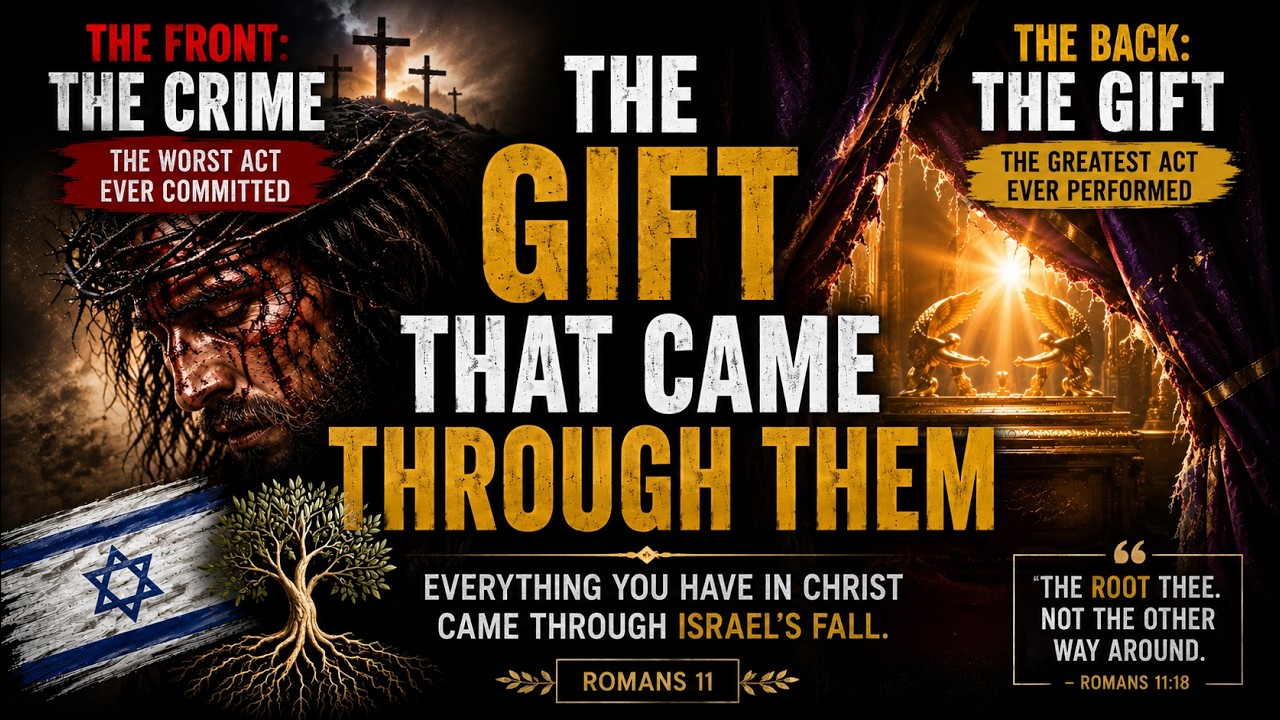
Paul, in Romans 11, turns from his argument about the fall and the riches and the fulness and addresses the Gentile believer directly. Not gently. With a warning that centuries of Christian history have largely ignored, and the ignoring of which has produced some of the darkest chapters in the Church’s record.
“And if some of the branches be broken off, and thou, being a wild olive tree, wert grafted in among them, and with them partakest of the root and fatness of the olive tree; boast not against the branches. But if thou boast, thou bearest not the root, but the root thee” (Romans 11:17–18).
The wild olive. That is what you are. That is what every Gentile believer is, by birth and by nature — a shoot cut from a tree that produced no covenant, no Scripture, no Messiah, no apostles, no Gospel. Grafted in — contrary to nature, Paul says in verse 24 — to a tree you did not plant, drawing from a root you did not grow, partaking of a fatness you did not produce.
And Paul’s word to that wild olive branch is plain: boast not against the branches.
But the Church has boasted. For centuries. In theology — replacing Israel with itself, absorbing the promises while discarding the people, reading the Old Testament as though it were a preface that the New Testament has made obsolete. In history — the Crusades, the Inquisition, the pogroms, the forced baptisms, the ghettos, the theological poison that flowed from supersessionist pulpits into the streets and eventually into the gas chambers.
The grafted branch turned on the root.
And Paul says: if you do that — if you boast against the branches, if you hold the root in contempt — understand what you are doing. Thou bearest not the root, but the root thee. You are not sustaining the covenant. The covenant is sustaining you. Cut the root and you do not damage the root. You die.
“Because of unbelief they were broken off, and thou standest by faith. Be not highminded, but fear: for if God spared not the natural branches, take heed lest he also spare not thee. Behold therefore the goodness and severity of God: on them which fell, severity; but toward thee, goodness, if thou continue in his goodness: otherwise thou also shalt be cut off” (Romans 11:20–22).
Goodness and severity. Both faces of the same God. The severity that fell on the natural branches was not arbitrary — it was the judicial blindness examined in the previous article in this series, the necessary veil, the ordained hardening that made the cross possible. But Paul’s point here is not to explain the severity. It is to warn the wild branch: you stand by grace, not by right. The same God who broke off the natural branches for unbelief will not hesitate to remove you for pride.
And then — the verse that contains the whole future.
“And they also, if they abide not still in unbelief, shall be grafted in: for God is able to graff them in again. For if thou wert cut out of the olive tree which is wild by nature, and wert grafted contrary to nature into a good olive tree: how much more shall these, which be the natural branches, be grafted into their own olive tree?” (Romans 11:23–24).
How much more. The same compression Paul used in verse 12. If the wild branch was grafted in contrary to nature — against all biological logic, against every expectation — how much more shall the natural branches, the ones who belong to the tree by birthright, be grafted back in? Their return is not unlikely. It is the most natural thing in the world. God is able. And God intends.
The mirror has been held. The boasting has been named and refused. Now — and only now — are we in the right posture to turn the cross around.
The Two Faces
The previous article named the crime. This one turns the cross around.
Not to minimise the crime. Not to pretend the injustice was not injustice, or the blood was not blood, or the suffering was not suffering. But to look at what was accomplished — what was purchased, what was opened, what was made possible — by the very act that human history will forever call its darkest moment.
Because the cross has two faces.
From the front — the face of human sin and judicial murder. The worst act ever committed by any creature against the Creator. The Son of God handed over, stripped, beaten, nailed to a Roman instrument of execution outside the city walls. Abandoned by His disciples. Mocked by the crowd. The innocent in the place of the guilty — and the guilty crying for more.
From the back — the face of divine love and infinite mercy. The most deliberate and costly act of self-giving in the history of the universe. The eternal Son, in an act that no one could compel and nothing could coerce, laying down a life that was His own to lay down, bearing the full weight of every sin committed by every human being who had ever lived or would ever live, absorbing the wrath that belonged to the guilty so that the guilty could stand in the place of the innocent.
Both faces belong to the same event. You cannot have the gift without the crime. You cannot have the atonement without the sacrifice. You cannot have the open heaven without the torn veil — and the veil was torn from top to bottom because the Lamb was slain.
That veil deserves a moment’s attention, because most people who have read that sentence their entire lives have never been told what it actually was. It was not a curtain in any ordinary sense. Jewish historical sources describe it as sixty feet high, thirty feet wide, and a handbreadth thick — approximately four inches of densely woven fabric, constructed in Babylon, so massive that it required hundreds of priests to handle it. It was, by every human measure, untearable. Its entire purpose was architectural theology — the physical, permanent, unarguable declaration that sinful humanity could not pass into the presence of the holy God. The holy of holies lay behind it. No one entered except the high priest, once a year, on the Day of Atonement, with blood.
When that veil tore, it did not fray. It did not split under the pressure of an earthquake, as though the ground shaking had weakened the seams. It tore — from top to bottom. Not from the bottom as a man would tear it, reaching up and pulling down, but from the top, as only God tears, reaching down from His side of the separation and removing what He Himself had put in place.
The way into the holy of holies — barred since the garden, sealed by the Law, guarded by the veil across a thousand years of sacrificial worship — was opened in the moment the final sacrifice was complete. Not by human achievement. Not by religious performance. Not by accumulated piety or priestly qualification. By blood. By the Lamb.
The same people whose hands were on the knife are the people through whom the knife was provided. The same nation whose No to the Messiah made the cross possible is the nation through whom the Messiah came. Their fall was the riches of the world. Their scattering was the sowing of the Gospel. Their rejection was the opening of the door through which every Gentile believer has walked into the family of God.
This is the gift that came wrapped in the crime.
The Fall That Became Riches
Paul, in Romans 11, makes a statement so compressed and so vast that it is possible to read it a hundred times and still not have taken in its full weight.
“I say then, Have they stumbled that they should fall? God forbid: but rather through their fall salvation is come unto the Gentiles, for to provoke them to jealousy. Now if the fall of them be the riches of the world, and the diminishing of them the riches of the Gentiles; how much more their fulness?” (Romans 11:11–12).
Through their fall — salvation came to the Gentiles. Not despite their fall. Through it. The fall was the mechanism of the salvation, not an obstacle to it. God did not rescue His plan for the Gentiles in spite of Israel’s rejection of Christ. He executed His plan for the Gentiles by means of it.
Every Gentile believer in the history of the world received the Gospel because Israel said No. Because the disciples, turned away from the synagogues and the established religious structures of Jerusalem, took the message to the nations. Because Paul — whose strategy was always to go to the Jew first, and then to the Greek — found the doors of the synagogues closing and turned, again and again, to the Gentile world. Because the fall of the branches created the space through which the wild olive was invited in.
And then Paul asks the question that should make every Gentile believer sit down in stunned silence. If the fall of them produced such riches — if Israel’s diminishing was the enrichment of the entire Gentile world — how much more their fulness?
He answers it in only three words: life from the dead. Not revival. Not renewal. Not a large harvest. The restoration of Israel in its fulness will be to the world what resurrection is to death — the single most transformative event in human history since the cross itself. Paul plants that seed in Romans 11 and does not fully explain it, because the explanation belongs to the end of the age, to the fullness that is still coming, to the day when the veil lifts and the nation looks upon Him whom they pierced and mourns, and the Lord gathers what He scattered, and the dry bones stand as an exceeding great army.
But before that fullness arrives, stay with the fall. Stay with what the No produced. The one new man has not yet begun to fully understand the scale of what it received through Israel’s rejection. And until it does, it cannot properly love the people through whom it received it.
What the Fall Actually Gave You
Let me be specific. This is where the theology must become personal — must become inventory — must become the kind of reckoning that produces not guilt but genuine, structural gratitude.
What did you receive through Israel’s fall?
The Scriptures. Every word of the Old Testament — the Torah, the Prophets, the Writings — preserved across a thousand years of exile, persecution, and attempted annihilation, copied with a precision that makes the Dead Sea Scrolls nearly identical to manuscripts written a millennium later. Every word of the New Testament — written by Jewish hands, rooted in Jewish covenant, explicable only within Jewish categories of thought. You did not produce this. You received it. From them.
The Messiah. Born in Bethlehem, of the tribe of Judah, of the lineage of David. He did not arrive as a generic human being from a generic nation. He came as the specific fulfilment of specific promises made to a specific people across a specific history. The Lion of the tribe of Judah. The Root of David. He is Jewish. His humanity is Jewish. The flesh in which the eternal Word tabernacled on this earth is Jewish flesh. You received your Saviour from them.
The apostles. Every man Jesus chose to carry the Gospel to the world was Jewish. Peter and James and John — Jewish. Matthew the tax collector — Jewish. Paul, the apostle to the Gentiles, the man whose letters form the theological backbone of the New Testament — a Hebrew of Hebrews, of the tribe of Benjamin, a Pharisee. The good news that God so loved the world — first articulated, first preached, first written down, first carried to the nations at enormous personal cost — by Jewish believers for whom it cost everything.
The door. Every Gentile believer in the history of the world walked into the family of God through a door that was opened by Israel’s fall. The No that sent the Gospel to the Gentiles. The rejection that created the road Paul walked to Rome. The scattering that prepared the synagogue infrastructure in every major city of the ancient world — the same infrastructure that became the first beachhead for the Gospel in every city the apostles entered.
You received all of this because of Israel’s fall. Because of the cross — that great crime and that greater gift — performed by Jewish hands on a Jewish hill in a Jewish city at the centre of a Jewish history that God had been writing since He called a wandering herdsman out of Ur of the Chaldees and said: In thee shall all families of the earth be blessed (Genesis 12:3).
All families. You are one of them. And the blessing that reached you came through them.
The Root and the Branch
Paul’s image of the olive tree is not decorative. It is anatomical. It describes a biological reality that has spiritual weight.
The root bears the branches. Not the other way around.
Every Gentile believer in the history of the world has been sustained by a root they did not plant, in a tree they did not grow, drawing from a fatness they did not produce. The arrogance of the grafted branch toward the natural branches is not merely ungrateful — it is biologically absurd. Cut the root and the branch dies. Honour the root and the branch flourishes.
And the root is Israel. The covenants. The adoption. The glory. The promises. The Scriptures. The Messiah. The entire spiritual infrastructure of redemption that God built through Abraham, through Moses, through David, through the prophets, through the priesthood, through the exile, through the return — all of it is the root. All of it is the fatness from which every Gentile believer draws life.
This is not a courtesy extended to outsiders. This is the anatomy of the one new man. The Gentile is not a full member of an institution that was always essentially Gentile but happens to have Jewish origins politely acknowledged. The Gentile is a wild branch grafted, contrary to nature, into a tree that was always Jewish, sustained by a root that is always Jewish, bearing fruit from a fatness that is always Jewish.
That changes everything about the posture. Not guilt. Not a new form of spiritual debt that paralyses rather than frees. But the clean, clarifying, liberating gratitude of a person who finally knows what they owe and to whom they owe it — and who finds, in that knowing, a love for Israel that is not manufactured by effort or obligation but is simply, inevitably, true.
There is a question every Gentile believer quietly carries. Sometimes spoken, more often not. But it sits beneath the surface of everything we have been saying.
Does God still love them? In their present condition. With the veil still partially in place. With the fulness not yet arrived. With the long centuries of blindness and wandering still unresolved.
Paul answers it in Romans 11:28, and he does not soften it, qualify it, or defer it to a future condition. As concerning the gospel, they are enemies for your sakes: but as touching the election, they are beloved for the fathers’ sakes.
Two things simultaneously. Enemies concerning the gospel — the judicial blindness, the rejection, the No at the cross. That is real. Paul does not withdraw it. But — as touching the election, they are beloved. Not were beloved. Not will be beloved when they return. Are. Present tense. Active. Unrevoked. The love of God toward Israel is not in abeyance pending their national repentance. It is operative now, in this moment, in their present condition — because it rests not on their response but on the covenant God made with their fathers, Abraham, Isaac, and Jacob. And God does not break covenant.
Verse 29 seals it: For the gifts and calling of God are without repentance. Without repentance — ametamelēta in Greek. Irrevocable. Not subject to revision. Not contingent on Israel’s behaviour, the Church’s theology, or the world’s politics. The gifts and the calling stand. The beloved stands. Because the One who gave and called does not change His mind.
This is the God whose cross we have been standing before. The God who ordained the crime. The God who provided the gift. The God who veiled the eyes of the ones whose hands He needed. The God who grafted the wild branch into a root that still, at this moment, bears the love He has never withdrawn. That is the God whose depth Paul could only respond to with an O.
The Debt Paul Names
Paul does not leave this gratitude as a vague spiritual feeling. He names it as a specific, practical obligation.
The Gentile churches of Macedonia and Achaia were taking up a financial collection for the Jewish believers in Jerusalem who were suffering poverty. Paul describes that collection not as charity but as debt repayment: It hath pleased them verily; and their debtors they are. For if the Gentiles have been made partakers of their spiritual things, their duty is also to minister unto them in carnal things (Romans 15:27).
Their debtors they are.
The Gentiles are debtors to the Jewish believers — not because of a financial transaction but because of a spiritual one. Partakers of their spiritual things — the entire inheritance of salvation, from the Scriptures to the Messiah to the apostolic mission to the covenant promises — came through Israel. The material response is the least, the very least, that gratitude can offer.
But before the material response comes something more fundamental: the posture. The posture of a branch that knows it is a branch. The posture of a wild olive that knows it was grafted in — that it did not earn its place, that the root is not indebted to it but it to the root.
That posture is what the Church has consistently failed to hold. And the failure has been catastrophic — not only for Israel, who bore the violence of it, but for the Church itself, which in turning against the root has repeatedly sawn off the branch it was sitting on.
The Other Face
Now — with the mirror held, the inventory taken, the posture established — we can look at the back of the cross with the full weight it deserves.
From the divine side, the cross is not a crime redeemed. It is not a tragedy absorbed. It is not a human failure that God, in His mercy, managed to turn to good purpose. It is the most deliberate, the most costly, the most precisely executed act of love in the history of the universe.
The eternal Son did not stumble into Calvary. He walked toward it. From before the foundation of the world — the Lamb slain from the foundation of the world (Revelation 13:8) — this was the plan. The plan behind the plan. The purpose beneath every other purpose. The answer that was being prepared before the question was asked.
He walked into Jerusalem knowing every detail of what the prophets had written about this week. He went to Gethsemane knowing what the cup contained. He said — not as resignation but as sovereign declaration — not my will, but thine be done. And He went to the cross not as a victim led to slaughter but as a High Priest entering the holy of holies — the final, sufficient, once-for-all offering — carrying in His own body the sin of the world that the blood of bulls and goats across a thousand years of faithful sacrifice had never been able to remove.
For it is not possible that the blood of bulls and of goats should take away sins (Hebrews 10:4). Not insufficient. Not possible. The entire Levitical system, magnificent and meticulous as it was, was operating with the wrong currency. Animal blood cannot purchase human souls. What sin against an infinite God requires for its final settlement is a payment of infinite worth. And the only Person in the universe qualified to make that payment walked up the hill outside Jerusalem carrying it.
Therefore doth my Father love me, because I lay down my life, that I might take it again. No man taketh it from me, but I lay it down of myself (John 10:17–18). Caiaphas did not take it. The Sanhedrin did not take it. Rome did not take it. The crowd did not take it. He laid it down. Deliberately. Freely. For the joy that was set before Him — the joy of what the death would purchase, the joy of the sons and daughters He would bring to glory, the joy of presenting to the Father a redeemed humanity that the Father had given Him before the world began (Hebrews 12:2).
This is the back of the cross. From the front — the worst act ever committed by any creature against the Creator. From the back — the most loving act ever performed by anyone, anywhere, in the entire history of the universe.
And both faces belong to the same event. You cannot separate them. You cannot have the gift without the crime. The crime was the gift. The gift required the crime. And the people through whose hands the crime was performed are the people through whom the gift was provided.
Hallelujah
The greatest crime in history was the greatest gift in history.
Those two sentences are not in tension. They are the same sentence, read from two different sides of the same cross.
From the human side: an innocent man was murdered by a conspiracy of religious and political power, abandoned by His friends, mocked by the crowd, hung on a Roman instrument of execution outside the city walls. A crime. The worst crime. The blood of the innocent on guilty hands.
From the divine side: the eternal Son, in an act of inconceivable love, willingly laid down a life that no one could have taken from Him, bore the full weight of human sin and divine wrath simultaneously, cried out in the desolation of abandonment — My God, my God, why hast thou forsaken me — and then, having finished what He came to do, yielded up His spirit into His Father’s hands.
It is finished (John 19:30). One word in Greek. Tetelestai — written across a debt account in the ancient world when the full amount had been paid. Paid in full. The debt is discharged. The account is settled. Nothing more is owed.
And the people through whose hands this transaction was made possible — those people are not our enemies. They are not objects of contempt or theological dismissal. They are not a people God has set aside, replaced, or forgotten.
They are the people through whom our salvation came.
Every Christian who loves Jesus — who has knelt at that cross, who has felt the weight lifted, who has known the Father’s embrace, who has tasted even once the freedom of a forgiven conscience — owes those people a gratitude that has no adequate human expression.
We owe them our lives.
O the Depth
Paul brings the entire eleventh chapter of Romans — the most sustained theological treatment of Israel’s past, present, and future in the New Testament — to a close not with a proposition but with a doxology.
After eleven chapters of carefully argued theology. After three chapters of unrelenting focus on the mystery of Israel and the Gentiles. After the hardening and the fall and the riches and the fulness and the olive tree and the grafting and the life from the dead — Paul arrives at a place where the only adequate response to what he has seen is worship.
“O the depth of the riches both of the wisdom and knowledge of God! how unsearchable are his judgments, and his ways past finding out! For who hath known the mind of the Lord? or who hath been his counsellor? Or who hath first given to him, and it shall be recompensed unto him again? For of him, and through him, and to him, are all things: to whom be glory for ever. Amen” (Romans 11:33–36).
O the depth. Not: what a reasonable plan. Not: what a satisfying theological framework. Not: what a well-structured argument. O the depth — the exclamation of a man who has been staring into an abyss of wisdom so vast that his categories for understanding have been overwhelmed and only wonder remains.
This is the right response to everything this series has been saying. The choosing of the smallest seed. The thousand years of priestly training. The scattering into every soil on earth. The judicial blindness that came into the world with Christ Himself. The determinate counsel. The wicked hands. The ordained ignorance. The Caiaphas who prophesied. The crowd who cried His blood be on us and spoke truer than they knew. The tetelestai. The torn veil. The fall that became riches. The diminishing that enriched the world. The wild branch grafted in contrary to nature. The debt that is real and the fulness that is coming.
None of this was improvised. None of it was a contingency plan. None of it was God responding to human failure with a revised strategy. All of it — every thread of it, from Genesis 12 to the present day and beyond — was the outworking of a wisdom so deep that Paul, the most theologically sophisticated mind the first century produced, could only respond to it with an O.
The crime has been named. The gift has been received. The debt has been acknowledged.
In the next article, we follow the question Paul leaves open — the fulness, the life from the dead, the bones coming home. Because the Sower is still in the field, and the last sheaf has not yet been gathered in.
Continue with the next episode in this series: Israel as Seeds — The Scattering Was Not Merely Punishment. It Was Planting.
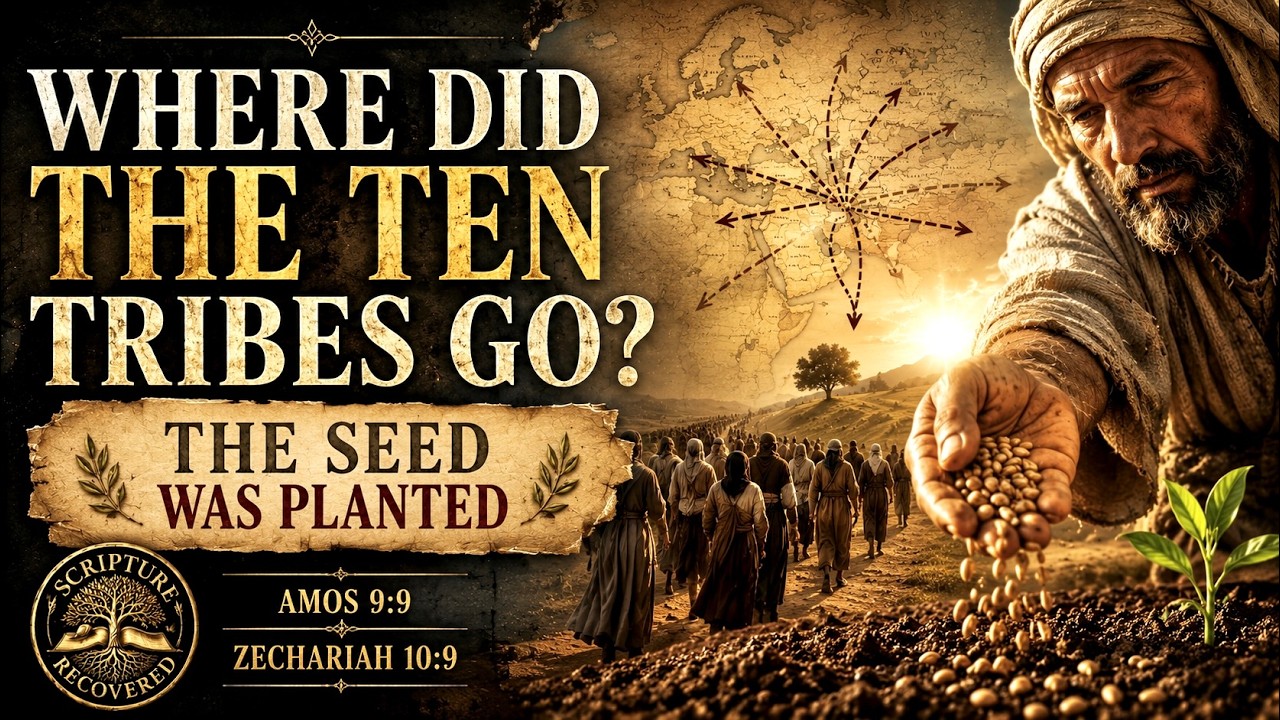
Or read the full article: Israel as Seeds
B.V. Thomas is the author and theologian behind The Hermeneutical Quill, a platform reaching readers across 170+ countries. This article is adapted from the Scripture Recovered video teaching series.
Subscribe to Scripture Recovered on YouTube — and visit bvthomas.com for more.
Scripture references in this article: Romans 11:11–12 · Romans 11:17–18 · Romans 11:20–22 · Romans 11:23–24 · Romans 11:28–29 · Romans 11:33–36 · Romans 15:27 · Genesis 12:3 · Revelation 13:8 · Hebrews 10:4 · Hebrews 12:2 · John 10:17–18 · John 19:30