The Fullness Yet to Come — Isaiah 60 Fulfilled

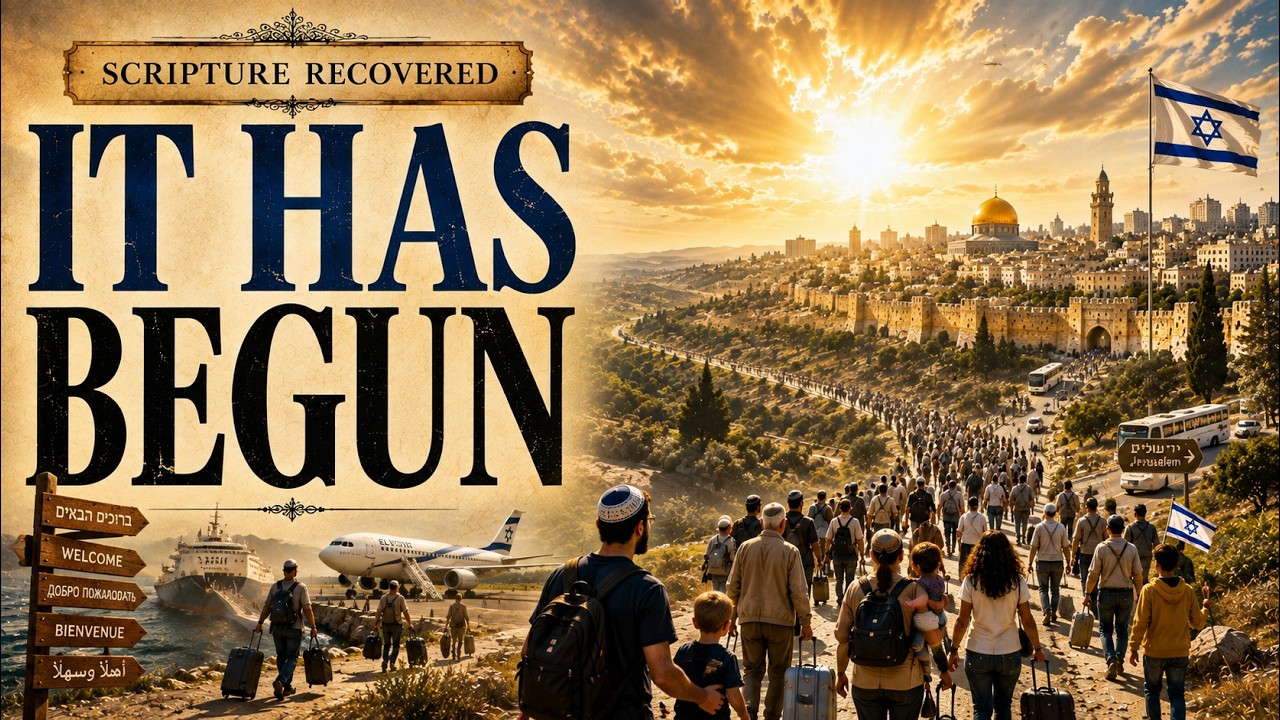
A major prophecy has already happened, hidden in plain sight. B.V. Thomas closes the Scripture Recovered series with Isaiah 11:9 and Isaiah 60’s vision of gates that never shut.

Here is a claim that will sound, at first hearing, like an exaggeration.

A major Old Testament prophecy has already happened, in substantial measure. Not in some thin, spiritualised, “kind of, sort of” sense, but verifiably, in the plain record of world history. And it rarely gets named for what it is.

This video presentation is based on the article below, adapted for the Scripture Recovered series. The full written study follows underneath for reading, reference, and further reflection.
youtube placeholder image

They shall not hurt nor destroy in all my holy mountain: for the earth shall be full of the knowledge of the LORD, as the waters cover the sea (Isaiah 11:9).

Put yourself in the eighth century BC for a moment. Isaiah is writing into a world where war is simply how nations settle disagreements, where the strong take from the weak as a matter of course, where no serious moral framework tells the powerful that they owe anything to the powerless. Into that world, Isaiah sees something that must have sounded almost absurd to his first hearers: a mountain rising, nations streaming toward it, and a coming day when the knowledge of the God of Israel would be as total and as ordinary as water filling the sea.

Now look at what is actually true today. Scripture exists in thousands of languages. The name of the God of Israel is known, in some form, on every continent on earth. There is no remote village, no isolated people group, that the message has not reached in at least some measure. A seed planted in one obscure nation in the ancient Near East has worked its way into the bloodstream of human civilisation itself.

The waters cover the sea. Not every drop sits on the surface — there are still depths, still distances, still corners barely touched. But the sea, as a whole, is covered.

This article closes the series with the highest point in the whole argument — a fulfilment already astonishingly underway, and a fulfilment still to come.

A World That Learned a Different Way

Picture the world Isaiah was speaking into more concretely.

Children sacrificed to gods of stone among Israel’s neighbours. Slavery as the unquestioned engine of every ancient economy. Strength, simply by being strength, given the final word in almost every human transaction.

Isaiah looked straight at that world and said: it will not stay this way. A mountain will rise. The nations will come to it. Instruction will go out from it. And — stated as plainly as a prophet ever states anything — the result will be a transformed world, soaked through with the knowledge of God the way the sea is soaked through with water.

That transformation is not some invisible, merely “spiritual” thing requiring blind faith with no evidence at all. It has left fingerprints across two thousand years of recorded history — believers who took the Bible’s vision of human worth seriously enough to fight slavery as an institution, the documented retreat of practices like child sacrifice and infanticide everywhere the Gospel put down roots, the spread of hospitals, orphanages, and the very notion that every human life carries inherent worth, into cultures that had never held that idea before.

None of this arrived automatically, everywhere, all at once, without resistance or failure. The honest record is mixed, and at times deeply troubling. Believers were also slaveholders and colonisers. Mission sometimes travelled alongside conquest rather than against it. The Church has often been slow to apply its own best convictions, and has sometimes betrayed them outright. This series has already named some of those wounds directly elsewhere and will not pretend otherwise here. But naming the failures honestly does not erase the underlying pattern — it sits alongside it. Across the long run of two thousand years, taken as a whole rather than at any single failed moment, the trajectory Isaiah described — weapons reforged into farming tools — is still real and still traceable, however unevenly, and at however great a human cost it has sometimes come.

This is the same seed that has run through every article in this series — the seed the enemy hunted and could never destroy, the seed that travelled the diaspora’s own trade roads centuries before the apostles ever walked them, the seed whose bones have been coming home in our own generation. That seed has filled the earth with fruit, and the world, eating freely from it, has mostly stopped asking where the tree came from.

The answer is Israel. It has always been Israel. The answer is the God of Abraham, Isaac, and Jacob, who chose the smallest of all seeds, who knew exactly what that choice would produce, and who has kept every word He spoke through every prophet He ever sent.

Arise, Shine

We have reached the summit of this series. And the passage that stands at that summit has been deliberately withheld until now, because this is where it belongs — the place from which the entire shape of what this series has traced finally comes into view at once.

Arise, shine; for thy light is come, and the glory of the LORD is risen upon thee. For, behold, the darkness shall cover the earth, and gross darkness the people: but the LORD shall arise upon thee, and his glory shall be seen upon thee. And the Gentiles shall come to thy light, and kings to the brightness of thy rising (Isaiah 60:1–3).

Arise, shine. That command lands on Israel — the people this entire series has circled back to again and again. Not on the nations, who only receive the light. On Israel, who carries it. Darkness covers the earth and its peoples, and yet the Lord rises specifically on Israel, and the nations are pulled toward whatever it is that is rising there.

This is not purely a future scene. It is the same pattern that has been running since the first century. The light rose on Israel in the person of the Messiah — Jewish by birth, Jewish by lineage, announced first by Jewish voices, carried first into Jewish diaspora communities, and only from there outward to every nation under heaven. The Gentile world has been streaming toward that light for two thousand years already. Kings, the people who shape entire civilisations, have been drawn to its brightness. It has been happening the whole time. It is happening now. And its fullest expression is still ahead.

Isaiah does not leave this as vague poetry. He gets remarkably specific about what that fullness looks like. Then thou shalt see, and flow together, and thine heart shall fear, and be enlarged; because the abundance of the sea shall be converted unto thee, the forces of the Gentiles shall come unto thee (Isaiah 60:5).

The wealth of the sea — every resource, every ounce of creative and material strength the Gentile world possesses — turning and flowing toward Israel. Not seized by conquest. Not extracted under threat. Arriving freely, carried by the same current that draws the nations to the light in the first place.

This series has already established that the Gentile believer owes Israel something real — that what the nations received through Israel’s fall creates an obligation, not a sentiment. Isaiah sees a day when that obligation stops being something paid reluctantly and becomes instead a glad, overflowing response to a light too bright to ignore.

And the sons of strangers shall build up thy walls, and their kings shall minister unto thee: for in my wrath I smote thee, but in my favour have I had mercy on thee. Therefore thy gates shall be open continually; they shall not be shut day nor night; that men may bring unto thee the forces of the Gentiles, and that their kings may be brought (Isaiah 60:10–11).

Strangers rebuilding the walls with their own hands. Kings of the nations serving Israel rather than ruling over her. Gates left open day and night without exception — because the traffic never stops, the arrivals never end, the fullness has no bottom to it.

For in my wrath I smote thee, but in my favour have I had mercy on thee. Everything this series has walked through — the exile, the long scattering, the centuries of suffering — the smiting was real, and Scripture does not pretend otherwise. But the mercy outweighs it. Every wound God allowed along that road was already held inside a larger mercy. The fullness still coming will finally let both the wound and the mercy be seen at their true size, side by side.

The Current Reverses

Thou shalt also suck the milk of the Gentiles, and shalt suck the breast of kings: and thou shalt know that I the LORD am thy Saviour and thy Redeemer, the mighty One of Jacob (Isaiah 60:16).

Israel, nourished by the nations she once gave everything to. The flow that has run one direction for twenty centuries finally turns around. For two thousand years, Israel handed the nations her own spiritual inheritance — the Scriptures, the Messiah, the apostles, the good news, the knowledge of the one true God. In the fullness, the nations hand back what they have built from that gift — their strength, their wealth, their accumulated wisdom — and Israel receives it.

And thou shalt know. That phrase carries the real weight. Not information added to a file. Recognition. The dawning realisation that the God who scattered and the God who gathers have always been one and the same — Saviour, Redeemer, the mighty One of Jacob. When Israel finally looks out and sees the nations streaming in, carrying the fruit the Gospel produced, and hears in that flood the fulfilment of promises God made to Abraham four thousand years earlier, that is the moment the veil finally lifts for good.

This is what covenant faithfulness from a God who never breaks His word actually looks like up close. Every hardship permitted along the way — the scattering, the exile, the long centuries of dispersion — was already wrapped inside a mercy bigger than the hardship itself. What is still coming will simply make that visible at last.

Gates That Never Shut

This series began on a Friday outside Jerusalem, with a crime that turned out to be the greatest gift ever given. It followed a single thread — the fall that became riches, the seed that became a harvest, the bones that finally came home — across four articles, and it has carried us here, to a gate that never closes.

Thy gates shall be open continually; they shall not be shut day nor night.

That is where this whole account of Israel’s place in God’s purposes finally lands — not a closed case, not a settled verdict, but an open door. A gate left permanently wide because the One who built it never planned to shut it. The nations are still walking through it. The wealth of the Gentile world is still being carried in. Walls once torn down are still being rebuilt by hands that used to belong to strangers and don’t anymore.

Look back at the distance covered. A people too small to matter by any worldly measure. A priesthood trained for a thousand years before anyone understood what it was for. An execution that turned out to be the means of rescue rather than its opposite. A scattering that functioned as planting rather than as ending. A homecoming, in living memory, that nobody’s history books predicted. And now, standing at the far end of all of it, a door propped open by a God who has no intention of closing it.

That is not a conclusion in the sense of a case finally closed. It is closer to a vantage point — a place to stand and watch something still in motion. The traffic through that gate has not slowed in two thousand years and shows no sign of stopping now.

B.V. Thomas is the author and theologian behind The Hermeneutical Quill, a platform reaching readers across 170+ countries. This article is the fifth and final piece in a series adapted from the Scripture Recovered video teaching series.

Subscribe to Scripture Recovered on YouTube — and visit bvthomas.com for more.

Scripture references in this article: Isaiah 11:9 · Isaiah 60:1–3 · Isaiah 60:5 · Isaiah 60:10–11 · Isaiah 60:16
When the Bones Come Home — Ezekiel 37 and the Return of Israel

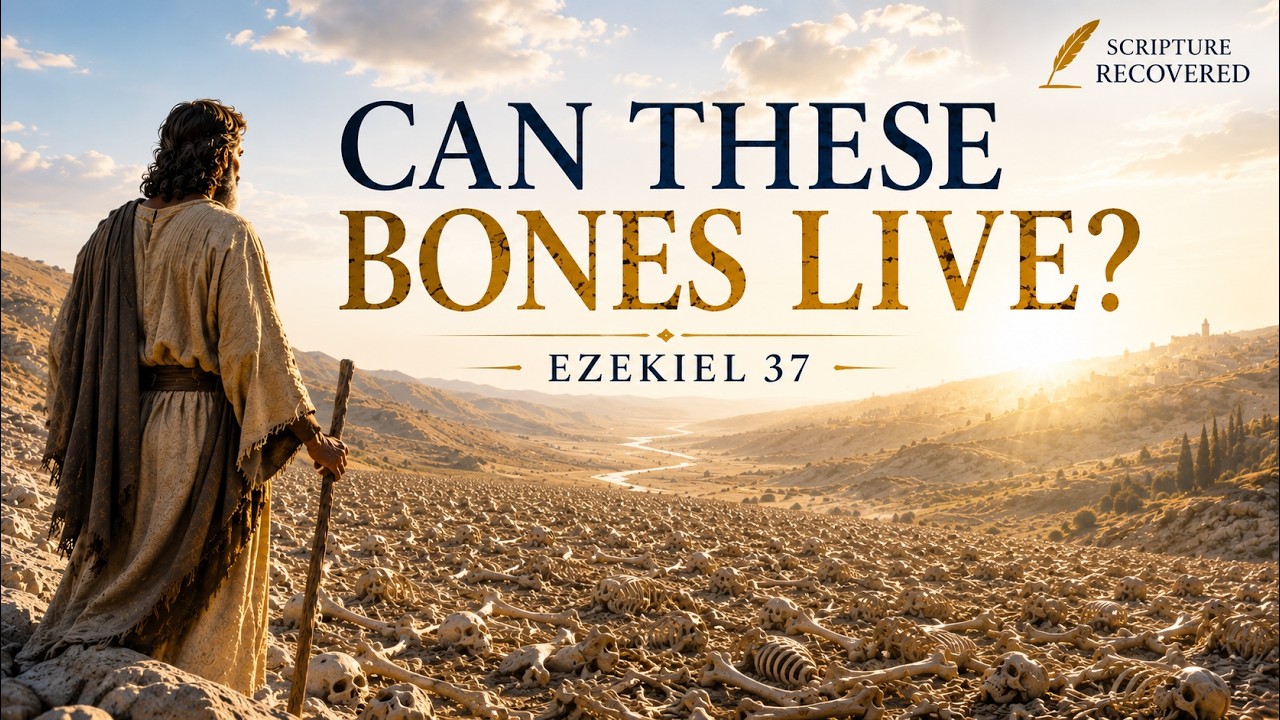
Can these bones live? A recovered reading of Ezekiel 37’s four-stage vision, the modern return of Israel, and the Church’s role in provoking Israel to jealousy.

In the sixth century BC, on the banks of the river Chebar in Babylon, a Jewish priest named Ezekiel was set down by the Spirit of God in the middle of a valley and told to look.

What he saw was one of the most arresting images in all of prophetic literature — and one of the most precisely accurate prophecies ever recorded, because it described, in exact sequence, a series of events whose fulfilment would span the entire distance from the first century to the last day.

He saw bones. Vast numbers of them, covering the floor of the valley. And God asked him a question that every reader should hear as a question addressed personally to them.

This video presentation is based on the article below, adapted for the Scripture Recovered series. The full written study follows underneath for reading, reference, and further reflection.

youtube placeholder image

Son of man, can these bones live? And I answered, O Lord God, thou knowest (Ezekiel 37:3).

Can these bones live? The question is not rhetorical. It is a genuine test of whether the person being asked is willing to believe that God can do what no human logic can justify believing. Can a nation dissolved into the nations of the earth for centuries be reassembled? Can a people whose identity had been absorbed into every nation on earth, whose language had not been spoken as a living vernacular for two thousand years — can these bones live?

The only honest answer is the one Ezekiel gave. O Lord God, thou knowest. Not yes — because human reason cannot get there. Not no — because the God asking the question is the God who made the bones in the first place.

Thou knowest.

And then God showed him what He knew.

This article answers the question the previous three articles in this series have been building toward. What happens when Israel comes home?

The Four Stages

The vision in Ezekiel 37 unfolds in four precise stages. Before walking through them, one interpretive principle must be established — because without it, the vision will be read too narrowly in one direction or the other.

Ezekiel’s vision is not either spiritual or national. It is both — a first-century spiritual fulfilment that is real and complete in itself, and a future national dimension whose fullness is still coming. To read it as only spiritual is to ignore that God says explicitly: I will bring you into the land of Israel. To read it as only national is to miss the Pentecost event the vision anticipates with breathtaking precision. The vision holds both. And so must we.

With that established, here are the four stages.

The first stage is the scattering. The bones are dry, separated, covering the valley floor. This is Israel dissolved into the nations — the northern tribes absorbed into Assyria and beyond, the southern kingdom in Babylon, and ultimately the great diaspora of the Roman period after AD 70 that spread the Jewish people to every corner of the inhabited world. God tells Ezekiel in verse 11: these bones are the whole house of Israel. Not a remnant. The whole house — all twelve tribes, in all their dissolution and apparent annihilation.

The second stage is the reassembly. At God’s command, Ezekiel prophesies to the bones and they come together — bone to bone, sinews, flesh, skin. The scattered elements are drawn back toward one another into recognisable form. But there is no breath in them yet. This is the physical gathering before the spiritual fullness — structure without life, form without Spirit.

The third stage is the breath. God commands Ezekiel to prophesy to the four winds — come and breathe upon these slain, that they may live. The breath enters and they live. Here is where the already-and-not-yet character of the vision becomes essential: this stage has a first-century fulfilment and a future fullness. The breath came at Pentecost. The Spirit fell on a hundred and twenty Jewish believers in an upper room, and then, through them, on three thousand diaspora Jews from every nation under heaven. The dry bones of the scattered house of Israel heard the voice of the Shepherd, and came alive. That was real. That was the breath of Ezekiel 37, fulfilled spiritually and historically in the first century — and that same breath has been blowing ever since, through every generation of the one new man, Jewish and Gentile believers together, in every nation the Gospel has reached.

The fourth stage is the army. They stood upon their feet — an exceeding great army. From scattered bones to a unified host, deployed and marching. This too has an already dimension: the one new man assembled at Pentecost has been that army for two thousand years, bearing the testimony of Jesus in every language, turning swords into ploughshares, filling the earth with the knowledge of God. The army is not waiting to be formed. It is already marching. But its final mustering — its full complement, with the complete ingathering of the remnant from every tribe — is still ahead, in the fullness that is yet to come.

Four stages. Already fulfilled in their spiritual and first-century dimensions. Still unfolding in their national and eschatological fullness. Both are true. Neither cancels the other.

A Pattern Without Precedent

On the fourteenth of May, 1948, David Ben-Gurion stood in the Tel Aviv Museum and read aloud the Israeli Declaration of Independence. In that moment — after nineteen centuries of exile, after the near-extermination of European Jewry in the preceding decade, after two thousand years during which the Jewish people had existed without a sovereign homeland — a Jewish state was re-established in the land of Israel.

This is not a comment on the politics of the modern Middle East, which are contested and complex and not the subject of this article. It is a theological observation about a specific pattern: no other people group in recorded history has been dispersed from their homeland for nineteen centuries, maintained a distinct identity through that entire period, and returned to reconstitute a functioning nation in their ancestral territory. As a pattern, it stands without precedent.

In the conflict that followed the declaration, the new state faced combined opposition from multiple neighbouring nations and survived against odds that few observers at the time expected it to survive. Whatever one’s view of the decades of conflict that have followed — and people of good conscience hold very different views — the survival itself, against those early expectations, is the detail this article is pointing to.

Thus saith the Lord God; Behold, I will take the children of Israel from among the heathen, whither they be gone, and will gather them on every side, and bring them into their own land (Ezekiel 37:21).

The aliyah that has brought Jewish people home from over a hundred countries across the last century is a visible, historically documented pattern that echoes a specific Old Testament prophecy. The bones are coming home. The second stage of Ezekiel’s vision is unfolding in the daily news.

The Faces of the Return

Look at the diversity of the return.

Ethiopian Beta Israel, airlifted home in Operations Moses and Solomon — ancient in their faith, carrying a form of Jewish observance that pre-dates the Talmud. Yemenite Jews, who had lived in the Arabian Peninsula since before the destruction of the First Temple, brought home in Operation Magic Carpet. Iraqi Jews — the community that traced its origins to the Babylonian exile itself, twenty-seven centuries in Mesopotamia — who came home in Operation Ezra and Nehemiah. Indian Jews from Mumbai, from Kerala, from the northeast, from Andhra Pradesh. Russian and Soviet Jews, over a million of them, who came home when the gates opened. Moroccan, Romanian, Argentine, Australian, American, French, Chinese.

Bone to bone. From every direction. From every soil.

Speaking the languages of every nation — but learning the one language that was dead as a vernacular for two thousand years and that the State of Israel has made its official tongue. Hebrew, the language of the prophets, resurrected from liturgical preservation to living speech in the mouths of children playing in the streets of Jerusalem. The resurrection of Hebrew as a living, daily, spoken tongue — after two thousand years as a liturgical and literary language only — is without real parallel in linguistic history.

That breadth of return is exactly what we should expect from a people preserved through centuries of exile, migration, and dispersion across every corner of the earth — and now being gathered from that same breadth by the hand that scattered them.

Life From the Dead, Already and Still Unfolding

Romans 11:15 contains one of the most staggering promises in the entire New Testament. For if the casting away of them be the reconciling of the world, what shall the receiving of them be, but life from the dead?

The casting away produced the reconciling of the world. That has happened. Two thousand years of harvest. The church in every nation. The Gospel in every language. Every believer of every people group who has ever been grafted into the covenant promises of Israel. All of that was the fruit of the casting away.

And the receiving — the ingathering of the believing remnant from among Israel — has also been happening since the first century. The three thousand at Pentecost were received. The priests who turned to the faith in the book of Acts were received. Every Jewish believer in the Messiah across twenty centuries has been part of that receiving. And the life from the dead that resulted — life out of death — is the resurrection life that has been flowing through the body of the one new man ever since.

But Paul’s language moves from the lesser to the greater. If the partial casting away produced so much, the fullness of the receiving will produce something of even greater magnitude — something that, in its completeness, will be to the world what resurrection is to death itself. Not a contradiction of what has already happened. The consummation of it.

We do not need to choose between the first-century fulfilment and the future fullness. Both are true. Both are real. The life from the dead has been flowing since Pentecost. Its final, fullest expression is still to come.

Return now to the fourth stage of Ezekiel’s vision — the exceeding great army standing on its feet — and see it correctly. The army is not a future formation waiting to be assembled. It has been assembled. It has been marching for two thousand years. The one new man — the body of Christ formed at Calvary and empowered at Pentecost, comprising believing Jews and believing Gentiles in one organism, one temple, one new humanity — is the exceeding great army. It wields not swords but the sword of the Spirit. It conquers not by military force but by the testimony of Jesus and the word of truth carried into every darkness.

And he shall judge among the nations, and shall rebuke many people: and they shall beat their swords into plowshares, and their spears into pruning hooks: nation shall not lift up sword against nation, neither shall they learn war any more (Isaiah 2:4).

The world before the Gospel was a world organised around violence and conquest. The world shaped by the Gospel — however imperfectly, however partially — is a world that has been learning, century by century, to value peace, human dignity, the sanctity of life. That is the army’s work, already accomplished in measure, still being accomplished, and awaiting its final completion when the Commander returns to consummate what His army has been advancing.

The army is marching. We are in it. Its final mustering is still ahead. But the march has long since begun, and the earth has already been changed by it beyond anything that could have been imagined in the valley of dry bones on the banks of the Chebar.

Provoked to Jealousy

Paul does not leave the one new man — Jewish and Gentile believers together in Christ — as a passive spectator of the fullness that is still coming. He assigns it a specific role: Through their fall salvation is come unto the Gentiles, for to provoke them to jealousy (Romans 11:11).

To provoke them to jealousy. The salvation of the Gentile members of the one new man was intended, among its other purposes, to make Israel want what they see — the Messiah who came through Israel, the covenant that was always Israel’s, the God of Abraham known not as obligation but as living relationship, the Spirit that the prophets promised.

The mechanism here is jealousy — not competitive resentment, but the longing of a person who watches someone else fully enjoying what was always rightfully theirs. A Jewish person watching the one new man worship the God of Israel with genuine love, genuine joy, genuine holiness — in the name of Israel’s own Messiah, through Israel’s own Scriptures, rooted in Israel’s own covenant — should feel something that draws them toward the source of what they are seeing. This is why the character of the one new man is not a private matter. It is an eschatological instrument.

And this is where a warning must be spoken plainly, because the role can be betrayed.

The dragon’s most successful strategy against the one new man has not been external persecution. External persecution has consistently produced growth, depth, and the purification of the church’s testimony. His most successful strategy has been internal confusion about identity — getting the one new man to forget what it is.

A church that has forgotten its Jewish foundation becomes antisemitic — and an antisemitic church cannot provoke Israel to jealousy. It can only confirm Israel’s worst fears about the God it claims to worship.

A church that has forgotten the root that bears it becomes arrogant — and an arrogant branch, Paul warns, will be broken off just as the natural branches were. The warning was not written for decoration.

A church that has forgotten the debt becomes ungrateful — and an ungrateful church cannot pray for Israel’s restoration with genuine love, cannot stand with Israel in its vulnerability, cannot be the mirror that reflects Israel’s own Messiah back to the people through whom He came.

But the one new man that is genuinely alive in the Spirit, genuinely grateful for the root, genuinely loving toward the natural branches, is fulfilling its assigned role in the divine timetable. It is not a Gentile institution. It is the household of God, built on the foundation of the Jewish apostles and prophets, with Christ Himself the chief cornerstone — the one new man, in whom there is neither Jew nor Greek, but all are one in Him. This community becomes exactly what it was designed to be: the instrument through which the fullness of the Gentiles comes in, and through which Israel is provoked to jealousy, and through which the breath of God blows on the assembled bones until they stand as an exceeding great army.

The Cedar and the Mustard Seed

That phrase — the fullness of the Gentiles — deserves one more moment, because it is tempting to read it as a simple threshold. A last soul. A last day. A final number that tips some divine scale. But the image Jesus Himself used for the growth of the kingdom suggests something far richer.

The kingdom of heaven is like to a grain of mustard seed, which a man took, and sowed in his field: which indeed is the least of all seeds: but when it is grown, it is the greatest among herbs, and becometh a tree, so that the birds of the air come and lodge in the branches thereof (Matthew 13:31–32).

The least of all seeds. The smallest beginning. And yet — a tree so large that every kind of bird finds shelter in it. The fullness of the Gentiles is not only a future event. It is a process that has been underway since Pentecost, growing from the mustard seed of a hundred and twenty Jewish believers in an upper room into the largest movement in human history, with branches reaching into every nation and people group on earth.

Ezekiel saw the same image from a different angle, centuries earlier. I will also take of the highest branch of the high cedar, and will set it… and will plant it upon an high mountain and eminent: in the mountain of the height of Israel will I plant it: and it shall bring forth boughs, and bear fruit, and be a goodly cedar: and under it shall dwell all fowl of every wing; in the shadow of the branches thereof shall they dwell (Ezekiel 17:22–24).

The tender twig planted on the mountain of Israel — Christ, the true Branch, planted in the soil of Jewish history — has become the cedar under which every bird of every wing finds shelter. The fullness of the Gentiles is this: every people group, every tongue, every nation drawn into the shadow of that cedar. That fullness has been growing for two thousand years and is still growing. Its completion is ahead. But its substance is already vast.

Ten Men From Every Nation

There is a vision the prophet Zechariah was given that has not yet been fully realised, but is unmistakably on its way. We have held it in reserve for this final moment, because this is where it belongs — at the summit of everything this series has been building toward.

Thus saith the Lord of hosts; In those days it shall come to pass, that ten men shall take hold out of all languages of the nations, even shall take hold of the skirt of him that is a Jew, saying, We will go with you: for we have heard that God is with you (Zechariah 8:23).

Ten men from every language of every nation, taking hold of the garment of a Jewish man and saying: we will go with you, for we have heard that God is with you.

This is the one new man in its eschatological fullness. Not the Gentile world absorbing Israel. Not Israel absorbing the Gentile world. But the nations — every tongue, every people — taking hold of their Jewish brother and saying: we know now what you are. We know now what you carried. We know now what it cost you, and what it produced, and what we owe you. We are not going anywhere without you. We will go with you.

The significance of that movement is not its direction but its object. The nations are not running toward a Jewish man as an end in himself — that would be ethnic veneration, which is not gratitude but a different kind of error. They are running toward the God who is with him. The Jewish man is the signpost, not the shrine. For two thousand years, the knowledge of the God of Israel has been moving outward from Jerusalem — to Judea, Samaria, the uttermost parts of the earth. And in the fullness that is coming, the nations who have received that knowledge turn back toward its source — not to worship Israel, but to stand with Israel before the God of Israel.

Because we have heard that God is with you.

Not was with you. Is. The God of Abraham, Isaac, and Jacob — the God who chose the smallest seed, who scattered it into every soil, who raised the Seed of seeds from the dead, who has been gathering His harvest for two thousand years and is not finished — is still with His people. Has never stopped being with His people. And the nations, when they finally see it clearly, will run toward that presence rather than away from it.

The bones came together. The breath entered. The army stood. And the bones are still coming home — by the hundreds of thousands, from every continent, speaking every language, resurrecting a language that had been dead for two millennia, surviving what should have destroyed them seven times over.

Can these bones live?

We have seen the answer. We are watching it happen.

Watch Episode 5 — The Fullness Yet to Come → here

B.V. Thomas is the author and theologian behind The Hermeneutical Quill, a platform reaching readers across 170+ countries. This article is adapted from the Scripture Recovered video teaching series.

Subscribe to Scripture Recovered on YouTube — and visit bvthomas.com for more.

Scripture references in this article: Ezekiel 37:3 · Ezekiel 37:10 · Ezekiel 37:11 · Ezekiel 37:12 · Ezekiel 37:21 · Ezekiel 17:22–24 · Romans 11:11 · Romans 11:15 · Isaiah 2:4 · Matthew 13:31–32 · Zechariah 8:23